

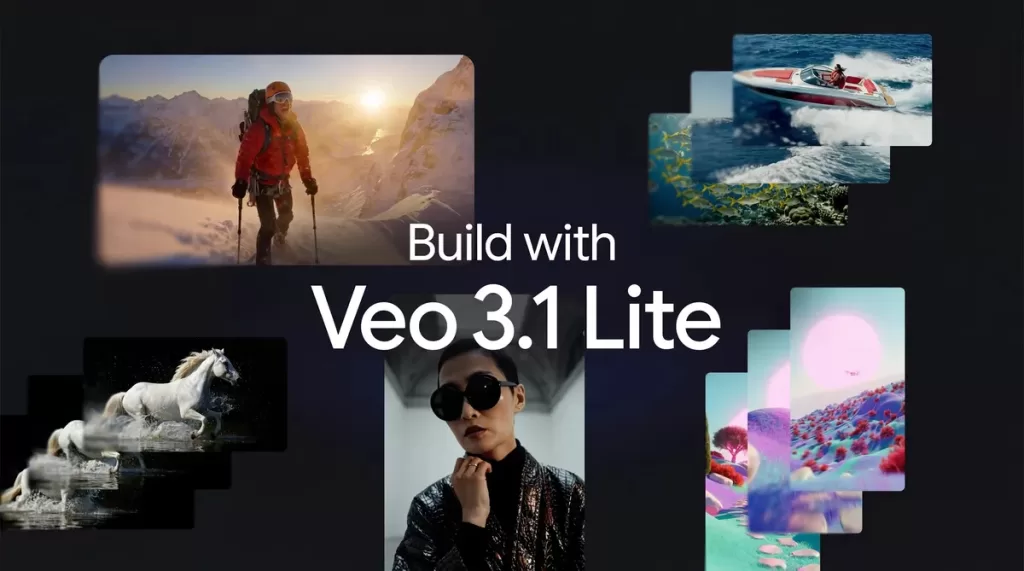
The race to conquer generative artificial intelligence has largely shifted from generating text and static images to the much more complex frontier of video. However, while generating high-quality video clips using artificial intelligence is undoubtedly impressive, it has traditionally been an incredibly expensive and computationally heavy task. This high barrier to entry often leaves independent developers and smaller creators locked out of the technology. Google is actively looking to change that dynamic with their latest announcement. They have officially introduced Veo 3.1 Lite, billing it as their most cost-effective video generation model to date.
The Push for Accessible Video Generation
This new model is specifically engineered to empower developers who want to build high-volume video applications without bankrupting their operational budgets. By introducing the Lite version, Google essentially rounds out the Veo 3.1 family of models, providing much-needed flexibility to the community. Developers now have the option to choose a model that perfectly aligns with their specific project requirements and financial constraints, rather than being forced into a one-size-fits-all solution.
Balancing Performance and Cost
From a purely technical standpoint, Veo 3.1 Lite manages to strike a very practical balance between utility and professional-grade capabilities. The standout feature is its raw efficiency. Google claims that Veo 3.1 Lite operates at less than half the cost of its more powerful sibling, Veo 3.1 Fast, while remarkably maintaining the exact same generation speed. This means developers do not have to sacrifice responsiveness for affordability.
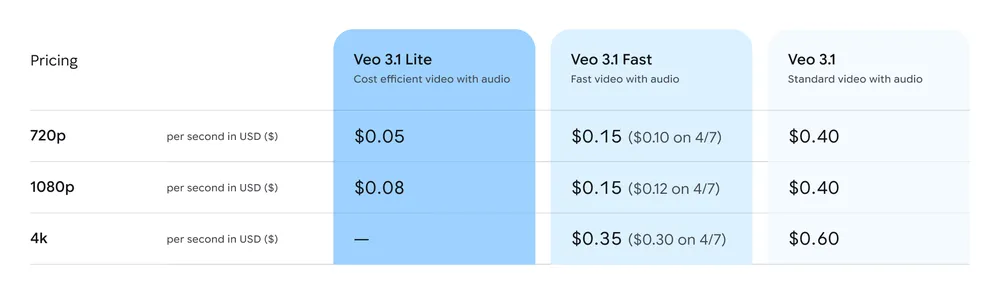
The model fully supports both Text-to-Video and Image-to-Video generation, ensuring it can handle a wide variety of creative workflows seamlessly. It also offers flexible framing options, catering to both traditional landscape formats at a 16:9 ratio and mobile-friendly portrait formats at a 9:16 ratio. Furthermore, users are not forced into low-quality outputs just because they are using the Lite model. The system supports both 720p and 1080p video resolutions, which is more than sufficient for most social media, marketing, and web-based applications.
Practical Implications for App Builders
When we look at the practical implications for daily use, this accessibility opens up an entirely new landscape for application development. Previously, integrating AI video generation into a consumer-facing app—like a social media scheduler, a marketing toolkit, or an automated presentation builder—was a risky financial bet due to the sheer cost of processing each user request. By slashing the processing cost by more than fifty percent, Veo 3.1 Lite makes these types of high-volume, user-generated video platforms financially viable. It shifts AI video from a premium novelty to a standard feature that can be baked into everyday software tools.
Customization and Granular Control
One of the more practical additions to Veo 3.1 Lite is the granular control it gives developers over the actual output duration. Rather than forcing a standard length, the model allows creators to customize their video durations to four, six, or eight seconds. Crucially, the cost adjusts accordingly based on the chosen length. This modular pricing structure ensures that developers are only paying for the exact amount of compute they actually need, making it significantly easier to scale applications and predict backend costs accurately.
Availability and A Broader Strategy
For developers eager to get their hands on the new tools, Veo 3.1 Lite is rolling out immediately. It is officially accessible via the paid tier on the Gemini API and through Google AI Studio.
However, Google’s strategy to make video generation more accessible extends beyond just releasing a cheaper model. In tandem with the launch of Veo 3.1 Lite, the company also announced that they will be officially reducing the pricing for their premium Veo 3.1 Fast model starting on April 7, 2026. This dual approach of introducing a budget-friendly option while simultaneously discounting their flagship offering is a clear signal. Google is aggressively positioning its ecosystem as the default playground for developers looking to integrate robust, scalable AI video generation into their products without dealing with prohibitive overhead costs.