

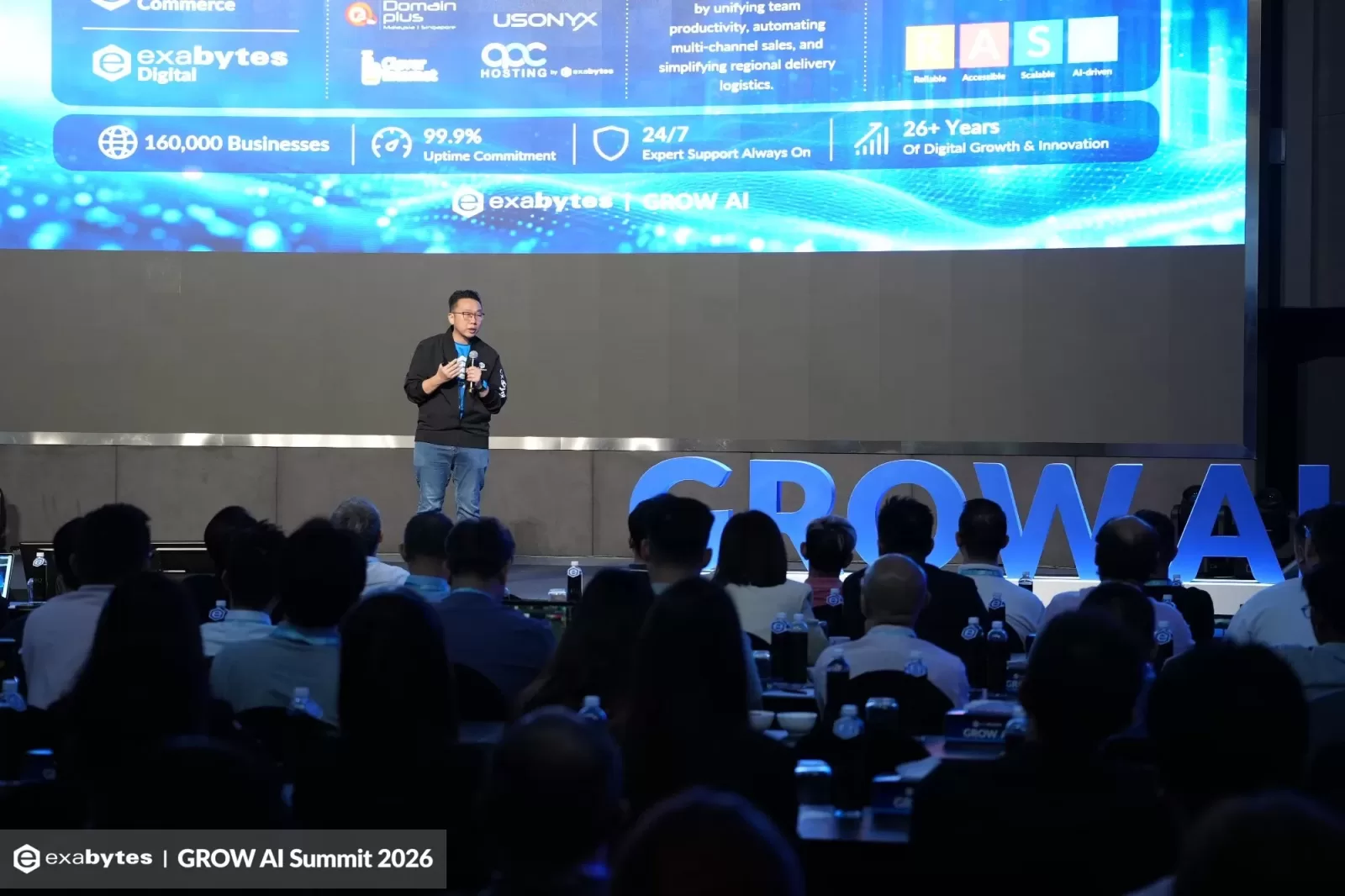
AI adoption is moving into its next phase as businesses look beyond experimentation and towards practical applications that can improve productivity, customer engagement and operational efficiency.
Exabytes officially launched GROW AI at the GROW AI Summit 2026 at EQ Kuala Lumpur on 13 August, with the company targeting one million businesses to GROW AI by 2030.
The launch builds on Exabytes’ GROW Digital initiative, which focused on helping businesses establish and grow their digital presence. GROW AI expands this focus to artificial intelligence, covering areas including cloud infrastructure, cybersecurity, business applications, eCommerce, workplace productivity, automation and managed AI services.
Exabytes currently serves more than 160,000 businesses across Southeast Asia.
According to Chan Kee Siak, Founder and CEO of Exabytes Group, GROW AI represents the next stage of the company’s growth journey.
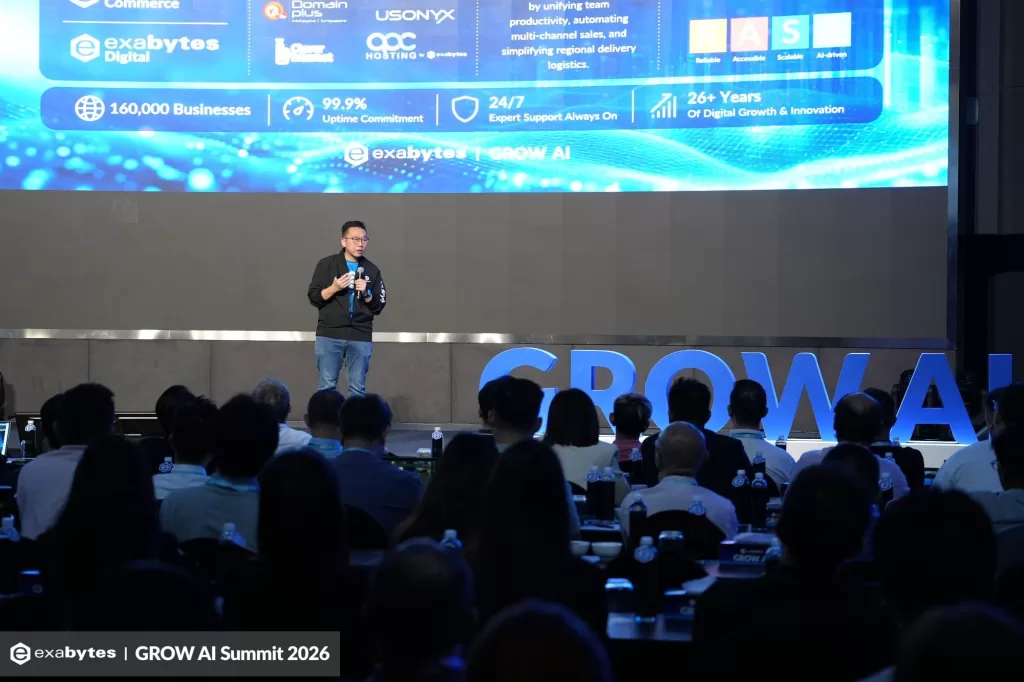
“For the past 25 years, Exabytes has helped businesses establish the digital foundations they need to grow. GROW AI represents the next chapter of that journey, helping organisations move from being digitally present to becoming intelligently operated,” Chan said.
GROW AI is built around four principles: Reliable, Accessible, Scalable and AI-driven, or RASA. The company is positioning GROW AI as an end-to-end AI stack that covers different stages of adoption, from dedicated AI hardware and cloud infrastructure to no-code AI agents, automation and managed services.
The focus comes as businesses continue to face challenges moving from AI experimentation to implementation.
A 2025 study by Ecosystm, in partnership with Red Hat and supported by the National AI Office, found that only 21% of 133 Malaysian SMEs surveyed had progressed beyond AI pilots, while 60% cited insufficient in-house technical expertise as a major barrier to adoption.
From AI Experimentation To Practical Business Applications
The summit also showcased several AI applications from Exabytes’ technology partners.
Aurora Mobile demonstrated conversational sales, AI-powered customer service and enterprise AI agents. Sangfor showcased AI-powered cybersecurity capabilities including Security GPT, 24/7 cyber defence and next-generation firewall solutions. Moka AI presented AI applications for recruitment, including recruitment data analysis, process automation and AI agents for candidate sourcing.
These use cases highlight how AI can be applied across different areas of a business, from customer engagement and cybersecurity to recruitment and workflow automation.
Exabytes And Aurora Mobile Sign Three-Year MOU
The event also saw the signing of a three-year Memorandum of Understanding between Exabytes and Aurora Mobile through Aurora Mobile’s enterprise AI platform, GPTBots.ai.
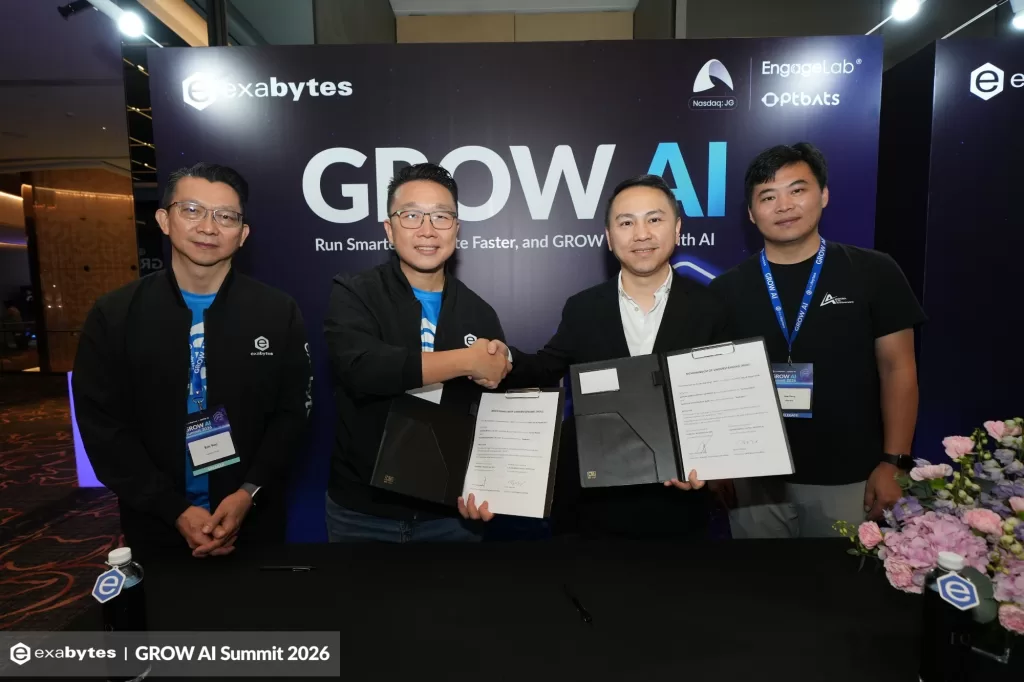
The partnership combines Exabytes’ cloud infrastructure, managed services, regional customer network and implementation capabilities with Aurora Mobile’s enterprise AI platform, AI agents, knowledge management and workflow automation capabilities.
Under the collaboration, the companies intend to develop enterprise AI solutions for businesses across Southeast Asia.
The solutions are expected to cover areas including AI-powered customer service, sales, marketing and knowledge assistants for SMEs, as well as enterprise AI agents, intelligent service desks, workflow automation, private AI deployments and hybrid AI infrastructure for larger organisations and government bodies.
The partnership will also include internal AI projects across Exabytes’ business functions, customer proof-of-concept programmes and managed AI services.
Exabytes plans to use successful internal AI applications as potential frameworks for solutions that can later be introduced to its customers.
Making AI Work At Enterprise Scale
Chris Lo said enterprise AI transformation requires more than deploying a standalone chatbot or application.
Organisations need to connect AI with their knowledge, workflows, employees and operational systems while establishing the necessary governance and security capabilities.
Exabytes Deputy CEO Eric Foo said businesses do not need to transform every function at once. Instead, organisations can begin with a clearly defined operational challenge and expand their AI adoption as their capabilities and requirements develop.
He also highlighted the need to move AI adoption from the individual level to the company level, where its impact can be measured through financial and operational metrics.
The summit brought together more than 500 business owners, C-suite executives, technology leaders, solution providers and public-sector stakeholders, with discussions covering AI infrastructure, enterprise applications, cybersecurity, commerce, workplace productivity and talent development.
With GROW AI, Exabytes is targeting one million businesses by 2030, supported by its existing regional customer base and partnerships across cloud infrastructure, enterprise AI, cybersecurity, commerce and talent development.
The initiative marks Exabytes’ expansion from digital adoption into AI implementation, with the company focusing on helping businesses integrate AI into their operations and scale their adoption over time.