
This article is written based on an interview with Kelly Switt, Global Head of Industrial Business at Red Hat
The narrative around Industry 4.0 is often presented as an all-or-nothing leap of faith. For manufacturers in Malaysia and across the ASEAN region, the vision of a fully automated, AI-driven “thinking factory” can feel less like an opportunity and more like a mandate that’s financially and operationally out of reach. The prevailing wisdom, often pushed by technology vendors and high-level consultants, suggests a complete and costly overhaul—a “rip and replace” strategy that is simply not feasible for businesses running on legacy machinery that has been reliable for decades.
This pressure to transform creates a state of paralysis. The fear of being left behind is matched only by the fear of a massive, budget-breaking project that disrupts operations and may not deliver a clear return on investment. According to a recent study by McKinsey, many companies get stuck in “pilot purgatory,” unable to scale their digital manufacturing initiatives due to the high costs and complexity involved. Similarly, a Deloitte report on smart factories identifies the cost of implementation and the challenge of integrating new technology with legacy systems as top barriers to adoption, particularly for small and medium-sized enterprises.
But what if this “big bang” approach is a myth? In a recent sit-down with Kelly Switt, the Global Head of Industrial Business at Red Hat, we learnt a different, more pragmatic picture. It’s a roadmap for AI adoption that is evolutionary, not revolutionary—a journey that starts with practical, non-disruptive steps and leads to a future where AI acts as an expert co-pilot for the human workforce.
The First Step: Starting Small with “Bolt-On AI”
The biggest hurdle for many is simply knowing where to begin. Switt’s advice is refreshingly straightforward: start with what you have. Instead of gutting the factory floor, manufacturers can begin by adding capabilities around the edges of their existing processes.
She calls this “bolt-on AI”—the idea of adding systems like computer vision for quality control or video analytics for predictive maintenance without touching the core machinery. These are contained, high-impact projects that can provide immediate value.
Even more ingeniously, Switt suggests that the data needed to power these initial AI models may already be available to the companies and factories. Most factories have a networks where data from various machines and sensors is constantly flowing. By simply pulling this data off the network, a manufacturer can begin feeding it into AI systems for real-time analysis. This clever approach requires no invasive changes to the operational technology (OT) itself, bypassing one of the biggest technical and financial hurdles.

“The hardest part is just starting. So if the starting point is “we want to do some predictive maintenance and have a very kind of simplistic setup with camera feeds and… a vision model”- do it. It’s still going to provide value.”
Underpinning this strategy is the need for a common infrastructure that can handle both the old and the new. This is where a platform like Red Hat OpenShift becomes critical. It allows a factory to run its existing virtualised workloads—like a legacy Manufacturing Execution System (MES)—on the same platform as new, containerised AI applications. This creates a bridge between the past and the future, enabling a gradual, controlled modernisation rather than a sudden, disruptive break.
Bridging the Human and Technical Divide
Of course, before any advanced AI can be deployed, a foundational challenge that has plagued the industry for decades must be addressed: the divide between Information Technology (IT) and Operational Technology (OT). It’s a problem Switt acknowledges has been a topic of discussion for over 20 years.
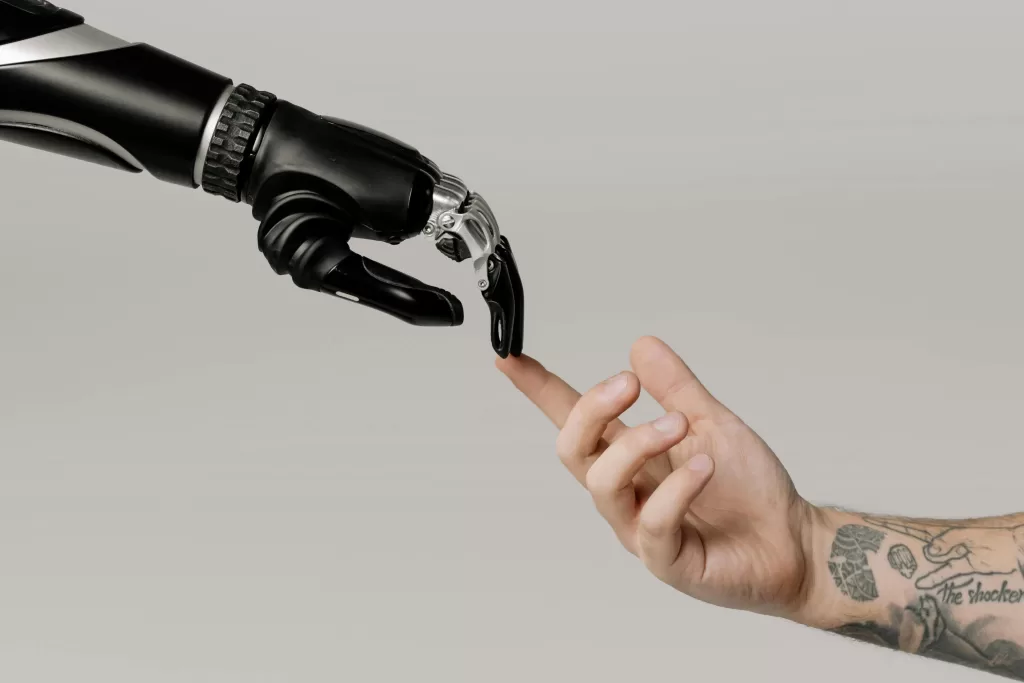
The common misconception is that this is a purely technical problem to be solved with a product. However, Switt argues it’s primarily about people and process. It’s not about the IT team coming to “take over” the factory, nor is it about the OT team expecting IT to learn the intricacies of every controller on the floor. Instead, the solution lies in fostering “ways of working together” and creating a collaborative environment where the best practices of both worlds can be combined.
This is where Red Hat aims to act as a “broker” between the two camps. By taking its IT-centric portfolio through rigorous OT-specific certifications, such as the IEC 62443 cybersecurity standard, the company is building a technical bridge of trust. This ensures that as IT capabilities are introduced to the factory floor, they meet the stringent security and reliability standards that the OT world rightly demands.
The Destination: Generative AI as the Expert Co-Pilot
With a solid foundation in place and the IT/OT relationship on the right track, the true potential of AI can be unlocked. Switt is quick to dismiss the hype around using generative AI for simple chatbots, a technology she was building back in 2017. The real, tangible value on the factory floor is far more sophisticated.
The vision is for a “converged AI” system where predictive and generative models work in tandem. Here’s how it works:
- Predictive Detection: A predictive AI model, fed by the “bolt-on” data streams, detects an anomaly—perhaps a subtle change in a machine’s vibration that signals an impending failure.
- Generative Interpretation: Instead of just sending a cryptic error code, the model’s output is fed into a generative AI. This AI has been trained on the specific technical manuals, standard operating procedures, and repair guides for that exact piece of equipment.
- Actionable Guidance: The generative AI then provides the human worker with clear, conversational, step-by-step instructions on how to diagnose and fix the problem before it leads to a costly shutdown.

“I think it’s going to become like a great augmenter to the worker, especially when we think about the next generation worker that’s coming in that is going to be much more technically savvy and is going to be looking for those types of interfaces that is allowing them to be more conversational with the tech than necessarily needing to be like tactile with the tech.”
This isn’t about replacing the engineer; it’s about empowering them. The AI becomes an expert co-pilot, a powerful “augmenter” that saves critical time and reduces human error. Furthermore, this system creates a powerful feedback loop. As workers interact with the AI and validate its recommendations, they are effectively retraining and improving the model, capturing decades of human experience and making it accessible for the next generation of talent.
An Evolutionary Path Forward
The journey from a traditional factory to an AI-enabled one doesn’t have to be a terrifying leap across a chasm. As Kelly Switt lays out, it can be a steady, evolutionary path. It begins with pragmatic, non-disruptive “bolt-on” solutions that deliver immediate value and builds towards a future where sophisticated AI acts as a true partner to the human workforce.
For manufacturers in Malaysia and across ASEAN, this realistic roadmap offers a way to cut through the hype and start building the factory of the future, one practical step at a time.
This article is written based on an interview with Kelly Switt, Global Head of Industrial Business at Red Hat
Kelly Switt
Global Head of Industrial Business, Red Hat
Kelly leads the edge strategy for solutions, ecosystems and sales globally at Red Hat. She is a transformation strategist who partners with executives to drive client-centric transformation. Over the past 25 years, her focused approach has led these organizations to achieve goals from securing marketing share through new product entrance, M&A integration and operational digitization. Her work was recognized by receiving the Transformation Leader of the Year Award by the prestigious Women in IT organization.