
The modern banking world moves at a breathtaking pace. Traditional financial institutions can no longer rely solely on off-the-shelf software to stay competitive. True digital resilience requires something much deeper. It demands a self-reliant tech culture built from the ground up. For more than a decade, Hong Leong Bank has embraced a clear philosophy known as Digital At The Core. This approach focuses heavily on investing in human capital, nurturing in-house engineering capabilities, and forming strategic ecosystem collaborations. Instead of outsourcing every technical hurdle, the bank is actively building the future of banking with its own people.
Cultivating In-House Talent Through the Graduate Trainee Program
The core of this digital strategy is a conviction that sustainable innovation starts with talent development. The bank continually expands its technological footprint through structured upskilling pipelines, anchored firmly by the Group Technology Graduate Trainee Program. This intensive 12-month program is carefully structured around four strategic rotations. These rotations are designed to give emerging technology professionals deep technical expertise and agile operational experience across different functional units.
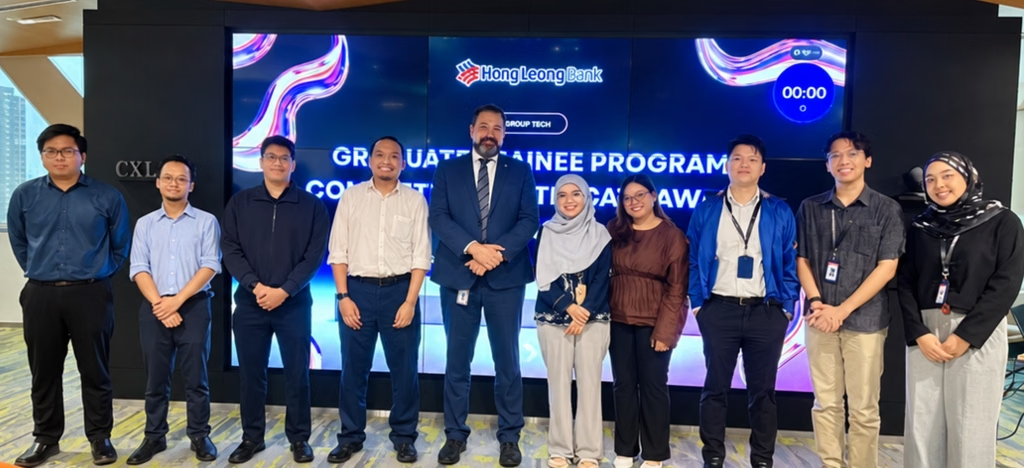
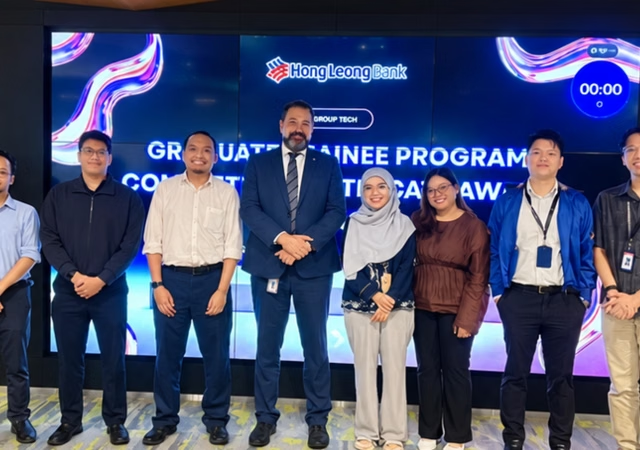
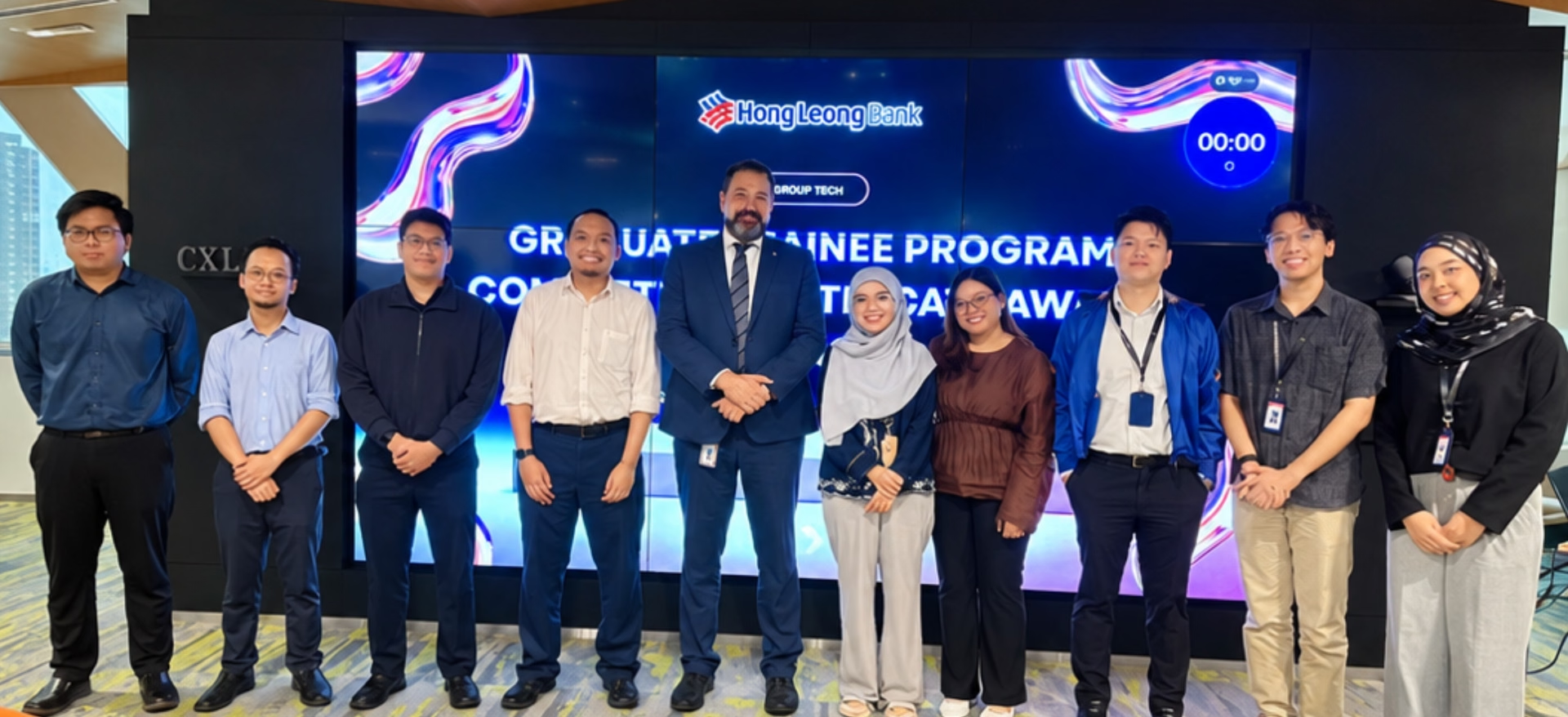
The recent graduating cohort proved their mettle by tackling complex, enterprise-level projects head-on. Drawing on diverse talent pipelines, including recruits from the GamudaAI initiative, these trainees made an immediate impact. They deployed Google ADK-powered artificial intelligence chatbots and UiPath robotic process automation tools to streamline workflows. They also optimised internal compliance by introducing automated IT Risk Dispensation e-Forms, modernised IT Service Management operations, and improved cloud infrastructure efficiency.
The success of this talent pipeline speaks for itself. All ten members of the graduating cohort have successfully transitioned into permanent roles across vital departments. These include IT Governance and Assurance, Application Support, IT Services and Operations, Security Management, the Innovation Center of Excellence, and the CEO Transformation Office. Meanwhile, the bank has already welcomed 10 new trainees into the program. This fresh wave of talent brings diverse academic backgrounds spanning Data Science, Computing, Cybersecurity, Information Security, Mathematics, and Engineering.
Innovation at Hong Leong Bank does not lie only with the specialised technology divisions alone. Through its AI Ignite Programme, Hong Leong Bank is actively fostering grassroots creativity throughout its divisions. This initiative invites staff members from all departments to submit practical use cases for AI. AI Champions from this programme are given access to the necessary resources for implementation and scale. This is also fostering technological advancements that develop organically from every corner of the business.
William Streitberg, the bank’s Chief Information and Technology Officer, highlights that this internal engineering focus is vital for maintaining market responsiveness. He notes that AI will not replace people, but it will replace people who refuse to use it. Building technology in-house grants the institution the freedom and control to build fast, fail fast, and learn fast. This dynamic turns every operational challenge into immediate institutional knowledge.
Winning Industry Recognition Through Cloud-Native Innovation
Investing heavily in human capital ultimately yields tangible engineering outcomes and industry recognition. This commitment recently culminated in a major victory at the Red Hat APAC Innovation Awards 2026 for Malaysia. Hong Leong Bank secured the top spot in the Virtualisation and Cloud-Native Development category.
To overcome legacy performance bottlenecks and scale critical online business applications, internal technology teams executed a major architectural overhaul. They successfully transitioned core applications from a rigid monolithic framework into a modern containerised environment. By utilising Red Hat OpenShift and Red Hat Application Foundations, alongside Red Hat OpenShift Virtualization, the bank unified virtual machines and containers onto a single cohesive platform.
The results of this modernisation effort were immediate and striking. Software deployment cycles plummeted from months down to weeks. The upgrade completely eliminated manual virtual machine patching for containerised workloads while allowing banking applications to scale dynamically during peak traffic spikes.