
This article is written based on an interview with Yasutaka Ihara, Director & Corporate Officer, Head of the Sales Management Department, TANAKA Precious Metal Technologies Co., Ltd.
For decades, the narrative surrounding Malaysia’s rise as a regional semiconductor powerhouse has been told through a lens of unbridled industrial expansion. We look back at decades of assembly, testing, and packaging dominance, and now, we watch as the nation commits at least RM25 billion under the National Semiconductor Strategy to pivot toward high-value front-end fabrication and advanced packaging. It’s an exciting, high-stakes chapter for our local tech ecosystem.
Yet, behind the glossy ribbon-cuttings and soaring export projections lies a sobering physical reality that we rarely talk about out loud. For years, the relentless pursuit of silicon supremacy has exacted a quiet toll on our environment and local communities. We have watched parts of the developing world—and at times, our own backyard—struggle with the fallout of mismanaged electronic waste and straining municipal capacities, while our manufacturing ecosystem remains perpetually vulnerable to distant geopolitical shocks and volatile global raw material markets.
Let’s be honest with ourselves: as we look toward a future where Malaysia aims to be both a front-end technology producer and carbon-neutral by 2050, the math simply doesn’t add up if we rely on the old playbook. You cannot scale an industry dependent on energy-intensive manufacturing and resource extraction without confronting the physical and environmental wall standing right in front of us. Economic growth, environmental health, and community well-being cannot continue to operate as opposing forces. If we truly believe that technology and sustainability can thrive cohesively—and at techENT, we firmly do—then our entire approach to the materials powering our devices needs a radical, systemic overhaul. We have to stop consuming and discarding; we have to start recycling, upcycling, and closing the loop.
The Material Paradox
When the conversation turns to moving up the semiconductor value chain, the oxygen in the room is usually consumed by discussions around talent development, capital injection, and state-of-the-art cleanroom infrastructure. But there is a silent bottleneck that rarely gets the airtime it deserves: raw materials.

Semiconductor manufacturing, including front-end processes, advanced packaging and testing, depends heavily on volatile, highly localised precious metals such as gold, silver, platinum, palladium, ruthenium, and rhodium, as well as specialised materials such as ruthenium-based precursors. Some of these metals, particularly platinum-group metals, have highly concentrated primary supply chains. To ensure a stable and sustainable supply of critical materials such as bonding wires, silver adhesive pastes, probe pin materials, and high-purity chemicals, the semiconductor ecosystem can benefit from strengthening circular resource flows through recycling and local material recovery.
Sourcing these purely from traditional mining exposes local players to severe supply chain choke points, trade conflicts, and unpredictable price swings. If your entire fabrication pipeline relies on importing raw bonding wires, silver adhesive pastes, probe pin materials and high-purity chemicals from thousands of miles away, your national semiconductor ambitions are effectively held hostage by external forces beyond your control.
This is why material sovereignty is no longer just a corporate buzzword; it is an economic imperative. True independence doesn’t mean simply consuming high-tech products or hosting assembly lines; it means owning the lifecycle of the materials that build them. Industry heavyweights like TANAKA—which boasts a 140-year history in precious metals and a three-decade manufacturing footprint in Penang— see the localisation of precious metal refining as a potential solution.
As Yasutaka Ihara, Director and Corporate Officer at TANAKA, aptly noted during our conversation, establishing domestic refining capabilities changes the game entirely:
“Having refining capabilities in Malaysia would allow us to recover and refine precious metals from industrial scrap generated by the semiconductor and electronics industries, as well as from e-waste, and return those metals to the supply chain. This would reduce the need to import and export precious metals and help establish a more circular precious-metal supply loop within Malaysia.”

Instead of constantly importing raw materials from overseas and exporting valuable industrial scrap right back out, closing the loop within Malaysia means keeping the entire material lifecycle inside our borders. This insulates local OSATs and upcoming fabrication facilities from sudden export bans, tariff swings, and geopolitical turbulence.
From Dumping Ground to Strategic Asset: The Promise of Urban Mining
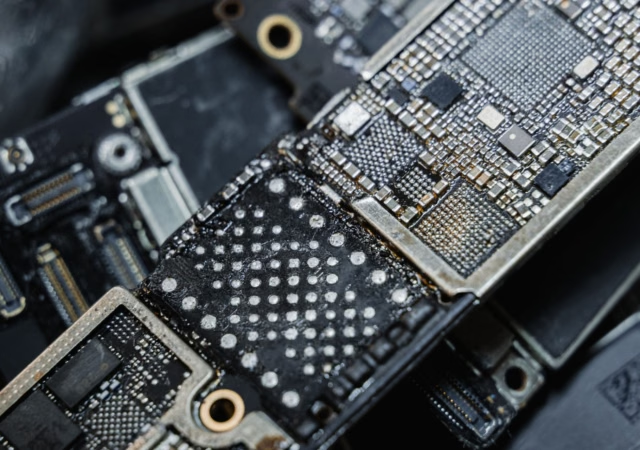
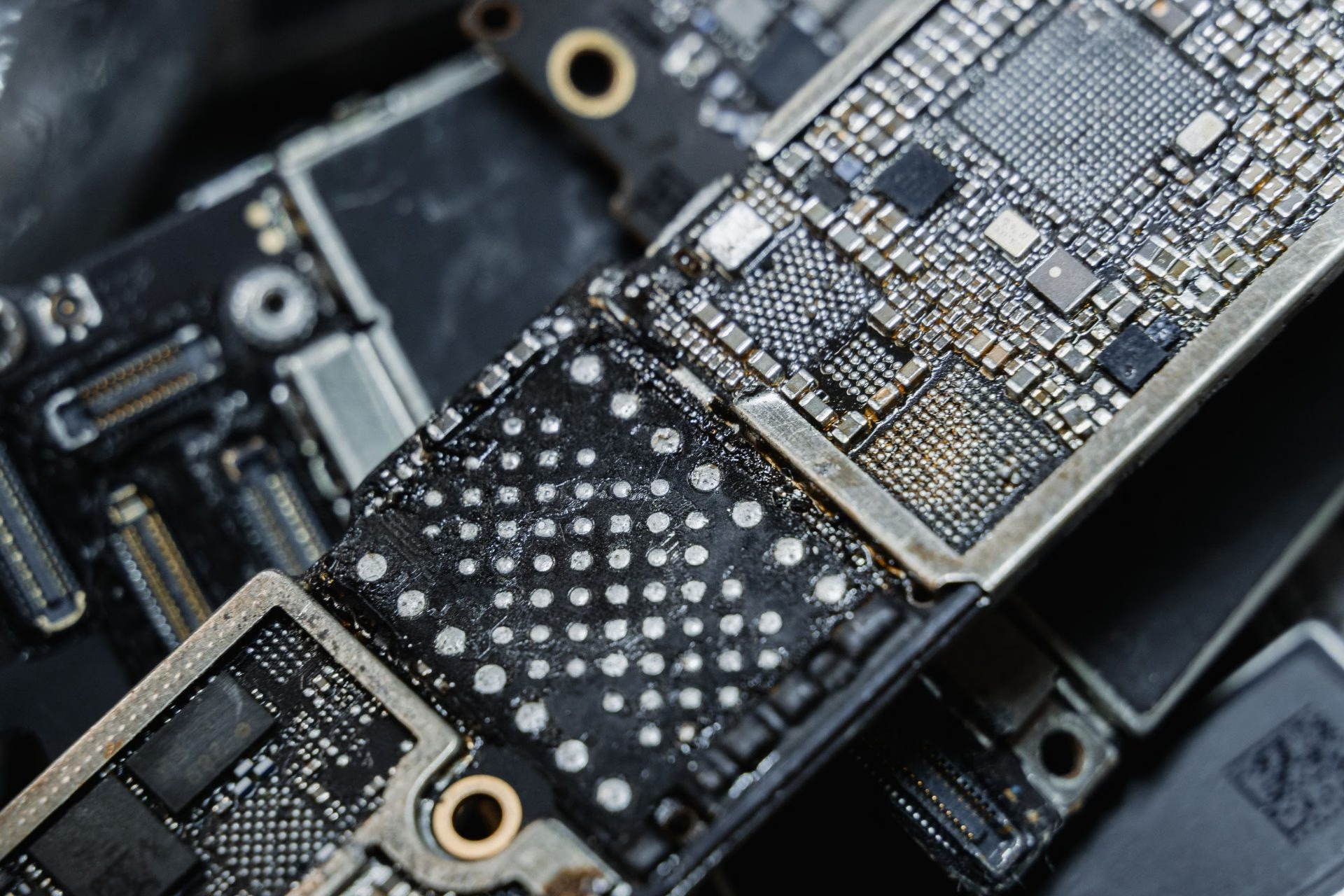
In recent years, Malaysia has frequently found itself in uncomfortable global headlines as the developed world’s dumping ground for low-quality e-waste and mismanaged rubbish. It’s a painful narrative that impacts local communities and burdens municipal authorities. But here is where we need to draw a sharp, uncompromising line: the industrial scrap and end-of-life electronic components generated by modern tech are not mere “rubbish.” They are a valuable, untapped resource repository.
Of course, skeptics often question whether harvested urban waste can ever match the exacting standards of commercial tech. But precision metallurgy has evolved. Whether recovered from spent automobile exhaust catalysts, discarded electronic circuit boards, or manufacturing production scrap, precious metals can be refined back to extreme purity levels. As Ihara-san explained when discussing industrial demands:
“The semiconductor industry requires exceptionally high levels of purity, often 4N or 5N—99.99% or 99.999%. Our refining and product manufacturing processes are designed to consistently meet these demanding standards, including when precious metals are derived from recycled materials.”
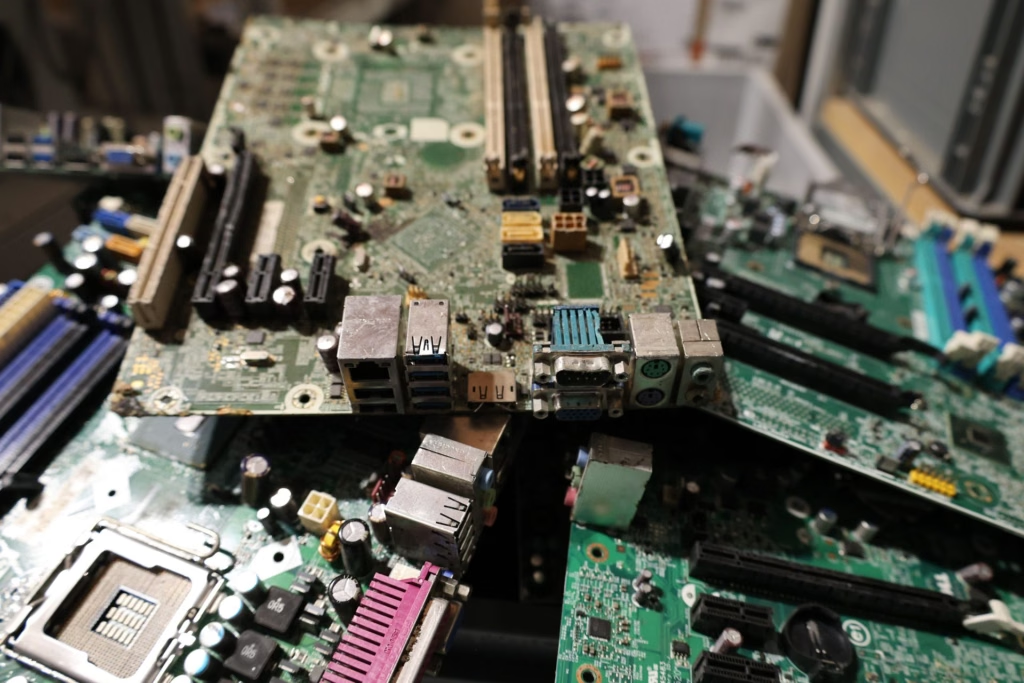
By building local ecosystems that partner with waste-management and recycling innovators, we open the door to recovering not just precious metals like gold and silver, but also copper, aluminium, and advanced plastics. Done right, this transforms our national narrative entirely. Malaysia stops being a passive dumping ground for foreign waste and instead evolves into a disciplined, high-purity resource recovery hub for Southeast Asia.
The Environmental Math We Can’t Ignore
You cannot talk about the future of tech without reckoning with its carbon footprint. Semiconductor manufacturing is notoriously resource-heavy, and traditional mining of precious metals is exceptionally destructive. Digging tonnes of earth to extract a fraction of an ounce of gold or platinum consumes immense energy, displaces ecosystems, and generates staggering greenhouse gas emissions.
However, the data tells a starkly different story when we turn our attention to recycling. According to industry lifecycle assessments, obtaining precious metals through urban mining and refining emits a fraction of the greenhouse gases produced by mining-derived ingots. As Ihara-san pointed out, the environmental advantage of secondary recovery is undeniable:
“Recovering precious metals through recycling generates far lower carbon emissions than mining them. That is precisely why we are introducing and championing precious metal recycling across the industry.”
The disparity is staggering: recycling-derived gold slashes carbon emissions by a staggering factor of over 200 compared to primary extraction, with similar dramatic reductions applying to platinum group metals. For a nation committed to achieving net-zero carbon emissions by 2050, integrating urban mining into our high-tech industrial master plan isn’t just an optional ESG checkbox or a marketing footnote. It is an operational necessity. We cannot preach a green future while quietly relying on the dirty, carbon-heavy extraction methods of the past.
What It Takes to Make It Work
Of course, moving from a linear “take-make-dispose” model to a closed-loop circular ecosystem is easier said than done. Bringing high-purity refining capabilities to Malaysian soil requires navigating distinct domestic hurdles, and the government has an active role to play here.
Chief among them is regulatory predictability. For a high-precision refining facility to invest millions into local infrastructure within the next couple of years, they require a stable, transparent policy environment. Sudden, unpredictable shifts can cripple operations overnight. As Ihara-san cautioned:
“When trading rules, including taxation, change frequently or without warning, it becomes very difficult to sustain operations. For a business built on continuous production and recycling, that kind of sudden change is simply not workable.”

We need streamlined trade frameworks that make it seamless to legally collect and process industrial scrap within the region without getting bogged down in bureaucratic red tape. Furthermore, we need a cultural shift in how society views waste—fostering public education and robust incentives so that ordinary citizens and corporate boardrooms alike see factory scrap and discarded electronics not as trash, but as valuable commodities waiting for a second life.
Malaysia’s Future Lies in Adopting Green Policies and Turning a Line into a Circle
TANAKA’s proposition and the broader push toward urban mining serve as a timely reminder that economic resilience and environmental stewardship are not competing forces. They are two sides of the same coin.
As Malaysia commits tens of billions of Ringgit to rewrite its economic destiny in the semiconductor space, we have a generational opportunity to do it right. We can choose to build a linear industry that consumes, pollutes, and discards, or we can choose to anchor circularity into the bedrock of our manufacturing future.
By embracing urban mining, securing material sovereignty through local refining, and relentlessly cutting down our carbon intensity, we prove something vital: technological advancement, environmental health, and community well-being can thrive cohesively. The technology and expertise already exist. The real question is whether local stakeholders, industry leaders, and policymakers have the foresight to build the regulatory bridge to meet them halfway.
This article is written based on an interview with Yasutaka Ihara, Director & Corporate Officer, Head of the Sales Management Department, TANAKA Precious Metal Technologies Co., Ltd.
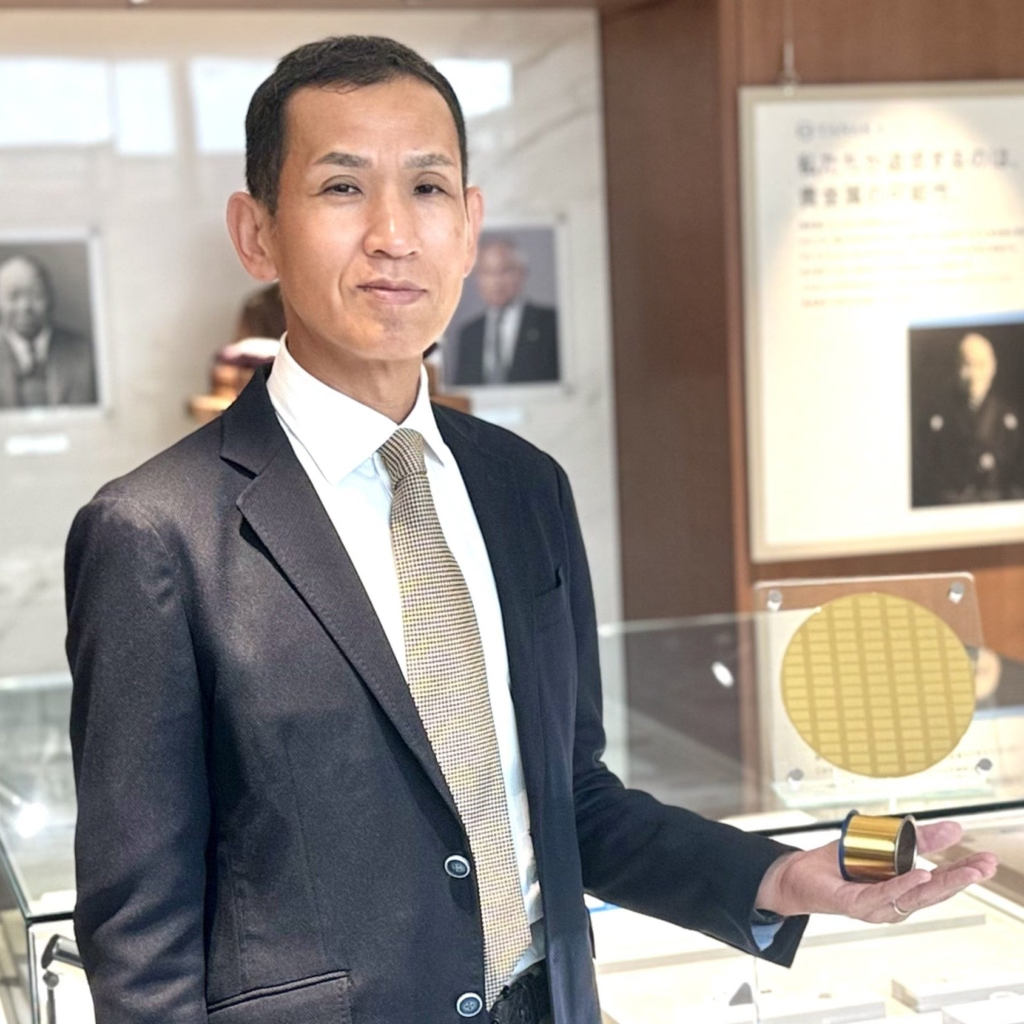
Yasutaka Ihara
Director & Corporate Officer, Head of the Sales Management Department, TANAKA Precious Metal Technologies Co., Ltd.
Yasutaka Ihara joined TANAKA Kikinzoku International in May 1998 and has been consistently engaged in overseas business. After being stationed in the United States, he was appointed Regional Head of the ASEAN, Europe, and America Supervisory Department and Director and Branch Manager of the Singapore Branch in July 2009. His main responsibilities included expanding sales and marketing of industrial precious metal products overseas and related operations, as well as establishing and managing overseas subsidiaries. He has a global perspective on both sales strategy and overseas subsidiary management.
In April 2013, he was appointed as the Regional Head of the China Regional Headquarters and Chairman of TANAKA Kikinzoku International (Shanghai) Co., Ltd., and became involved in markets outside Europe and the United States. He has since served as director of the branches in Singapore, Thailand, Europe, India, and South Korea. He has extensive knowledge of the development of industrial precious metal products and market trends in each area of the world.
In January 2025, he began serving as Director & Corporate Officer of TANAKA PRECIOUS METAL TECHNOLOGIES Co., Ltd. and Head of the Sales Management Department. He oversees sales strategies and marketing plans for both domestic and overseas markets.