

Let us be real for a moment: our smartphones have long evolved past being simple communication devices, and they are rapidly turning into proactive digital companions. If you want to understand exactly what that transition looks like over the next few years, major industry conferences often provide the clearest roadmap. Returning to the Boao Forum for Asia Annual Conference 2026 in Hainan Province as a strategic partner, vivo showcased a comprehensive look at how mobile computing is preparing for this massive shift. Rather than focusing on minor hardware tweaks, the presentation covered broader developments across 6G connectivity, Mixed Reality, and highly intelligent software, offering a solid glimpse into how hardware manufacturers are actively adapting to an AI-driven landscape.
Giving Artificial Intelligence a Pair of Eyes
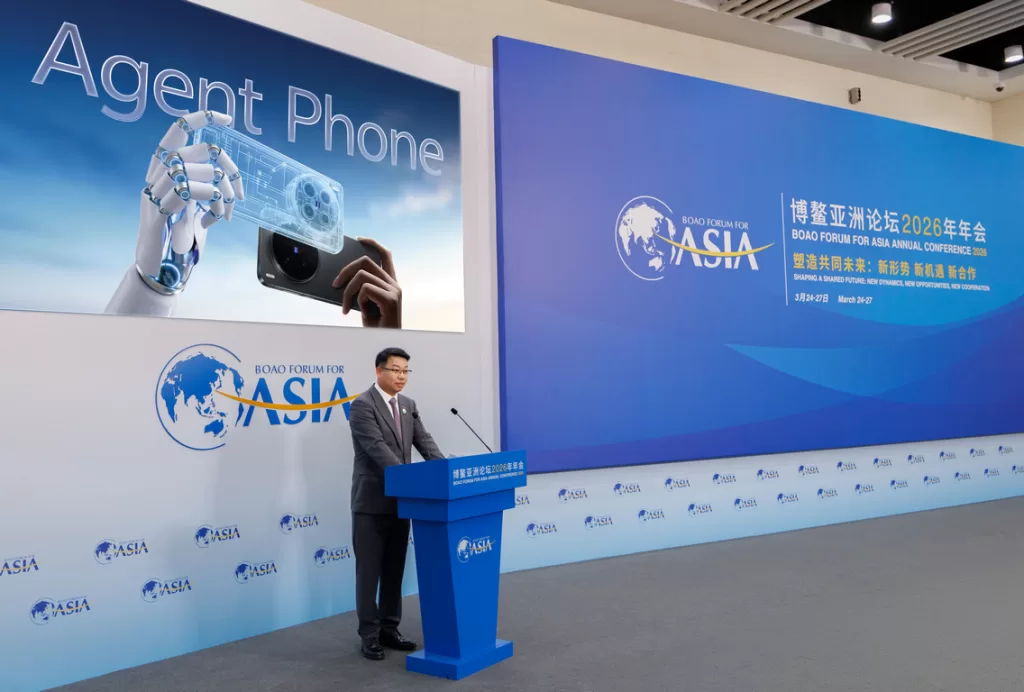
The most compelling takeaway from the forum discussions is a concept that heavily integrates artificial intelligence with advanced camera hardware. During a major keynote address, vivo President and Chief Operating Officer, Hu Baishan, broke down a strategic plan to build a perception system driven entirely by what the company calls “Imaging + AI.”
Think about the practical applications: as artificial intelligence becomes significantly smarter and more capable of handling complex, multi-step daily tasks, it desperately needs a reliable way to perceive the physical environment around it. In this emerging paradigm, advanced smartphone camera technology essentially serves as the “eyes” for the AI, allowing the software to safely and accurately navigate the real world. This fundamental shift in utility is expected to eventually transform our traditional handsets into what are being called agent phones. These are devices equipped with genuine perception and cognition, designed to proactively assist you in everyday scenarios by reading your environment, rather than just waiting in your pocket for manual input.
Hardware in the Real World
For those following the local technology market in Malaysia, these high-level corporate strategies are already materializing in everyday consumer hardware. The recent local launch of the vivo V70, which debuted just a few weeks before the forum, serves as a highly practical example of this exact hardware and software integration.
The device packages several high-end capabilities into a standard, accessible footprint. It utilizes a 50-megapixel ZEISS Super Telephoto Camera powered by a Sony IMX882 sensor, comfortably supporting up to 20x zoom. To ensure the physical lenses and the on-board AI software work seamlessly together, the phone relies heavily on intelligent scene photography modes like Magic Weather and Stage Mode. The internal hardware, including snappy LPDDR5X memory and fast UFS 4.1 storage running on the new OriginOS 6 interface, is specifically calibrated to handle these heavier computational imaging tasks without stuttering, while the 3D Ultrasonic Fingerprint Scanning 2.0 handles security.
Expanding Beyond the Pocket
Interestingly, the technological ambitions discussed at the Boao Forum extend well beyond the traditional smartphone ecosystem. During the event, executives outlined concrete plans to inject this foundational imaging capability into entirely new hardware categories, specifically targeting next-generation headsets and humanoid robotics.
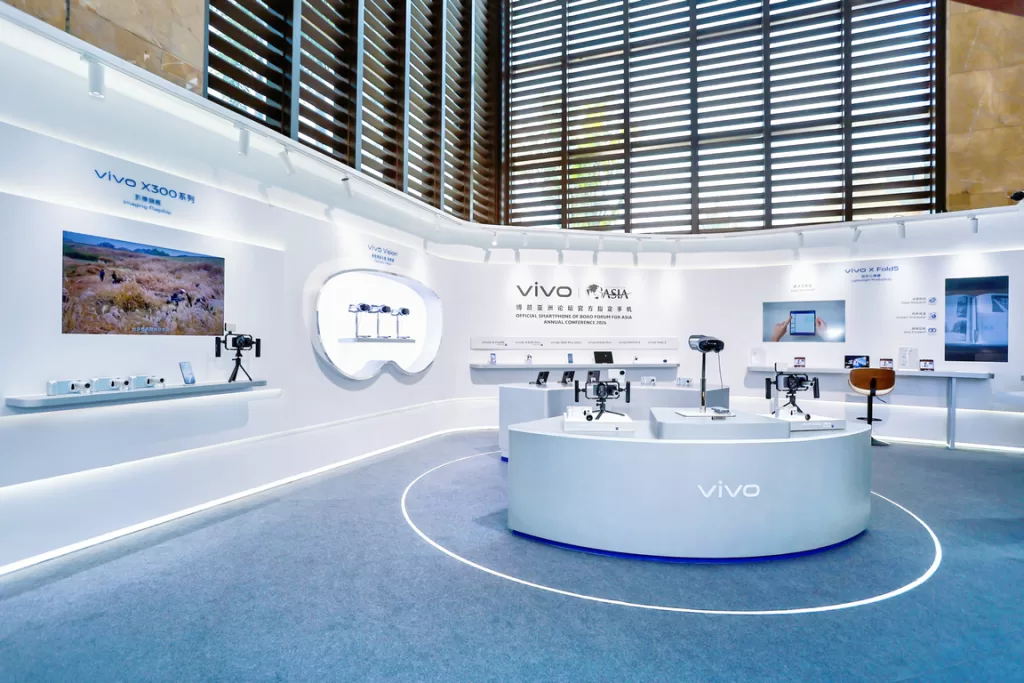
During dedicated sub-forums, leaders like the Head of the Robot Lab, Shao Hao, discussed the industry’s real-world progress in robotics, while Vice President of Technology Zhang Fei explored how smart imaging systems can empower massive, automated industrial operations. To cap off the event, the newly announced vivo X300 Ultra was officially designated as the smartphone of the conference. Ultimately, by treating the mobile camera as a critical sensory input for artificial intelligence rather than just a simple tool for snapping photos, the industry is laying the necessary groundwork for a much more connected and automated future.