

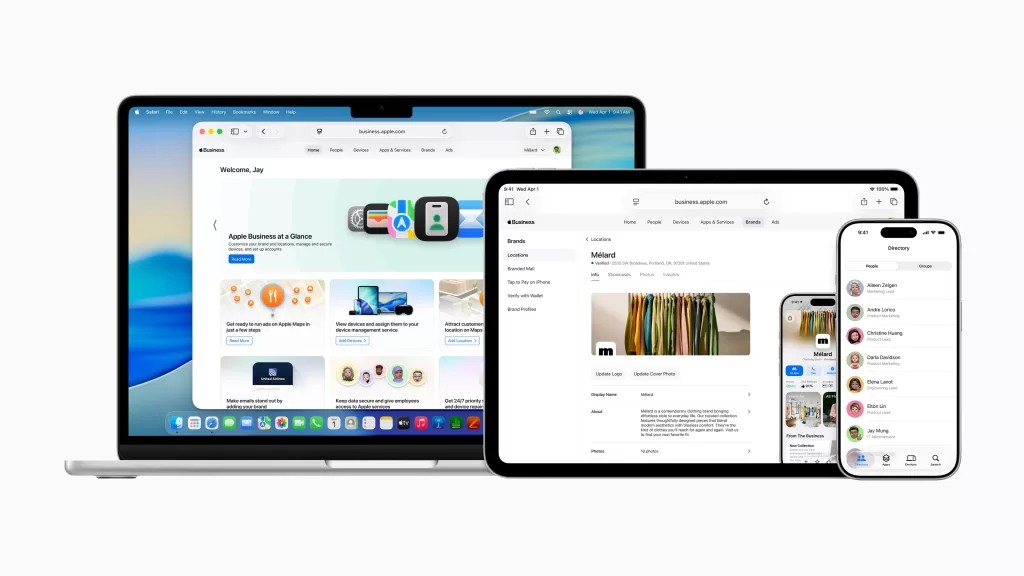
Managing a growing company’s technology infrastructure is often a highly disjointed experience. Business owners are usually forced to juggle multiple software subscriptions just to handle basic device management, email hosting, and online branding. Apple is actively looking to eliminate this administrative fragmentation with the introduction of Apple Business. Scheduled to launch globally on 14 April 2026, this new all-in-one platform consolidates the company’s previously scattered enterprise services into a single, cohesive dashboard designed to help organisations of all sizes manage their hardware and digital presence efficiently.
Streamlining Device Management
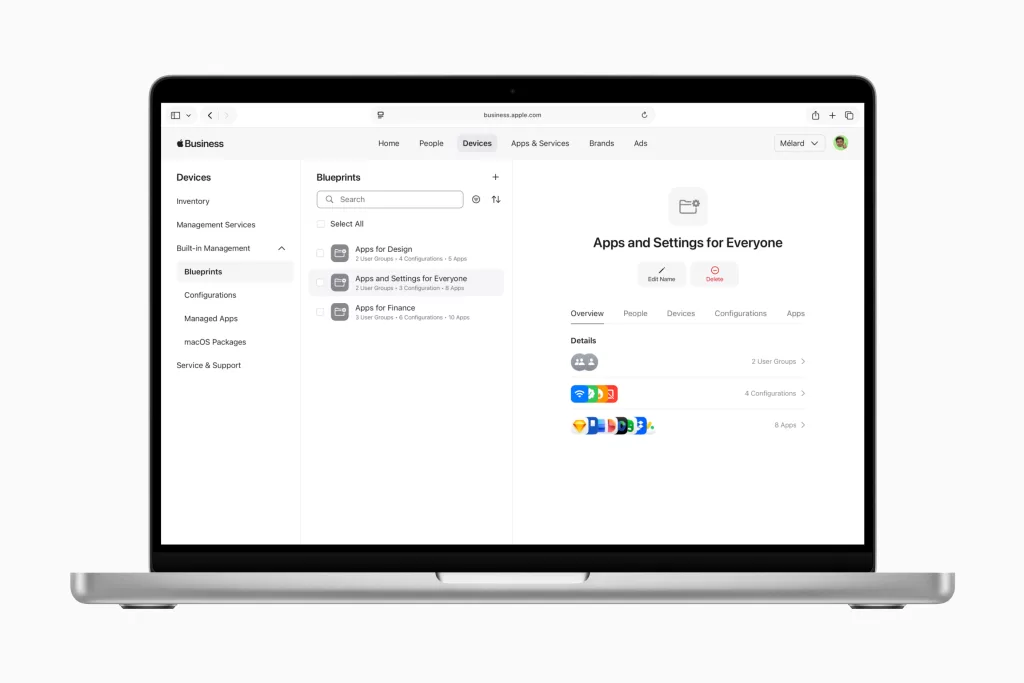
At its core, the new platform acts as a centralised command centre for mobile device management. Previously, deploying and securing company hardware required navigating the paid Apple Business Essentials tier. Now, Apple Business is absorbing those capabilities and making them significantly more accessible, particularly for smaller operations that lack a dedicated IT department. The standout feature in this ecosystem is Blueprints, a specialised deployment tool that allows administrators to preconfigure specific applications, network credentials, and security settings. When a new employee unboxes a company iPhone, iPad, or Mac, the hardware is immediately ready for work with zero manual setup required.
This localised control also fundamentally changes how employee data is handled daily. By utilising Managed Apple Accounts, the operating system enforces strict cryptographic separation between corporate data and personal files on the same device. This ensures that sensitive company information remains completely secure without ever compromising the user’s private data. To further simplify the onboarding process for new hires, the platform integrates directly with major identity service providers like Google Workspace and Microsoft Entra ID, allowing for automated account creation. Administrators also gain the ability to distribute necessary applications directly to specific teams and utilise a dedicated application programming interface to audit device usage across the entire organisation.
Unified Communication and Branding
Beyond hardware management, Apple is also taking aim at foundational office software. The platform introduces fully integrated business email, calendar, and directory services. Companies can either port over their existing custom domain name or purchase a completely new one directly through the interface to maintain a professional digital identity. The built-in directory and calendar delegation tools are specifically tailored to streamline internal scheduling and help employees connect effortlessly, bridging the gap between hardware management and daily operational communication.
Simultaneously, the platform absorbs the brand management tools previously housed under Apple Business Connect. This gives owners direct control over how their physical storefronts and digital services appear across the broader Apple ecosystem, including Maps, Wallet, Siri, and Safari. Businesses can easily customise rich place cards with high-resolution photos, updated operating hours, and promotional showcases to highlight seasonal deals. The dashboard also provides valuable location insights, showing exactly how potential customers are searching for and interacting with the brand’s profile in real time.
Pricing and Migration
Perhaps the most surprising aspect of this announcement is the new pricing structure. When Apple Business officially launches in over two hundred countries on 14 April 2026, it will be available entirely as a free service. This marks a massive shift for the company, as existing Apple Business Essentials customers will no longer be charged their standard monthly device management fees following the launch date.
Current users of Apple Business Manager and Apple Business Connect will see their existing data automatically migrated to the new unified platform without any manual intervention. However, there is a strict software requirement to utilise the full suite of tools. To access the new companion application alongside the integrated email and calendar features, employees will need to ensure their devices are updated to iOS 26, iPadOS 26, or macOS 26. By removing the financial barrier to entry and consolidating its enterprise tools into one accessible location, Apple is making a highly aggressive push to become the default operational backbone for modern businesses.