

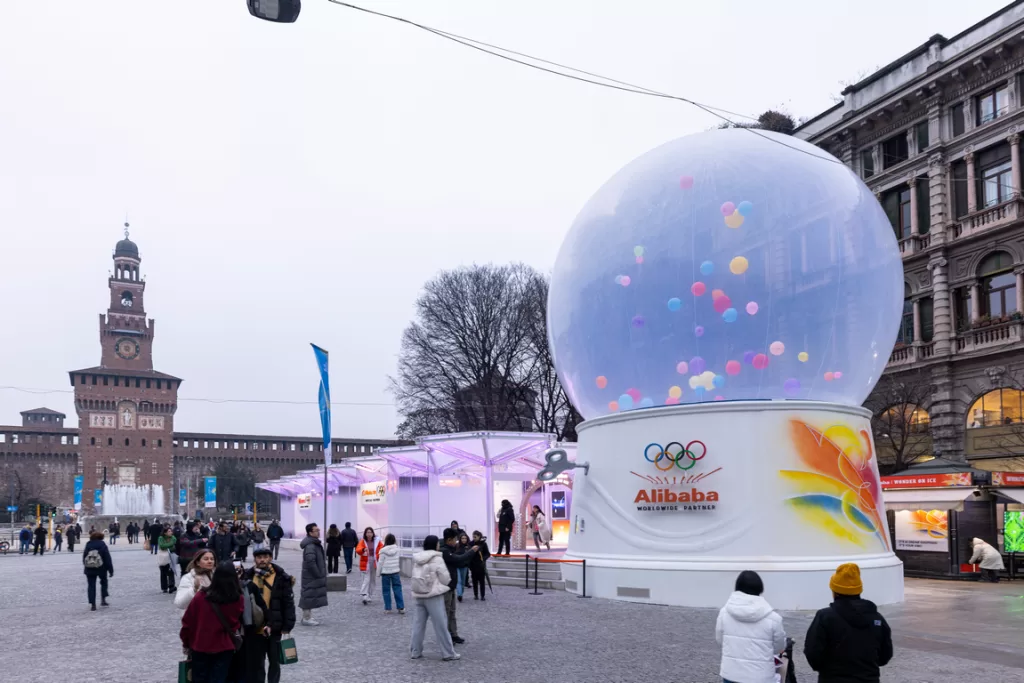
The Milano Cortina 2026 Winter Games are officially underway, and while the primary focus is naturally on the athletes and the snow, the technological underpinnings of the massive event are getting their own spotlight. Right in the heart of Milan, nestled against the historic 15th-century backdrop of the Sforza Castle, Alibaba Group has set up something quite different from your standard Olympic sponsor activation. Dubbed “Alibaba Wonder on Ice,” this interactive public installation serves as a live demonstration of how artificial intelligence and cloud computing are poised to fundamentally alter consumer engagement and the broader retail experience. It is a striking juxtaposition: turning one of Milan’s most recognisable and classic public spaces into a testing ground for next-generation digital commerce.
AI Meets Physical Retail
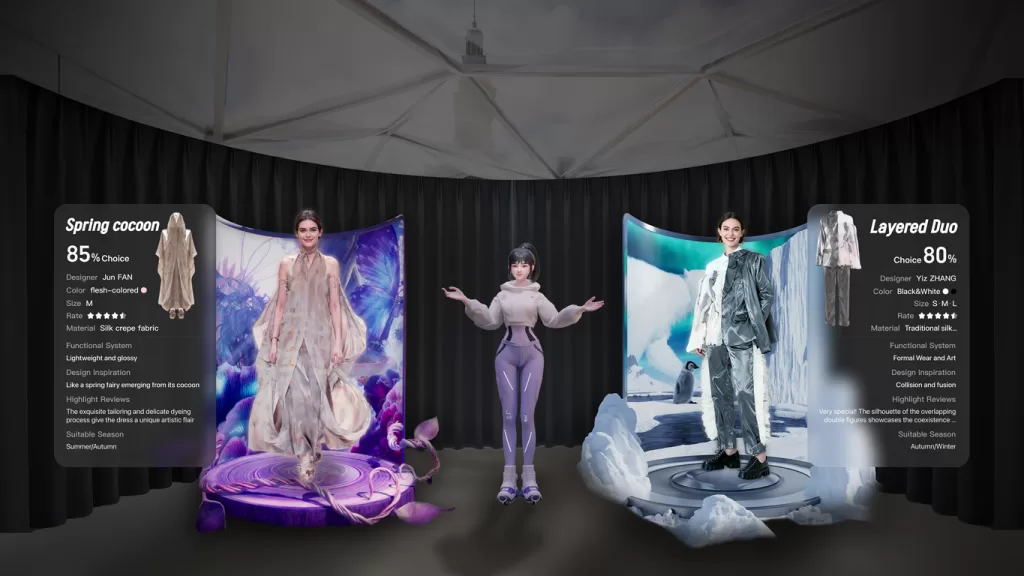
The core of this installation is an AI-guided journey designed to pull virtual retail into a physical space, bridging the gap between tapping a screen and walking through a physical store. When visitors enter the space, they aren’t greeted by static product catalogues or traditional display mannequins. Instead, they start the experience by sharing basic preferences—such as their favourite Milano Cortina 2026 winter sport—with a dedicated AI agent. Visitors can also choose to snap a quick photo to generate a real-time digital avatar of themselves, immediately placing their own likeness into the digital ecosystem.
From there, the AI steps into the role of a virtual stylist, interacting directly with the user to offer tailored recommendations for clothing, makeup, and fragrances. As the user makes selections, the environment and the recommendations adapt dynamically, showcasing how retail can evolve into an interactive, highly responsive loop. The entire journey culminates in a personalised, AI-generated video featuring the visitor’s digital avatar attending a virtual gala. Under the hood, this highly personalised interaction is powered by a hefty technology stack, relying on Alibaba Cloud’s global infrastructure, the Qwen3 series of large language and vision models, the Wan 2.2 image-to-video generation model, and immersive shopping solutions from Taobao Vision.
Environmentally Conscious Interactivity
Housing this technology is a 40-meter architectural setup split into two distinct elements. The first is the “Crystalised Skirt Building,” a sculptural structure inspired by the geometry of snowflakes and frost that physically contains the virtual retail experience. The second element is the “Snow Globe,” a spherical pavilion that operates as an interactive space during the day before transforming into a massive projection surface for AI-generated visuals in the evening. Notably, the entire setup was designed with sustainability in mind; it utilises recyclable materials and is built to leave absolutely no permanent footprint on the historic plaza.
The Snow Globe also serves as the canvas for another major component of the showcase: the results of the Alibaba Cloud AIGC Championship. This initiative, billed as the first Olympic fan engagement program of its kind, allowed fans globally to use Alibaba’s Wan video generation models to create original digital artwork. The generated art had to be inspired by four specific winter sports: alpine skiing, snowboarding, figure skating, and short track speed skating. A curated selection of the top 100 video artworks is now projected onto the surface of the globe. Interestingly, this collection marks the first time AI-generated artwork will be officially displayed by the Olympic Museum located in Lausanne, Switzerland. Furthermore, ten of these digital creators will be awarded tickets to attend the Olympic Winter Games in person.
Looking Beyond Connecting the Olympics Over the Air & Over WiFi

Ultimately, the installation serves as a physical manifesto for where sports technology and consumer tech are heading. Alibaba Group Chairman Joe Tsai noted that the integration of these AI tools marks a shift from a “Cloud Olympics” to an “Intelligent Olympics,” where AI is utilised to make smarter decisions and forge more meaningful connections. For the International Olympic Committee, this partnership represents a major step forward in cloud-based and AI-enabled operations, ensuring the Games remain efficient while setting a new benchmark for how future events will be broadcast and managed globally.
By combining the spectacle of the Olympics with accessible artificial intelligence, the Wonder on Ice experience invites people to go beyond merely spectating and actively participate in the digital ecosystem of the Games. For those in Milan, the installation is open to the public during the Olympic Winter Games from February 7 to 22, and will reopen for the Paralympic Winter Games from March 6 to 15.