

The data center industry is no longer just building bigger warehouses for servers; it is fundamentally redesigning the machine itself. According to the newly released Vertiv Frontiers report, the explosive demand for AI and high-performance computing (HPC) is driving a shift toward extreme densification and gigawatt-scale operations. The traditional methods of plugging AC power into a rack and blowing cold air on it are hitting their physical limits.
Vertiv’s 2026 outlook paints a picture of a sector in transition, moving from static infrastructure to dynamic, integrated systems. The report identifies four macro forces driving this change: extreme densification, gigawatt scaling at speed, the data centre acting as a single unit of compute, and silicon diversification.
These forces are shaping five specific technology trends that Vertiv predicts will define the immediate future of digital infrastructure.
1. The End of the AC Monopoly: Powering Up with High-Voltage DC
For decades, data centers have relied on a complex dance of converting AC power from the grid to DC power for the chip, often with multiple wasteful steps in between. Vertiv argues this model is becoming unsustainable. As AI workloads push rack densities beyond 300 kW—a staggering jump from traditional norms—standard 415 VAC or 480 VAC architectures are struggling with efficiency and space.
The solution is a pivot to higher voltage DC architectures, specifically 800 VDC. This isn’t just about efficiency; it’s a physics problem. Higher voltage DC reduces the current required, which means thinner cables, less copper, and fewer conversion stages. By centralising power conversion at the room level rather than the rack level, operators can squeeze more power into the same footprint—a critical requirement for the AI factories of tomorrow.
2. Distributed AI: Inference Moves to the Edge
While we associate AI with massive cloud clusters training Large Language Models (LLMs), the real volume game is in inference—the actual usage of those models. Vertiv predicts that inference capacity could eventually outweigh training capacity by several times.
Crucially, this won’t all happen in the public cloud. Highly regulated sectors like finance, healthcare, and defense face strict data residency and latency requirements. They cannot simply ship sensitive data to a centralised server. This is driving a trend toward Distributed AI, where enterprises build private or hybrid infrastructure. We are likely to see a surge in retrofitted on-premise facilities and modular deployments designed specifically to run proprietary models locally, ensuring data sovereignty while delivering the low latency required for real-time applications.
3. Energy Autonomy: The “Bring Your Own Power” Era
The grid is tapped out. In the US alone, data center energy consumption has surged from 1.9% of total generation in 2018 to an estimated 4.5% today, with projections hitting 6% by 2026. With utility connections often taking years to upgrade, data centers are forced to become their own power plants.
Vertiv identifies Energy Autonomy as a growing necessity. Operators are increasingly adopting “Bring Your Own Power” (BYOP) strategies, utilising on-site natural gas turbines, battery energy storage systems (BESS), and microgrids. This isn’t just for backup; it’s for primary load management. Looking further ahead, the industry is eyeing hydrogen fuel cells and Small Modular Reactors (SMRs) (nuclear) to decouple from grid constraints entirely.
4. Digital Twins: Simulating the Unit of Compute
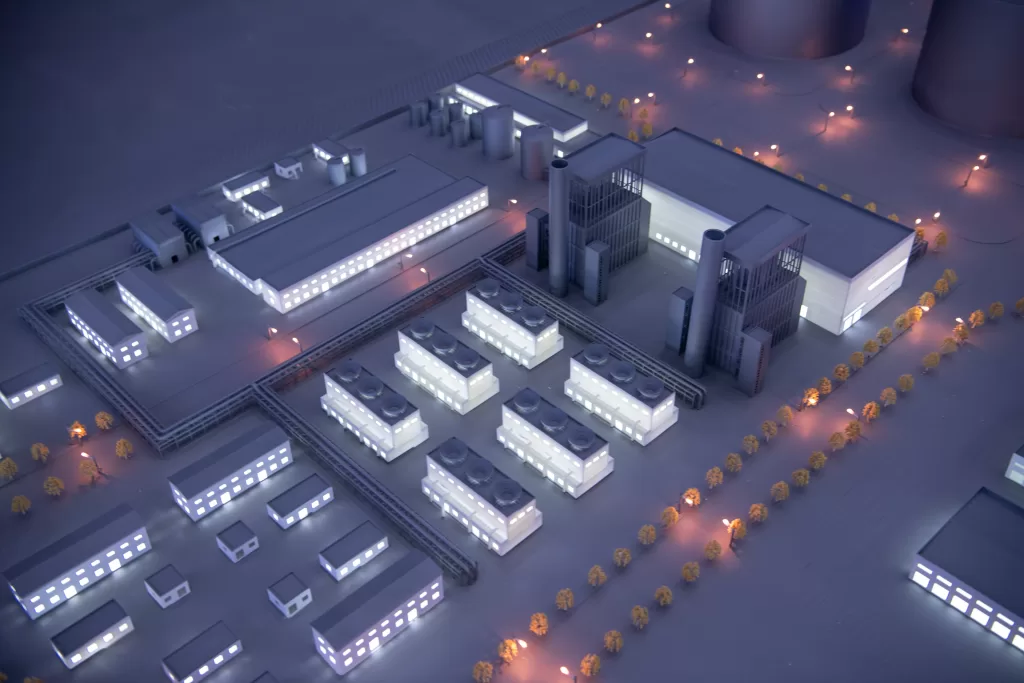
Speed is the enemy of perfection, but in the AI race, speed is non-negotiable. To deploy gigawatt-scale capacity faster without breaking things, the industry is turning to Digital Twin technology.
This goes beyond 3D blueprints. By using physics-based simulations (leveraging platforms like NVIDIA Omniverse), engineers can model the entire data centre—power, cooling, and IT load—as a single, integrated machine. This allows them to test failure scenarios and optimise cooling airflow virtually before pouring concrete. Vertiv suggests that adopting this “unit of compute” approach, where the facility and the hardware are designed in unison, could reduce “time-to-token” (the speed at which AI services go live) by up to 50%.
5. Adaptive Liquid Cooling: A “Circulatory System” for Servers
Liquid cooling is transitioning from a niche overclocking trick to a mandatory standard for AI chips. However, Vertiv sees it evolving into an adaptive, intelligent system.
Future liquid cooling loops will function like a biological circulatory system, using AI and embedded sensors to monitor coolant quality, pressure, and flow rates in real-time. This enables predictive maintenance, catching leaks or pump failures before they cause downtime. The report even hints at future innovations in smart materials, such as liquid metals that could offer self-healing capabilities for minor system faults.
General Purpose Data Centres Are Transitioning to Address AI’s Demand
The Vertiv Frontiers 2026 report makes one thing clear: the era of the general-purpose data center is fading. We are entering an age of specialized, high-density AI factories that generate their own power, circulate their own coolant, and are simulated in the digital world before they ever exist in the physical one. For enterprises and operators, the challenge is no longer just about buying capacity—it’s about engineering resilience into every layer of the stack.