

YouTube is rolling out a wave of updates that fundamentally change how we create, share, and consume content on the platform. From letting you generate an artificial intelligence clone of yourself to aggressively killing off a popular sharing feature, the video juggernaut is shaking things up. If you spend hours scrolling through Shorts or listening to long-form podcasts, here is exactly what you need to know about the latest changes.
Clone Yourself with AI Avatars for Shorts
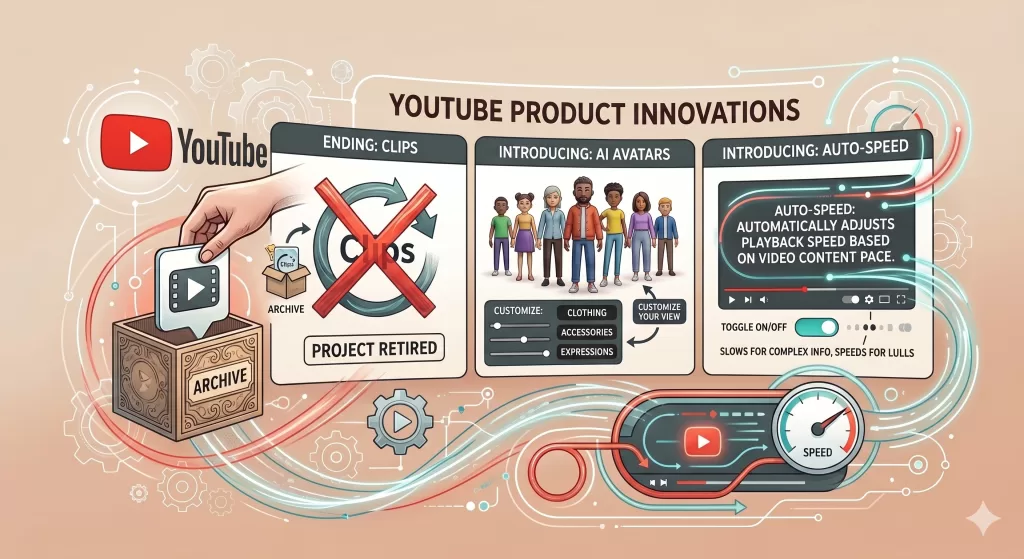
Google is bringing its generative AI capabilities directly to your channel. Powered by the Veo model, creators can now generate an AI avatar that looks and sounds exactly like them specifically for use in YouTube Shorts. To set it up, you need to be over the age of eighteen and have an active YouTube channel. The process involves capturing a secure “live selfie” video where you record your face and read a few lines to capture your likeness and voice.
Once registered, you simply type out a text prompt, and the AI will generate an eight-second video clip of your avatar delivering the content. These generated snippets can be joined together to form a longer video or dropped directly into an existing Short. Addressing obvious deepfake concerns, YouTube ensures you retain strict control over this digital clone. Other users cannot remix or use your avatar without your explicit permission, and you can request YouTube to delete the avatar data at any time. To maintain platform hygiene, Google will also automatically delete any avatar that goes unused for three years.
The Death of Video Clips and a Lucrative Side Hustle
While creators are getting powerful new tools, everyday viewers are losing a major one. YouTube is officially removing the ability for regular users to create Clips from existing videos. Previously, anyone could snip out a smaller section—up to sixty seconds in length—and reshare it as a new video with a custom description. This feature actually spawned a massive side hustle ecosystem, with microtask platforms like Whop Clipping paying users upwards of $1,000 a month to post promotional clips to personal accounts.
YouTube noted that the availability of advanced third-party clipping tools made the native feature redundant, and removing it helps limit the unauthorized generation of creator content. Moving forward, only the original creators will be able to generate Clips of their own videos through YouTube Studio, and the platform plans to add an auto-generate option directly from Shorts later this year. For regular users who just want to share a specific moment with a friend, YouTube is bringing the “Share at Timestamp” feature back to its mobile apps. This allows you to easily link directly to an exact second in a video without manually editing the URL.
Premium Features to Stop You From Wasting Time
For heavy consumers, YouTube is testing two experimental quality-of-life features aimed at Premium subscribers who use the platform like a podcast app while doing chores or walking the dog. The first is Auto-speed, which actively monitors specific English-language videos and automatically fast-forwards through dead air—like long visual pauses or someone simply stirring a pot—and instantly drops back to normal speed the second speech or anything of interest occurs.
The second feature, On-The-Go controls, caters to users who are physically moving. If your unlocked phone detects continuous motion for more than sixty seconds, it triggers a prompt to switch to a simplified interface. This layout replaces the standard player with massive, easy-to-tap playback buttons that take up a huge portion of the screen, removing the need to precisely tap tiny icons while walking. Both of these experiments are currently available to test, but time is running out, as they are scheduled to leave the experimental phase on April 27.