

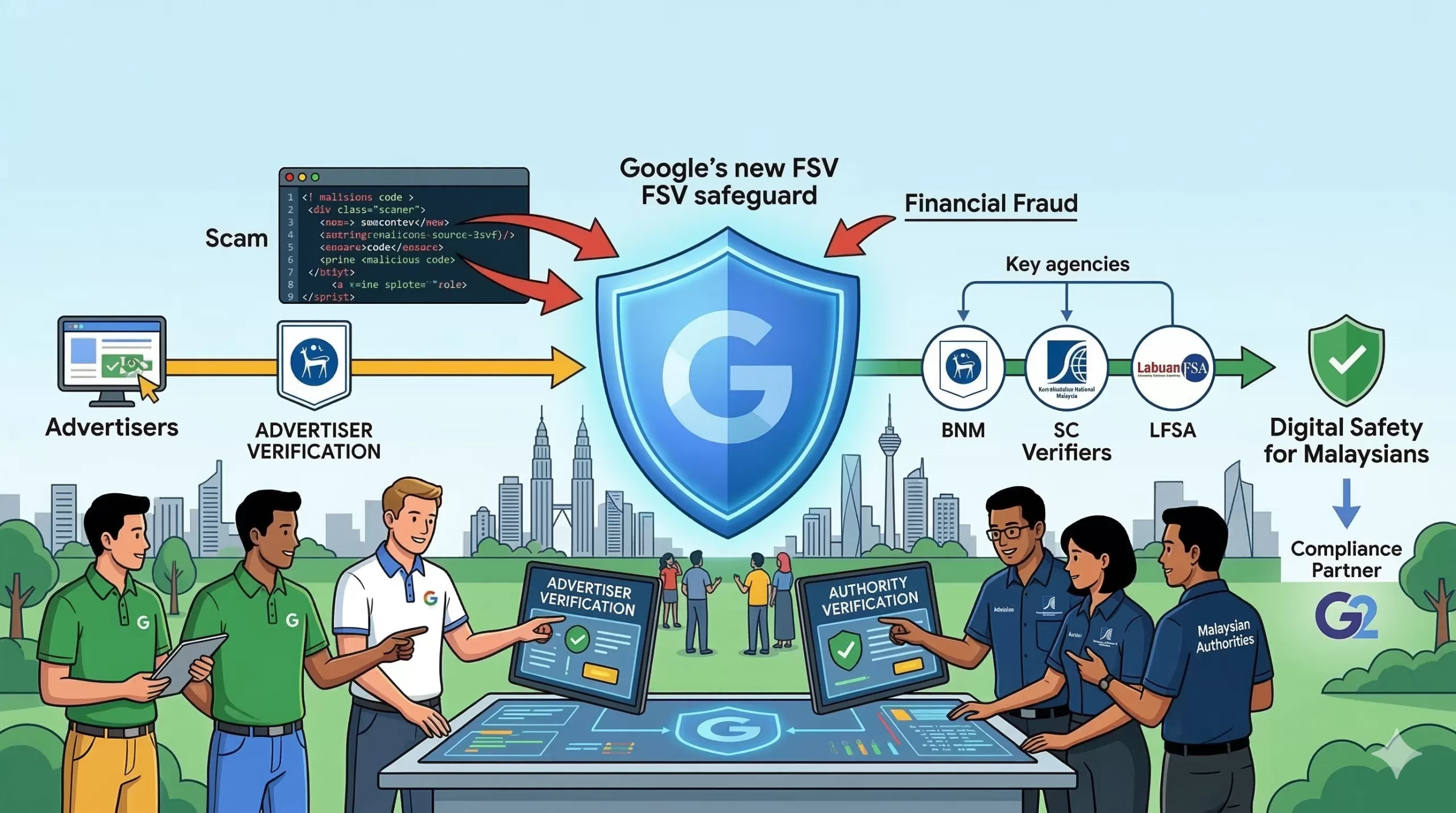
We spend a lot of time talking about hardware and software here on techENT. However, sometimes the most important updates are the ones happening in the background. Financial scams are a huge problem right now. In fact, the numbers are staggering. In 2025 alone, Malaysians lost RM2.77 billion to financial fraud, according to the Ministry of Home Affairs. It’s a critical issue that needs a structural solution. That’s exactly what Google is looking to address with their latest announcement. The company is bringing its Financial Services Verification to Malaysia. But what exactly does this mean for the average user and the advertisers trying to reach them?
Closing the Loopholes
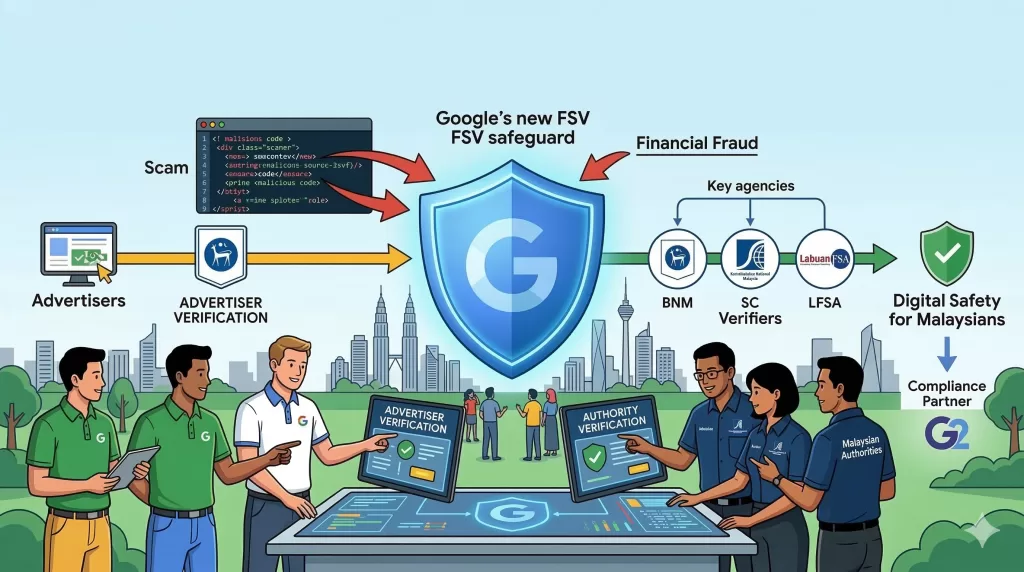
When it comes to online safety, scammers are constantly evolving their tactics to evade detection. Google’s new Financial Services Verification, or FSV, introduces a unique, structural layer of defence against these bad actors. It essentially adds a new layer of security to their existing financial products and services policy. The premise is simple but effective. It ensures that only legitimate, licensed financial service providers can reach users in Malaysia through Google’s advertising platforms.
This is done by enforcing local licensing standards right at the point of advertising. By doing this, Google is effectively closing the loopholes that bad actors exploit to reach Malaysian citizens. It is a system that is already available in other countries like the UK, Singapore, and Australia, and it directly supports the government’s fight against financial fraud.
The Verification Process
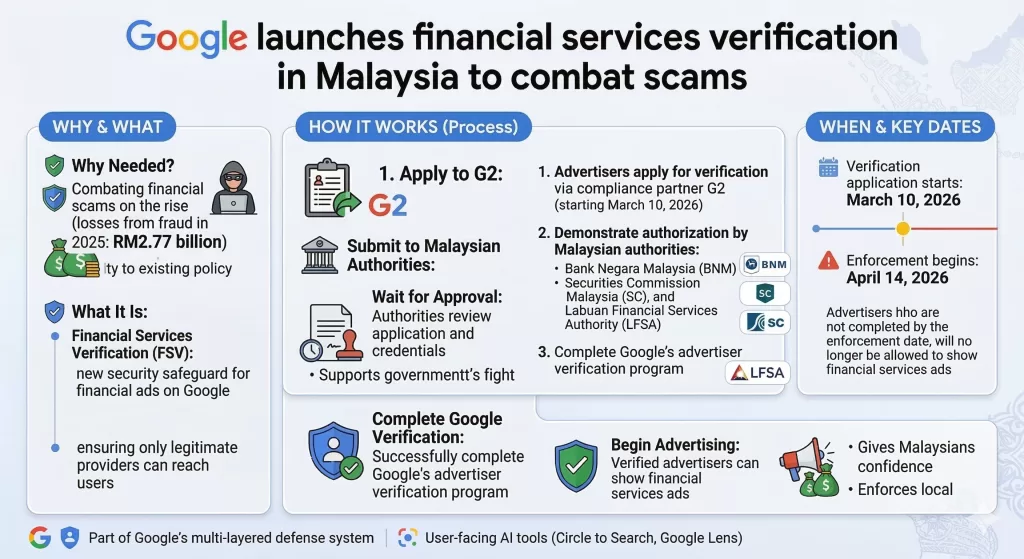
So, how does this actually work for the advertisers? Starting from 14 April 2026, select advertisers of financial products and services will be strictly required to complete a verification process before they can even run ads on Google’s platforms. This isn’t just a simple checkbox, either. Advertisers will need to demonstrate that they are authorised by the relevant Malaysian authorities. This includes bodies like Bank Negara Malaysia (BNM), the Securities Commission Malaysia (SC), and the Labuan Financial Services Authority (LFSA). In addition to this, they must also successfully complete Google’s own advertiser verification program.
The timeline is pretty tight. Advertisers can already initiate the process themselves and apply for verification through Google’s compliance partner, G2, starting 10 March 2026. Those who fail to successfully complete this new verification process by the 14 April 2026 deadline will no longer be allowed to show financial services ads. This sweeping rule applies to both direct financial service advertisers and non-financial services advertisers who are targeting users seeking financial services.
A Whole-of-Ecosystem Approach
To be very honest, this is a welcome addition to the digital landscape in Malaysia. Tackling digital fraud requires a whole-of-ecosystem approach where technology platforms, regulators, and the public all play a role. Abdul Karim Fakir Ali, Managing Director of MCMC, noted that verifying the legitimacy of financial advertisers is essential to ensuring a safe and trusted digital environment for all Malaysians. Ben King, Country Managing Director of Google Malaysia, echoed this, stating that partnering with authorities to enforce these stricter checks keeps us one step ahead of bad actors.
The FSV strengthens Google’s multi-layered defence system, which already includes policies around Advertiser Identity Verification and Limited Ad Serving for high-risk categories. When you pair these backend defences with user-facing AI tools like Circle to Search and Google Lens, which help detect potential scams in real-time, it creates a much safer ecosystem overall.
A Necessary Refinement for User Safety
Ultimately, Google’s Financial Services Verification is an exercise in balancing accessibility with security. It puts the onus on advertisers to prove their legitimacy before they can target users with financial products. While it may mean a few extra hoops for legitimate businesses to jump through, the long-term benefits for the daily user are undeniable. Giving Malaysians greater confidence when engaging with financial services online is a leap in the right direction. It’s a necessary refinement of how we interact with online ads, and it is definitely worth the effort.