

As Telekom Malaysia (TM) marks its 80th anniversary this year, the company is actively proving it is no longer just the legacy telecommunications provider that laid the nation’s first copper wires. Its fiscal year 2025 results paint a picture of a utility provider shedding its traditional skin to become a foundational player in the artificial intelligence economy. The numbers are steady, but digging into the specific growth areas reveals a company shifting its weight from merely providing basic internet to hosting the high-performance computing workloads of tomorrow.
The Financial Baseline and Consumer Ecosystem
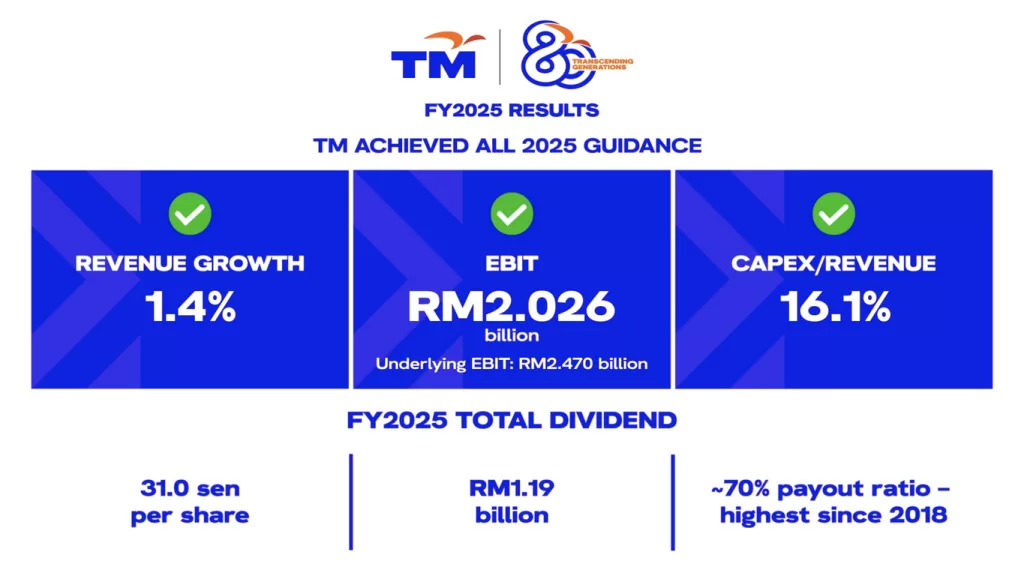
For the financial year ended December 31, 2025, TM recorded a 1.4% year-on-year revenue growth. This might sound modest, but momentum picked up significantly towards the end of the year, with fourth-quarter revenue jumping 6.8% to RM3.26 billion compared to the same period last year. The group’s Profit After Tax and Non-Controlling Interests (PATAMI) stood at RM1.71 billion. Notably, when adjusting for non-recurring items like foreign exchange movements and a significant wave of employee voluntary separation requests, the core PATAMI for the final quarter actually surged by 72.8%.
This financial stability is directly tethered to the everyday consumer experience. Under its Business to Consumer segment, TM is pushing hard to be more than just the router in your living room. The company has leaned heavily into convergence, bundling its services into Quad-Play campaigns that feature comprehensive Smart Home solutions and enhanced Unifi TV offerings. For TM, these initiatives translate directly to stronger Average Revenue Per User and an improved customer value mix. It is a strategic lock-in; the more digital footprints a household leaves within the TM ecosystem, the stronger the financial return.
Empowering Enterprise Digitalisation
Bridging the gap between the everyday consumer and massive global tech companies is TM’s Business to Business segment, led by TM One. Maintaining encouraging momentum throughout the year, this arm is tasked with accelerating digitalisation across the enterprise and government sectors.
Practically speaking, this means equipping local businesses with the tools they need to modernise, specifically through advancements in cloud computing, cybersecurity, smart services, and broader ICT solutions. By acting as the digital enabler for nationwide transformation initiatives, TM effectively entrenches itself as an indispensable operational partner for Malaysian enterprises.
Hyperscalers and the Submarine Pivot
However, the most critical evolution of TM’s business model is happening far away from residential living rooms and local corporate offices. The Carrier-to-Carrier segment, spearheaded by TM Global, is rapidly expanding the company’s network of submarine cable systems and open cable landing stations.
This infrastructure is not just about storing traditional data or routing basic internet traffic anymore. Driven by international data demand, TM is aggressively positioning Malaysia as a regional digital hub. The practical implication here is a massive pivot toward high-performance computing infrastructure. To meet the specific demands of hyperscalers, TM is building AI-ready, green data centres and has introduced GPU-as-a-Service. By offering graphical processing power as a service locally, TM is laying the physical and digital groundwork required to support the next generation of cloud and artificial intelligence applications in the region.
Streamlining for the Next Decade
To fund this pivot toward becoming a digital powerhouse by 2030, TM is streamlining its internal machinery. During the year, the group accommodated a significant number of voluntary separation requests from employees seeking early retirement or career transitions. This mutual transition package allows the company to progressively align its workforce with its future digitalisation priorities, essentially trading legacy operational overhead for agility.
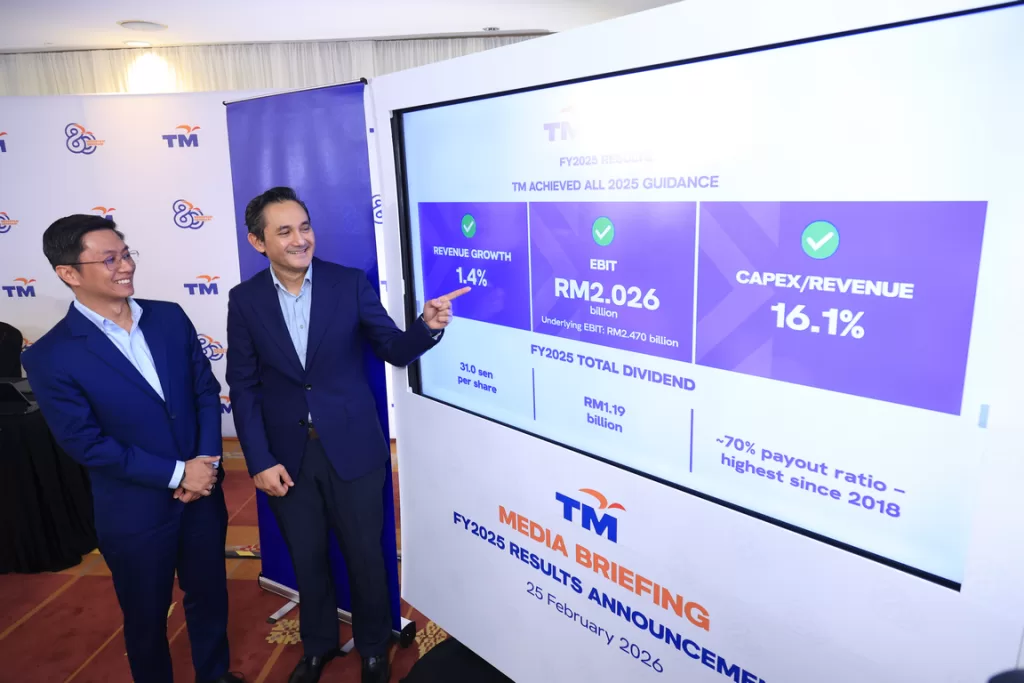
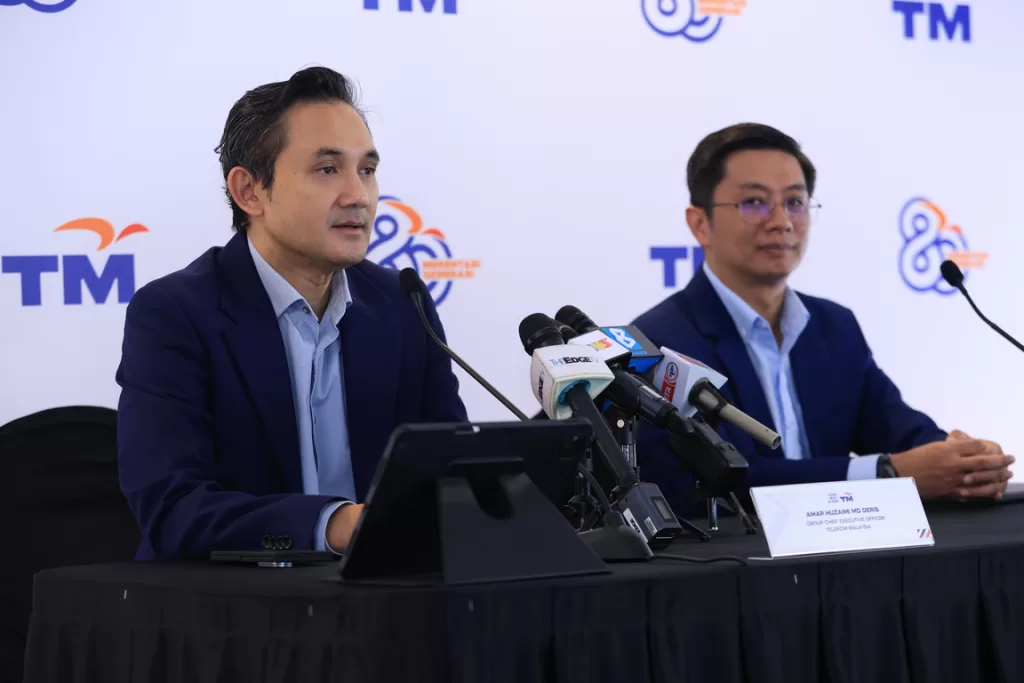
For shareholders, this transition phase is proving lucrative. TM declared a total dividend of 31.0 sen per share for the fiscal year, which translates to a payout of approximately RM1.19 billion. This represents about 70% of the reported PATAMI, marking the highest payout ratio the company has distributed since 2018. Group Chief Executive Officer Amar Huzaimi Md Deris summarised the year as a demonstration of the company’s ability to balance the evolving connectivity needs of customers with the demand for sustainable returns.
Ultimately, as TM celebrates eight decades of operations, its 2025 report card shows a telecom giant that knows the era of simply providing a basic connection is over. By securing the home with converged services and actively building the AI-ready data infrastructure required by hyperscalers, the group is laying down the tracks for its next 80 years of relevance.