


For the better part of a decade, the narrative of Southeast Asia’s digital economy has been one of explosive, unbridled growth. It was a land grab—a race to bring millions of users online, often at the expense of the bottom line. But if the latest e-Conomy SEA 2025 report by Google, Temasek, and Bain & Company makes one thing clear, it’s that the “growth at all costs” era is officially over. We have entered a new phase: the era of profitability and the dawn of the “AI Reality.”
The headline numbers are staggering, but they tell a different story than in years past. The region’s digital economy is on track to surpass $300 billion in Gross Merchandise Value (GMV) by 2025. More importantly, revenue is forecast to hit $135 billion, representing an 11.2x increase over the last decade. This isn’t just about moving money around anymore; it’s about making money. Platforms that were once burning cash to acquire users are now optimising logistics, raising take rates, and effectively monetising their user bases.
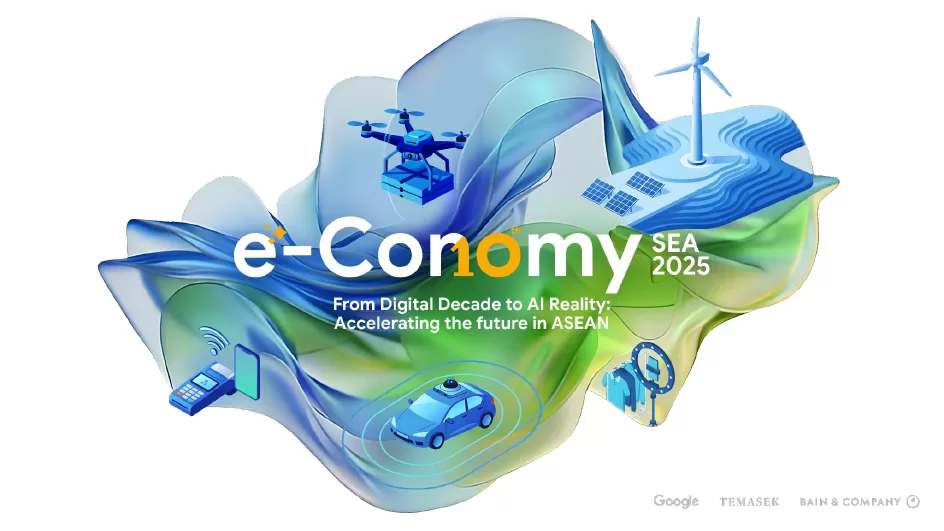
But as the dust settles on the ecommerce and ride-hailing wars, a new engine is being installed: Artificial Intelligence. This isn’t just marketing fluff. The report, titled “From Digital Decade to AI Reality,” outlines a structural shift where AI is moving from a novelty to a necessity, driving efficiency in data centres and reshaping consumer discovery.
SEA’s Next Step is AI Centred Driven by Investment into Infrastructure, Building AI Trust, and Deploying AI Agents
We often talk about AI in the abstract, but in Southeast Asia, it is becoming a physical and operational reality. The region is rapidly positioning itself as a global AI infrastructure hub. Data centre capacity is set to grow by 1.8x, outpacing the rest of the Asia-Pacific region. This isn’t happening by accident; it is a calculated move backed by governments and hyper-scalers to capitalise on the region’s robust connectivity and strategic location.
However, the adoption curve isn’t just about hardware. It is about trust. The report highlights a fascinating tension: while Southeast Asian consumers are among the most enthusiastic adopters of AI for daily tasks—spending 1.3x more time on social media than the global average—they remain cautious about trusting AI with high-stakes decisions like financial planning or complex healthcare advice.
The next frontier identified in the report is “Agentic AI”. They define this as systems that don’t just answer questions but take action, such as booking travel or managing payments. For this to work, we need a level of interoperability and digital identity verification that the region is only just beginning to build. The report suggests that for AI to truly scale, it needs to move from being a “smart assistant” to a “trusted agent,” a leap that will require transparent governance and robust security frameworks.
Malaysia is Driving IPO and Infrastructure Growth, Underscored by the Nation’s Financial Maturity
While often overshadowed by the sheer scale of Indonesia or the financial maturity of Singapore, Malaysia has quietly emerged as the region’s capital market leader. The report highlights that Malaysia contributed roughly half of the region’s total IPO listings in the first half of 2025. While global markets fluctuated, Malaysia provided a steady exit pathway for companies, signalling a maturing ecosystem that can sustain its own liquidity.

It’s not just about exits; it’s about foundations. Malaysia is rapidly becoming the engine room for the region’s AI ambitions. Data centre capacity in the country surged to 690 MW in the first half of 2025, a massive leap from 120 MW in 2024. With plans to further increase capacity by 350%, Malaysia is positioning itself as a critical node in the global cloud infrastructure network.
Furthermore, the consumer appetite for AI in Malaysia is notably aggressive. The report notes that Malaysians display the greatest appetite in the region for AI-powered decision-making. This willingness to adopt new tech is mirrored in the financial sector, where the launch of two new digital banks this year brings the total to five, expanding access and driving competition through distinct value propositions like Islamic finance.
Indonesia Stabilises with “Shoppertainment” and Game Downloads Taking Centrestage
As the region’s largest digital economy, Indonesia remains the bellwether for Southeast Asia. The country’s digital economy is projected to hit approximately $100 billion GMV in 2025. What’s driving this isn’t just raw population size, but a fundamental shift in how Indonesians shop.

Video commerce has become the primary growth engine. It’s no longer just a subset of ecommerce; for many Indonesians, it is ecommerce. The report notes that video commerce now accounts for roughly 25% of total ecommerce GMV in the region, and Indonesia is leading this charge. The “shoppertainment” model, where content and commerce blend seamlessly. This has unlocked a massive volume of lower-value, high-frequency transactions.
Furthermore, Indonesia remains the undisputed gaming capital of the region, accounting for roughly 40% of game downloads. While the market faced headwinds from global economic pressures, the resilience of its domestic consumption and the rapid adoption of digital financial services (DFS) continue to buoy the economy. The key takeaway here is stability: Indonesia has transitioned from a volatile high-growth market to a more mature, predictable digital ecosystem.
Singapore Drives Regional Trend of Driving Value Over Volume with Mature Digitisation
While Indonesia provides the scale, Singapore provides the sophistication. The report positions Singapore not just as a financial centre, but as the region’s undisputed AI hub. The city-state attracted $1.31 billion in private funding for AI in the first half of 2025 alone, capturing more than half of the total AI investment for the entire ASEAN-10 region.

Singapore’s digital economy is projected to reach $29 billion GMV by 2025. But the GMV number belies the true value of its ecosystem. The depth of Singapore’s Digital Financial Services (DFS) drives the growth and scale of its market. Singapore has reached a level of maturity where digital banks are no longer just fighting for deposits but are carving out sustainable niches in SME banking and micro-consumer credit.
The country is also leveraging its status to drive high-value tourism. By focusing on premium experiences from world-class entertainment events to high-end gaming. Singapore has managed to boost visitor expenditure to record highs, even as visitor numbers stabilise. It is a strategy of “value over volume,” mirroring the broader shift in the region’s digital economy.
Vietnam Matures as Digital IDs and Cashless QR Payments Become Mainstream
Vietnam continues to be one of the most dynamic stories in the report. Projected to reach $39 billion GMV in 2025, Vietnam’s growth is fueled by a potent mix of private sector dynamism and government-led digital infrastructure.
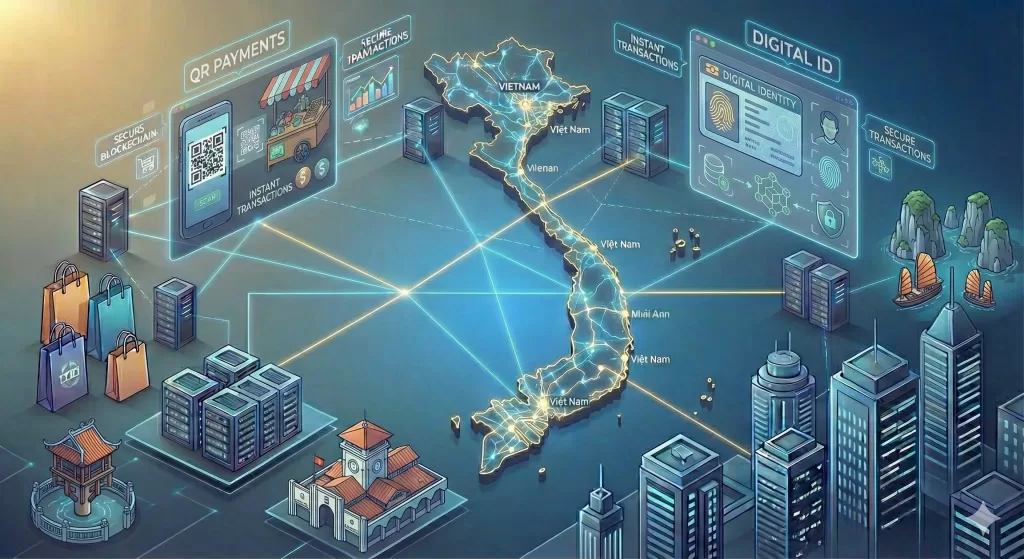
The standout metric for Vietnam is its relationship with AI. Vietnamese users rank first in Southeast Asia for AI engagement and trust. They aren’t just playing with chatbots; they are actively integrating AI into their daily workflows and are remarkably willing (96%) to share data for personalised experiences. This openness provides a fertile testing ground for AI-native applications.
On the ground, the government’s push for digital identity and cashless payments is paying off. The rollout of electronic IDs and the interoperability of QR payments with Thailand and Cambodia are reducing friction in the econom. Additionally, Vietnam’s developer community is maturing. Once known for “flappy bird” style viral hits, local studios are now pivoting to sustainable revenue models, focusing on in-app purchases and long-term user engagement rather than just maximising downloads.
Philippines Finds Success in Top-Down and Bottom-Up Efforts that Spur Digitization
The Philippines is running a unique race, projected to hit $36 billion GMV by 2025. The report identifies a dual-track acceleration strategy that sets it apart. On one track, you have a private sector-led consumption boom, particularly in video commerce, where the number of sellers has surged by 90% year-on-year.
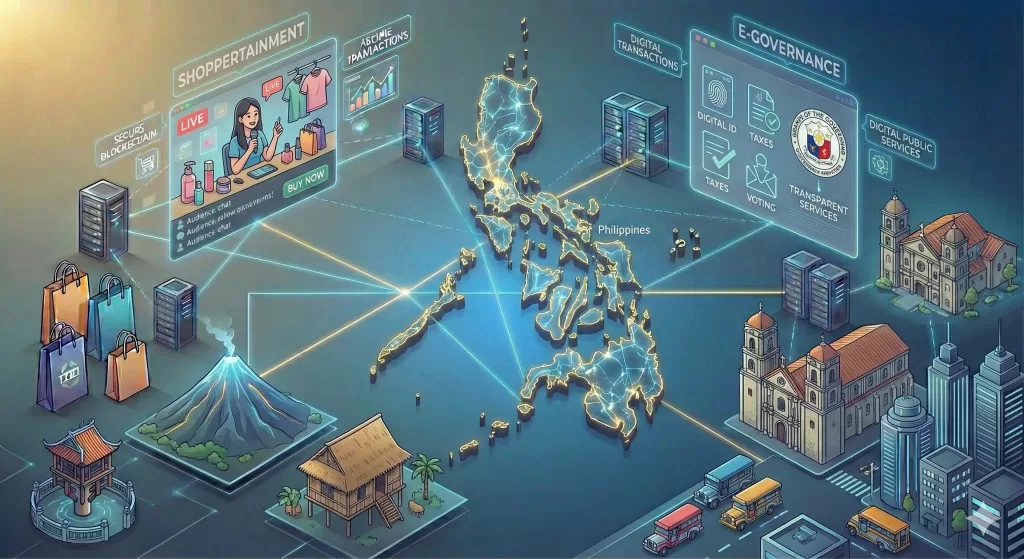
On the other track, the government is aggressively pushing the Konektadong Pinoy Act aimed at boosting internet connectivity and the E-Governance Act focused on digitising public services. This top-down and bottom-up approach is creating a powerful synergy.
The Philippines also stands out for its “shoppertainment” potential. Like Indonesia, the market is highly receptive to creator-led commerce. However, the average order value remains lower, driven by high-frequency, low-cost purchases. The challenge and opportunity for the Philippines lie in moving these consumers up the value chain, transitioning them from buying low-cost goods to utilising more sophisticated digital financial services like wealth management and insurance.
Thailand Find Stability in Digital Finance Amidst Changing Realities
Thailand faces perhaps the most complex outlook of the major economies. While its digital economy continues to grow, it is navigating significant structural headwinds. The tourism sector, traditionally a massive engine for the Thai economy, is experiencing a delayed recovery compared to its neighbours, partly due to intense competition from Japan and Vietnam.
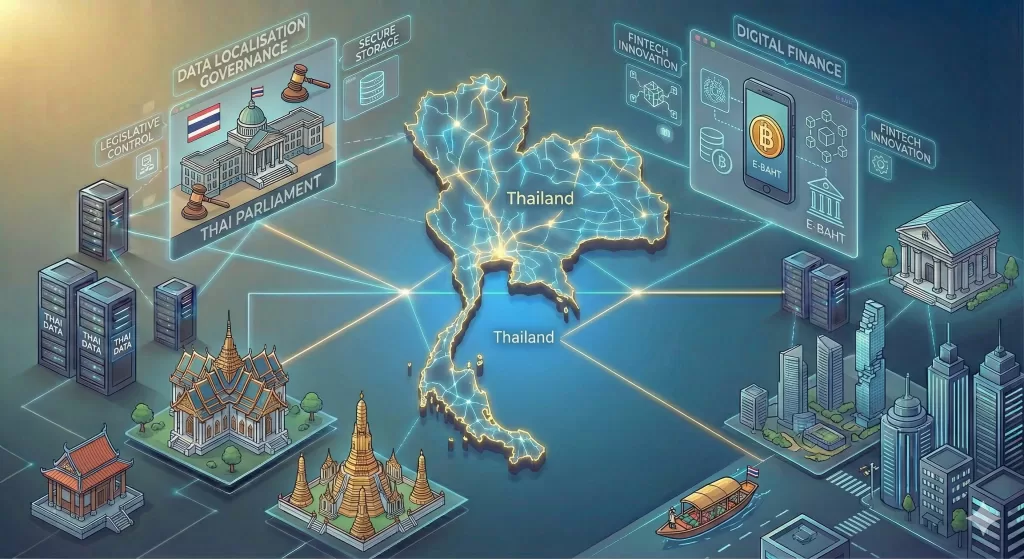
However, the report highlights Thailand’s resilience in the digital finance sector. The country has one of the most advanced real-time payment systems in the region with PromptPay, and cross-border QR interoperability is already a reality.
The regulatory environment is also shifting. Thailand, like Indonesia, is implementing data localisation laws that require high-impact data to be stored in-country. While this drives domestic data centre demand, it adds a layer of complexity for regional platforms trying to operate seamlessly across borders. The focus for Thailand in 2025 will be on leveraging its digital infrastructure to revitalise its tourism sector and finding new growth engines beyond traditional exports.
Regional Synergies: The Power of Connection
If there is one unifying theme across all these markets, it is connectivity—not just of the internet, but of systems. The walled gardens of the past are slowly coming down.
The dream of paying for street food in Bangkok using a Malaysian banking app is becoming a reality. Eight ASEAN nations have now enabled cross-border QR interoperability. This isn’t just a convenience for tourists; it’s a massive lubricant for regional trade, allowing SMEs to accept payments from neighbors without expensive intermediaries.
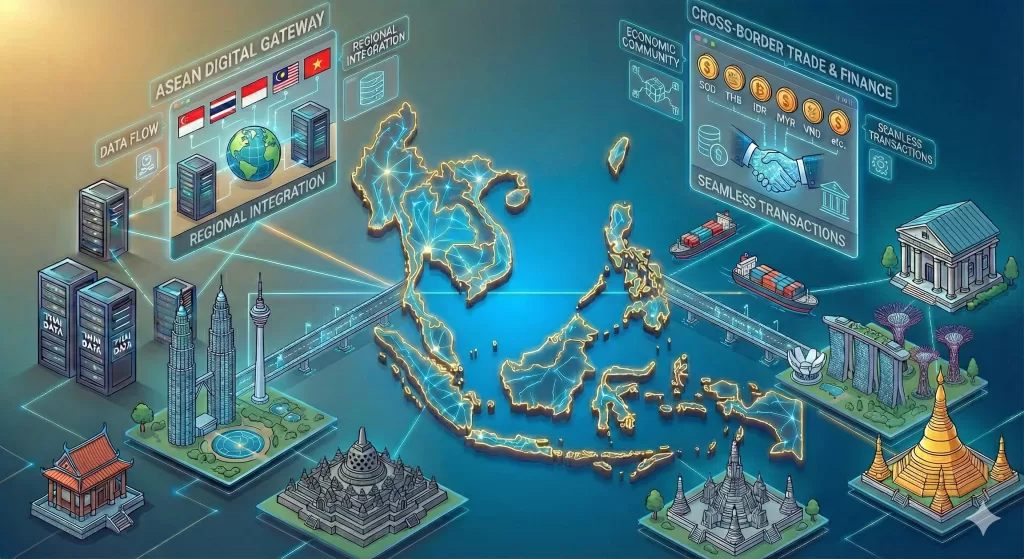
After a slowdown in funding, investor interest is rekindling. Private funding grew 15% over the last 12 months to $7.7 billion. But the money isn’t spraying everywhere. It is disciplined, targeting late-stage companies with proven paths to profitability and, crucially, the Digital Financial Services (DFS) sector. Investors are betting on the infrastructure of the economy, such as payments, lending, and wealth, rather than speculative consumer apps.
The report also underscores the potential of Southeast Asia to play a key role in the emerging AI market. However, this reality will only come to pass should the SEA region continue its efforts en bloc, leveraging its growing economies. This will make the region a powerhouse covering all the verticals and driving investments that will allow it to grow further.
The Outlook
The e-Conomy SEA 2025 report paints a picture of a region that has grown up. We are no longer just looking at vanity metrics like “number of users” or “gross transaction volume” in isolation. We are looking at revenue, profit, and sustainable infrastructure.
The shift to AI is the wildcard. If Southeast Asia can navigate the regulatory fragmentation and skill up its workforce, it has the structural advantages of a young, digital-native population and a lack of legacy tech debt. This can be leveraged to leapfrog mature markets. The foundation has been built; the next decade will be defined by how intelligently we build upon it.