


For the longest time, the wall separating iOS and Android wasn’t just about hardware or operating system preferences; it was fundamentally built into the languages used to create the apps we use every day. If you wanted to build an app for an iPhone, you wrote it in Apple’s Swift.

If you wanted that same app on an Android device, you practically had to start from scratch using Kotlin or Java. It is a frustrating reality that has forced development teams to maintain two entirely separate codebases, often resulting in delayed updates or missing features on one side of the fence. However, that long-standing barrier is finally starting to crumble. With the release of Swift 6.3, Apple’s programming language now officially includes a dedicated Software Development Kit for Android, marking a massive milestone for cross-platform development.
How It Actually Works
At its core, the new Swift SDK for Android gives developers the tools to create native Android applications using Swift right out of the gate. The heavy lifting for this release was handled by the Swift Android Workgroup, a dedicated team that spent months moving the SDK from early previews to a stable, official release. Rather than forcing developers to completely abandon their existing projects, the update introduces specialized interoperability tools named “Swift Java” and “Swift Java JNI Core.”
These tools effectively act as translators. They allow developers to seamlessly integrate Swift code into existing Android applications that were originally written in Kotlin or Java. This means a development team does not have to throw away years of work on an Android app just to start using Swift. Instead, they can slowly migrate complex logic or simply drop in existing Swift packages from their iOS counterpart directly into the Android build. It is a practical, flexible approach that prioritizes utility over a forced ecosystem shift, ensuring that the transition is as smooth as possible for engineers.
What This Means for Your Daily Apps
If you are an everyday Android user scrolling through your phone, you probably will not see a massive visual change in your interface immediately. The user interface elements will still look and feel like standard Android components because Swift is handling the underlying mechanics rather than the visual design. However, the real impact of this update lies beneath the surface, directly affecting your daily user experience.
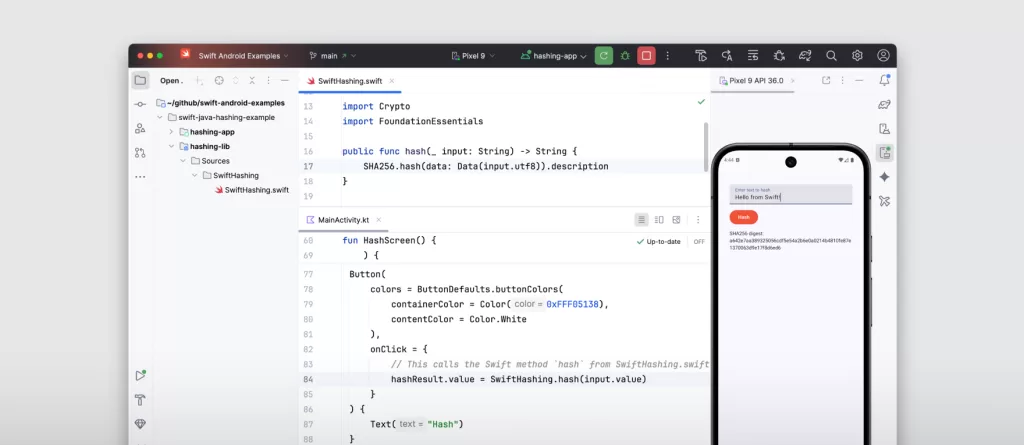
When developers can use the exact same core code—or the underlying logic—for both the iOS and Android versions of an app, everyone benefits. Updates tend to roll out significantly faster because the team only has to write and test the core functionality once. Furthermore, it means features stay synchronized between platforms. We have all experienced the frustration of seeing a highly anticipated feature drop on an iPhone app, only to wait months for it to arrive on Android. With Swift 6.3, if a developer creates a complex, powerful tool for their iOS app, they can now port that specific functionality directly to the Android version without having to rebuild the entire architecture in a different language. Ultimately, this paves the way for your favorite iOS-exclusive apps to finally make the jump to Android.
The Road Ahead for Developers
It is important to clarify that this announcement does not mean Kotlin is going anywhere. Kotlin remains the primary, Google-recommended language for Android development, and it will continue to dominate the space for the foreseeable future. However, the addition of official Swift support introduces a much-needed layer of choice into the industry.
For companies and independent developers already heavily invested in the Apple ecosystem, expanding to Android just became exponentially more practical. They no longer need to hire entirely separate engineering teams or juggle disconnected codebases. By reusing their existing Swift packages, they can streamline their workflow and focus on delivering better experiences across the board. While it will take some time for the industry to fully adopt these new tools, Apple’s official endorsement of Swift on Android is a game-changing move that will undoubtedly reshape how our mobile apps are built in the years to come.