
CES has always been the industry’s playground for “what if,” and this year Lenovo has brought a collection of concepts that feel less like sci-fi and more like a roadmap for the next three years. The company is clearly betting that the future isn’t just about faster processors, but about hardware that physically adapts to our workflow and software that lives outside the traditional laptop chassis. The showcase this year is headlined by rollable displays and “agentic” hardware that aims to make AI personal rather than just a cloud-based chatbot.
The ThinkPad Rollable XD Concept
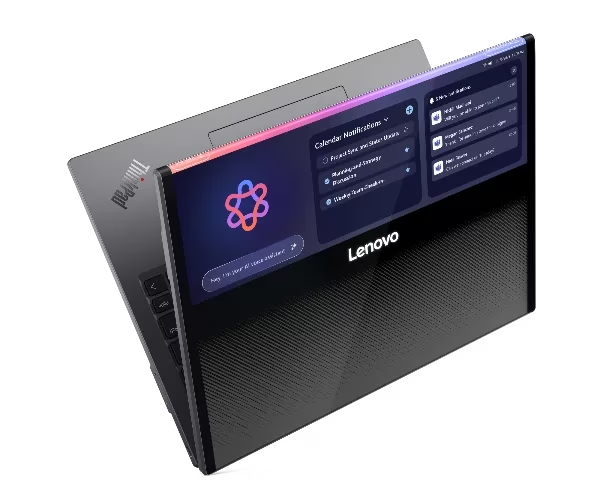
The star of the show is undoubtedly the ThinkPad Rollable XD. While we have seen foldable screens before, this concept takes a different approach to expanding screen real estate. It is described as one of the world’s first out-folding devices that features both a world-facing display and an expanding user-facing screen.

The device starts as a compact 13.3-inch laptop, familiar to anyone who has used an ultraportable. However, with a simple gesture or command, the screen unrolls to a near-16-inch workspace. This provides over 50% more screen area without the footprint of a bulky 16-inch notebook. Lenovo has worked with Corning to develop a transparent 180-degree Gorilla Glass Victus 2 cover, which not only ensures durability but also lets you see the mechanical engineering at work. The utility here is obvious for hybrid workers: you get a travel-friendly form factor that transforms into a serious productivity machine when you sit down to work, supporting everything from live translation to multi-modal AI interactions even when the lid is closed.
Legion Pro Rollable Concept

Gamers weren’t left out of the rollable conversation. The Legion Pro Rollable applies similar mechanics to the gaming sector, though specific details on its expansion ratio were kept lighter. The core idea remains the same: offering the immersive width of a large display—crucial for field-of-view in shooters and racing sims—in a package that can still fit into a backpack. It addresses the classic gamer dilemma of choosing between a portable rig with a cramped screen or a massive desktop replacement that effectively never leaves the desk.
Lenovo Personal AI Hub & AI Glasses
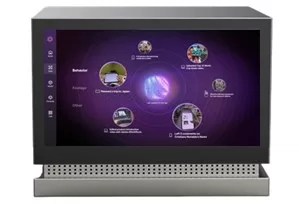
Moving away from screens, Lenovo introduced “Project Kubit,” or the Personal AI Hub Concept. This isn’t a computer in the traditional sense; it is a dedicated personal edge cloud device. Housing two ThinkStation PGX compact AI workstations powered by NVIDIA’s Grace Blackwell Superchip, it is designed to harvest and process data across all your devices—phones, wearables, and smart home tech. It effectively acts as a local brain for your digital life, ensuring that your AI interactions are fast, private, and deeply personalized.
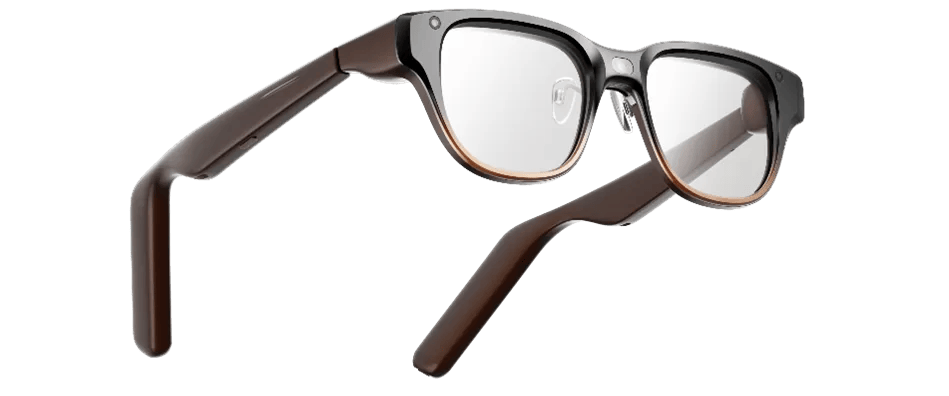
Complementing this is the Lenovo AI Glasses Concept. Weighing just 45g, these are designed to be worn all day, offering a battery life of up to 8 hours. Unlike previous smart glasses that struggled with utility, these leverage the new “Lenovo Qira” agent to provide sub-millisecond live translation and intelligent image recognition. They essentially act as a heads-up display for your life, offering features like a teleprompter for speeches or a “Catch Me Up” summary of notifications, all without needing to pull out a phone.
Smart Accessories
Finally, the showcase included some practical innovations for the desktop. The Lenovo Adaptable Keyboard Concept features adjustable stroke and optical actuation controls. This allows users to physically toggle the keyboard’s feel—switching from light, rapid keystrokes for gaming to heavier, more controlled resistance for typing. Sitting alongside it is the Self-Charging Kit Concept, a keyboard and mouse set powered by light-harvesting technology that works in environments as dim as 50 lux. The mouse, in particular, claims to offer true no-charging operation using only indoor light, potentially eliminating the frustration of dead batteries in the office.
As is tradition with “Proof of Concept” showcases, these devices are not currently for sale, and no official release dates or pricing have been announced. They represent the company’s R&D direction rather than immediate retail products. However, historically, elements from Lenovo’s concepts—such as the folding screen tech—often find their way into consumer products within 18 to 24 months. For now, they remain a glimpse into a very flexible future.