Enterprises everywhere are currently racing to deploy generative AI, autonomous agentic workflows, and AI-enabled SaaS platforms to stay competitive. While these technologies promise an incredible boost to daily operational efficiency, they also present a massive headache for corporate IT and security teams. The reality is that the enterprise AI estate has grown so fast and become so fragmented that no single security vendor can protect it all on their own. Security teams are typically left wrestling with an administrative nightmare, stitching together siloed point products that do not share context, leaving massive blind spots across a rapidly expanding attack surface.
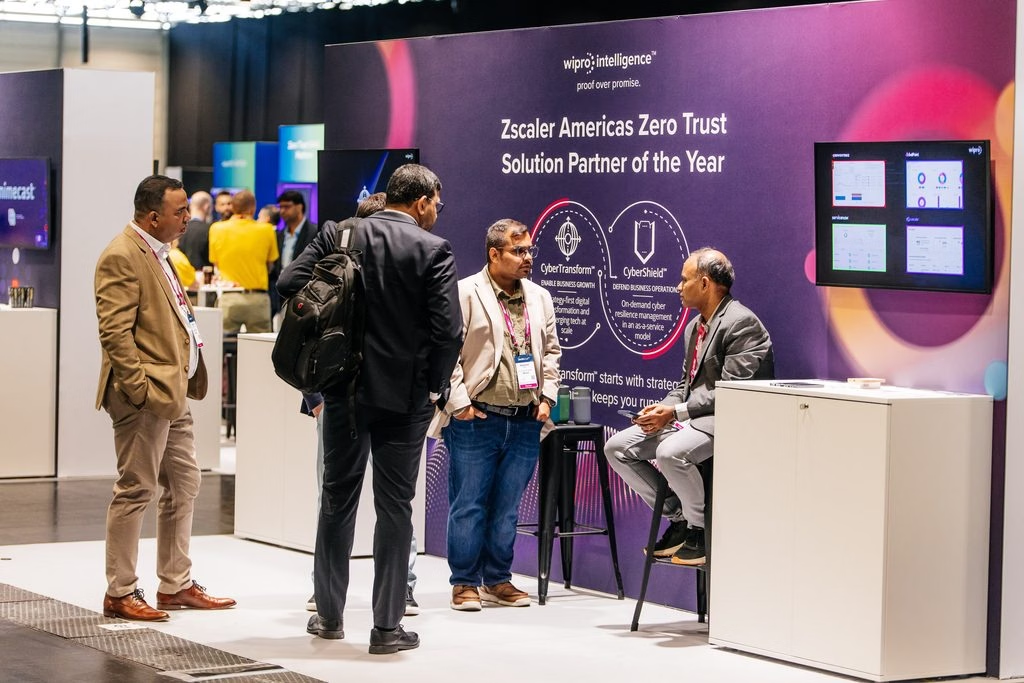
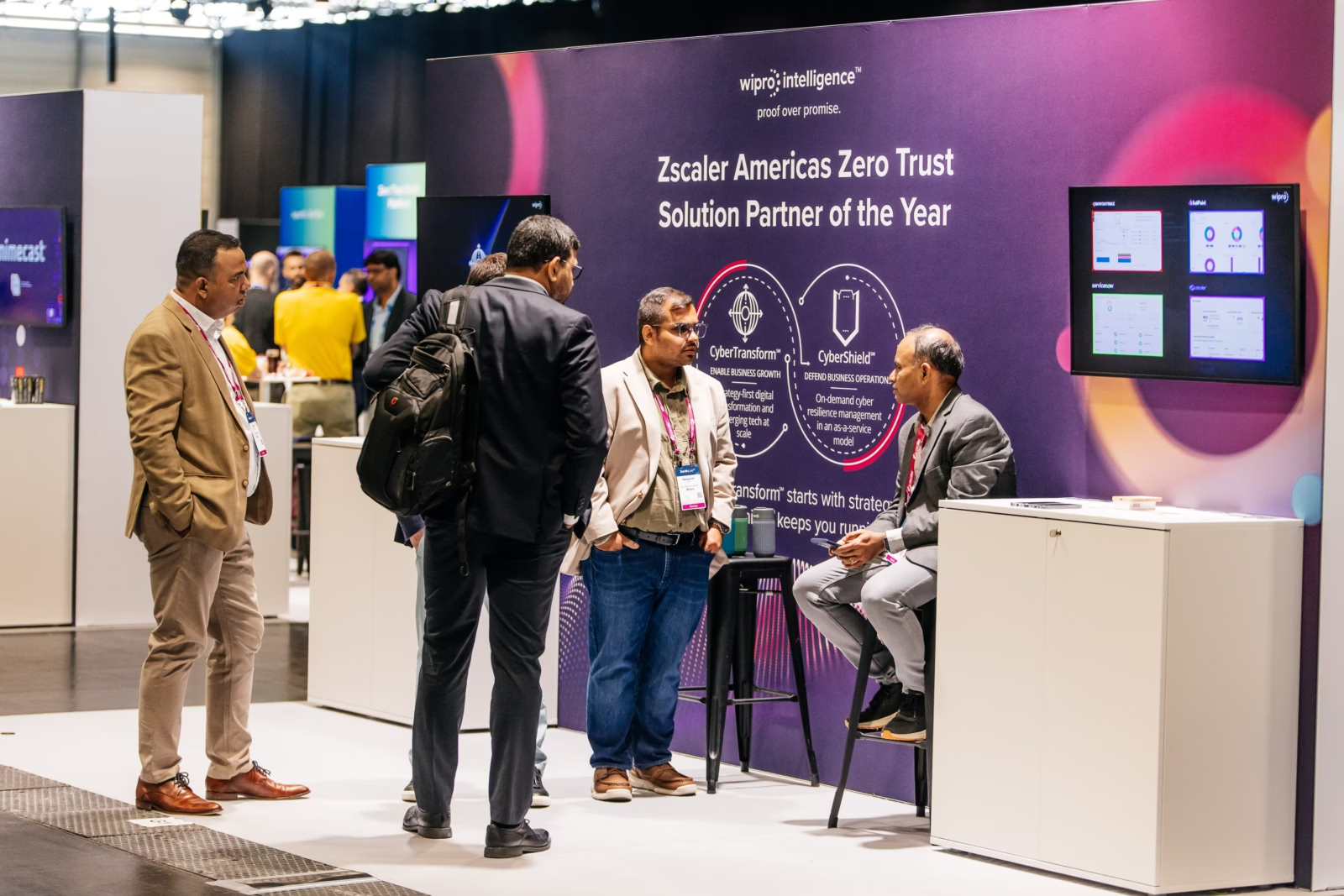
To tackle this exact fragmentation, Zscaler has announced a significant expansion of its Project AI-Guardian initiative. Originally built in collaboration with global system integrators, the program is entering its next phase by looping in a powerhouse alliance of technology giants, cloud providers, and foundational AI creators. By deepening interoperability across the Zscaler Zero Trust Exchange platform and its AI Protect portfolio, the expansion creates a unified ecosystem where disparate security signals, identity context, and enforcement actions are shared seamlessly in real time.
Breaking Down the AI-Guardian Ecosystem Architecture
The foundational principle behind this expanded phase of Project AI-Guardian is to eliminate the security silos that hold enterprises back from rapid AI adoption. Rather than deploying another disconnected security tool, Zscaler is leveraging its inline security cloud to act as a centralized control plane that routes and enriches security data across partner platforms.
At the heart of this data orchestration is the AI Access Graph, a specialized engine that continuously maps the intricate web of how corporate identities, internal applications, autonomous machine agents, and sensitive data sources connect to AI services. This mapping is paired with automated AI attack surface and risk modeling, which actively discovers and quantifies AI-related exposures across the corporate network. Because these services integrate directly with alliance partners, an insight gathered within Zscaler’s platform can immediately trigger defensive enforcement inside a partner’s infrastructure, and vice versa.

Because every single digital interaction is brokered directly through the cloud-native Zero Trust Exchange, this security enforcement happens inline and in real time. Access to AI models is verified continuously, data is inspected meticulously as it moves across the network, and strict zero-trust policies are applied to automated machine workflows exactly the same way organizations protect standard users and physical devices today.
Silicon to Cloud: High-Caliber Alliances Protect the Entire Stack
What makes this expansion particularly compelling for enterprise architecture is the sheer caliber of the technology alliance partners involved. Zscaler has brought together heavy hitters including AWS, CoreWeave, Databricks, Deep Cogito, Equinix, Glean, Google Cloud, OpenAI, and Saviynt, alongside new integration partners like Coforge and NTT DATA. This multi-layered collaboration addresses vulnerabilities across the entire AI pipeline, from raw compute infrastructure up to autonomous application interactions.
At the hardware layer, specialized AI infrastructure providers like CoreWeave are working to enforce zero-trust access controls from the silicon up, securing the compute stack before data even reaches the application layer. On the data platform side, partners like Databricks are enabling joint customers to safely ingest massive Zscaler security logs directly into their analytical environments, eliminating visibility gaps without creating entirely new data silos.
For daily productivity tools, permissions-aware search networks like Glean are integrating with the AI-Guardian framework to ensure that when business context is pulled into automated workflows, it strictly respects corporate governance rules. Furthermore, foundational AI developers like OpenAI are using the framework to align advanced model capabilities with the rigorous safeguards, transparency, and human oversight required by modern risk management compliance structures.
Secure Transformation Without Operational Friction
For security operations teams, this level of native interoperability offers a reliable control plane for corporate AI deployment without the crushing integration burden of custom-coding disparate security tools. The combined framework actively prevents the leakage of sensitive intellectual property or proprietary model training inputs through outbound prompts, handles autonomous AI-to-AI interactions securely, and delivers a complete view of shadow AI applications popping up on employee devices. By delivering pre-validated, interoperable partner integrations, Zscaler is effectively stripping out the operational friction that usually stalls digital transformation, allowing enterprises to scale their autonomous workflows with genuine resilience.