

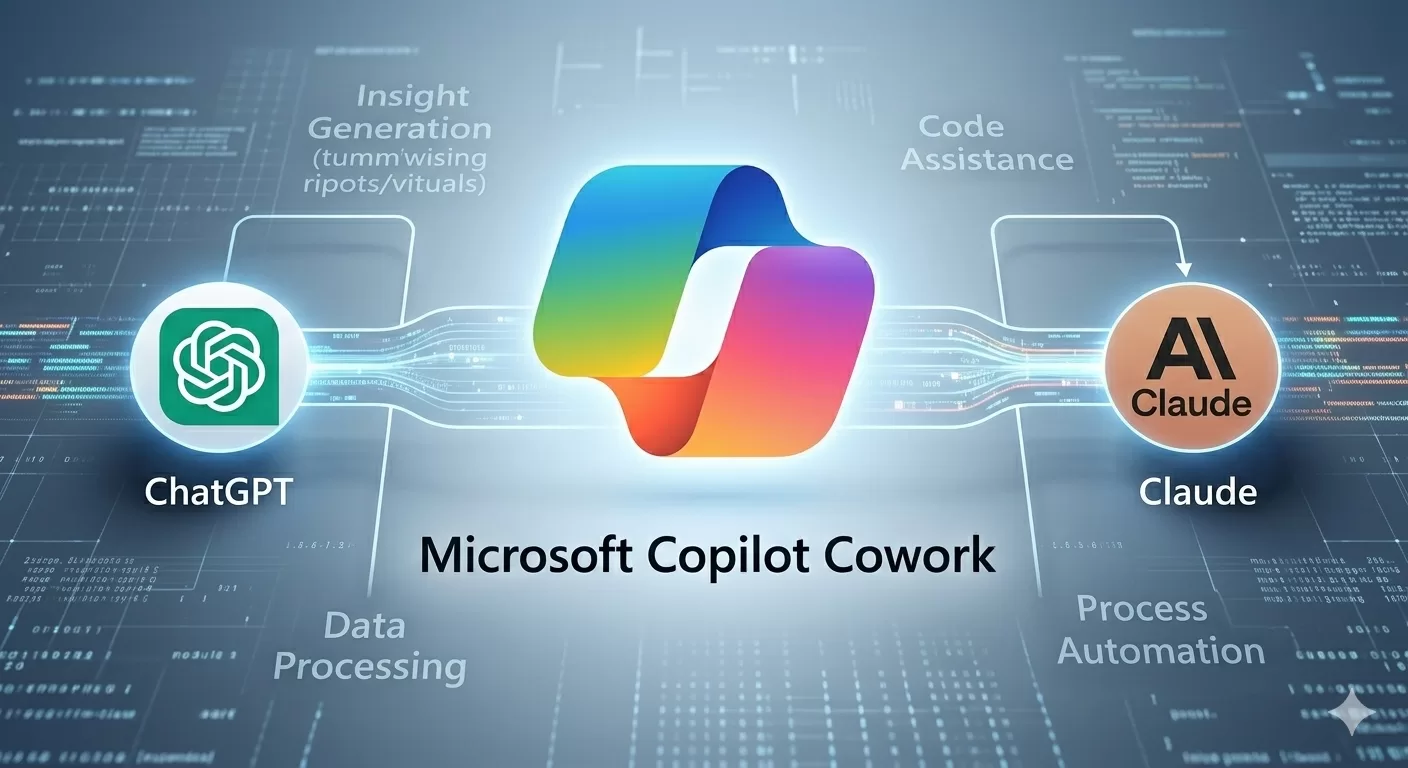
The world of generative AI is moving away from the novelty of text chat and stepping directly into heavy-duty automation. Microsoft has announced the global general availability of Copilot Cowork, marking a major shift from assistive AI tools to autonomous systems. More than half of the Fortune 500 have already adopted the platform during its preview in Frontier, including global brands like Accenture and Zurich Insurance..
What sets Copilot Cowork apart from standard digital assistants is its ability to handle complex, long-running, multi-tool tasks. Instead of just spitting out a draft template or a basic recommendation, you define the parameters, and the system runs the workflow end-to-end to return a finished product. Early pilots saw engineering teams teach the system to safely edit batch-job spreadsheets and automatically update dependency charts, while sales leads used it to analyse stalled pipelines and pull ranked lists of at-risk opportunities, collapsing a week of manual review into a single morning.

The Underlying SASE and Cloud Infrastructure
To make this level of machine-speed automation viable, Microsoft relies entirely on a secure cloud-native architecture. Because tasks are hosted in the cloud, files are not stored locally on endpoints, security policies are strictly enforced, and operations continue running seamlessly even when an employee’s laptop is powered off.
The system relies heavily on native Work IQ support, which ensures every automated task is grounded in the systems and collaborative context your business already operates on. Context retrieval pulls from emails, past meeting notes, and internal files to understand real-world corporate relationships. Because every automated interaction is brokered inside the Microsoft 365 trust boundary, security and compliance are maintained dynamically, keeping sensitive company data safe from lateral threat movement or external exposure.
Multi-Model Agility and Context Retrievability
Copilot Cowork utilises a unique multi-model design, meaning organisations are not locked into a single artificial intelligence model. At launch, the platform runs on Anthropic models, including Opus 4.8 and Sonnet 4.6, with GPT 5.5 available in Frontier. Microsoft also plans to release its own specialised model, Cowork 1, in the coming weeks, which is post-trained to minimise model bias and lower compute costs for everyday workloads.
The system is designed to intelligently pair tasks with the most efficient model available, making broad source aggregation less resource-intensive. Internal Microsoft testing showed that this optimised runtime environment makes Copilot Cowork roughly 30% to 40% cheaper on average than running competing options like Claude Cowork through an external Microsoft 365 connector.
Flexible Usage-Based Billing with Tight Cost Controls
Accessing these advanced agentic systems requires an underlying Microsoft 365 Copilot User Subscription License. From there, organisations are billed on a variable, usage-based model denominated in Copilot Credits, where the cost of each prompt is calculated based on model selection, context retrieval depth, specific tool calls, and overall runtime. Pay-as-you-go pricing is set at $0.01 per Copilot Credit, though companies can opt for a committed volume plan to secure a discount.
To help IT departments budget effectively for long-running workflows, Microsoft has embedded comprehensive cost management features into the tenant controls. The service is turned off by default, allowing administrators to dictate access and implement strict spending limits at the tenant, group, or individual user levels. Admins can configure customizable usage alerts, while an active portal allows employees to submit user-initiated credit requests directly from the app interface if a heavy task requires extra compute budget.
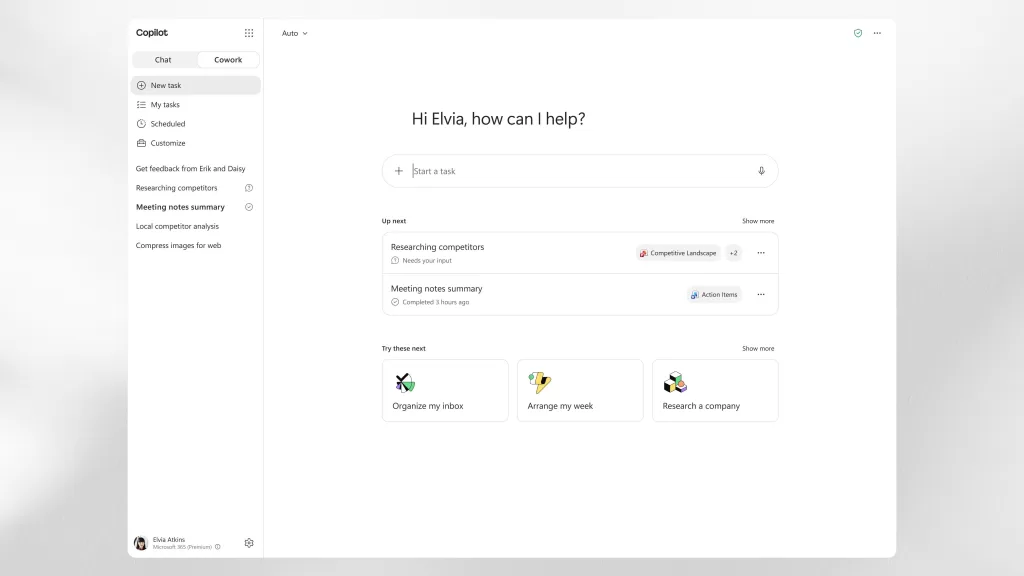
Ecosystem Interoperability and Getting Started
To support immediate deployment, the Microsoft 365 Copilot app now includes a native toggle to move quickly from chat to agent action. Microsoft has unlocked nine partner plugins at launch, including Miro, Monday.com, and S&P Global Energy, with expansions for Atlassian and Adobe coming soon. Furthermore, the platform supports browser use via Edge under strict Entra identity governance and Purview audit trails, ensuring corporate compliance is never compromised.
Ultimately, enterprise technology is evolving too fast for organisations to let outdated toolsets limit their scale. By unifying multi-model cloud compute with autonomous, natural-language automation, Microsoft has delivered a highly balanced, secure control plane that moves enterprise AI from simple experimentation to measurable operational impact.