


When we think of cyberattacks, our minds inevitably drift to Hollywood stereotypes. We picture a hooded figure sitting in a dark room, furiously typing strings of green code to “smash” through a corporate firewall. It’s a compelling image, but according to the latest insights from Arctic Wolf’s 2026 Threat Report, it’s completely wrong.
The terrifying reality for Malaysian Small and Medium Enterprises (SMEs) is much more boring, and infinitely more dangerous: attackers aren’t using complex, million-dollar exploits to breach your network. They are simply using a stolen password to walk right through your front door.
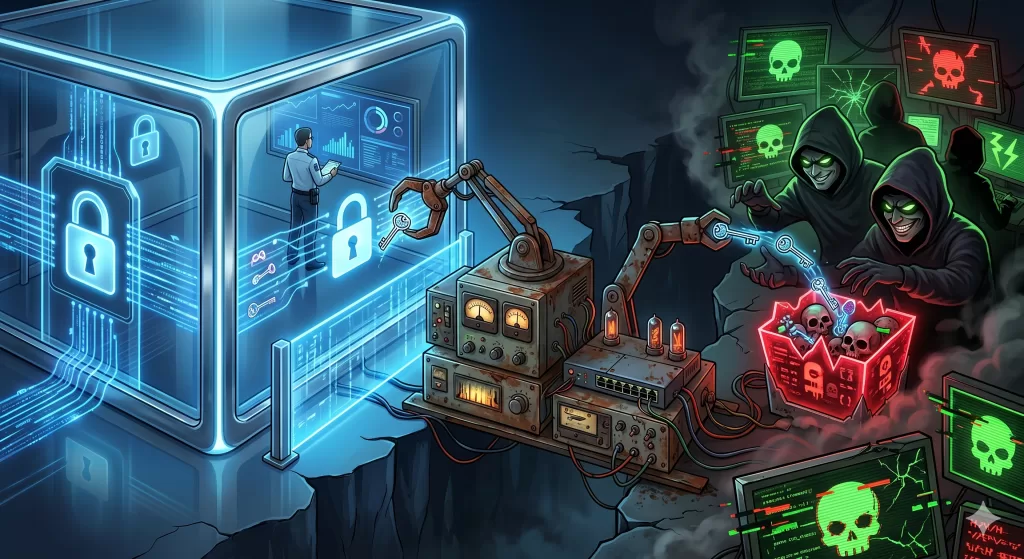
In a recent sit-down with the experts at Arctic Wolf, we took a hard look at the threat landscape heading into 2026, specifically focusing on the Asia Pacific and Japan (APJ) region. What we found shatters the illusion that only massive enterprises with deep pockets are in the crosshairs. In fact, an overwhelming 71% of victims across the APJ region are SMBs.
Why are attackers pivoting away from the big “whales” to target local SMEs? It all comes down to the path of least resistance, and it starts with the hardware sitting quietly in your server room.
The “Logging In” Epidemic
For years, the cybersecurity industry has sold us on the idea of the “sophisticated threat actor.” But the data shows that today’s cybercriminals are essentially opportunistic businesses. They want maximum return for minimum effort.
When we asked Arctic Wolf about the operational gaps that make SMBs such attractive targets, their answer was a massive reality check for any local IT department:
“What we’re seeing is that attackers are ‘logging in, not breaking in.’ Many organisations still have weak identity controls, inconsistent MFA, and exposed remote access services like VPNs or RDP. When those gaps exist, attackers don’t need advanced exploits; they simply authenticate using stolen credentials.”
Let that sink in. Attackers are logging in.
We are seeing a professionalisation of volume-based attacks. With the rise of the dark web’s “Access Markets” and Malware-as-a-Service, a low-level criminal can simply purchase valid credentials for your company’s network. If your business doesn’t enforce strict, modern Multi-Factor Authentication (MFA), that purchased password is all they need. There is no alarm bell. There is no shattered firewall. The system just assumes an employee is logging in to do their job.
The Hardware Debt Timebomb
This brings us to the hardware implications of this crisis. At techENT, we love talking about the latest silicon and the fastest internals. But in the real world of Malaysian SMEs, IT budgets are tight. If a router or a Virtual Private Network (VPN) appliance is still blinking green, business owners are incredibly reluctant to replace it or even take it offline for a software patch.
This accumulation of outdated, unpatched infrastructure is known as “Hardware Debt,” and it is killing businesses.

According to Arctic Wolf’s data, 65% of non-BEC (Business Email Compromise) intrusions are directly attributable to the abuse of external remote access products. We are talking about Remote Desktop Protocols (RDP), VPNs, and Remote Monitoring and Management (RMM) tools.
“Edge devices, such as VPNs, routers, and firewalls, are also frequently targeted by ransomware actors seeking initial access to an organization.”
The very tools that Malaysian businesses deployed to allow their employees to work from home have become the primary entry points for ransomware gangs. These edge devices sit on the perimeter of your network, directly exposed to the internet. When an IT team delays patching a known vulnerability on a SonicWall or FortiOS device because they are terrified of causing “downtime” during business hours, they are leaving a window wide open.
And cybercriminals know exactly when to climb through it. Arctic Wolf noted clear “waves” of threat activity in the APJ region, specifically peaking around March and again in September/October. These spikes often align with chaotic fiscal year-ends. Attackers know that during these high-stress periods, finance teams are moving fast, IT is stretched thin, and people are far more likely to bypass security protocols to get a job done.
The “Dumb Device” Pivot
The danger of an unpatched edge device doesn’t stop at the perimeter. Once an attacker uses a compromised VPN to slip inside your network, they rarely attack your core servers right away. Instead, they pivot laterally to find a hiding spot.
Often, this means targeting “dumb” internal hardware like smart office thermostats, connected boardroom cameras, or network printers. Because we rarely think to install security software on a printer, these devices serve as perfect, quiet footholds. Threat actors can establish persistence here, mapping out your daily business operations, scraping credentials, and quietly exfiltrating customer data over weeks or months before ever launching a disruptive ransomware payload.
In fact, the trend is shifting away from encryption entirely. Data-only extortion, where they simply steal your sensitive files and threaten to release them if you don’t pay, has surged massively. It’s stealthier, it doesn’t break your computers, and it turns an IT outage into an immediate legal and reputational crisis.
Closing the Front Door
So, what are the daily implications for a Malaysian SME owner reading this? It means that buying a shiny new AI-powered antivirus software for your laptops is utterly useless if your office VPN is running on software from 2022.
If you are operating on a lean IT budget for 2026, Arctic Wolf’s recommendations offer a highly practical, no-nonsense roadmap. The first and most critical step is paying off your hardware debt by prioritising patches for known vulnerabilities on your edge devices. Yes, it requires scheduled downtime. But an hour of planned maintenance on a Sunday is significantly cheaper than three weeks of forced downtime during a ransomware negotiation.
Beyond patching, it is vital to minimise your overall internet exposure. The rule of thumb here is simple: unplug what you don’t use. If an old server or remote desktop port isn’t strictly necessary for daily operations, you need to shut it down completely. Every unused connection left lingering on your network is a massive liability.
Finally, the conversation around identity needs to shift toward phishing-resistant Multi-Factor Authentication (MFA). It is time to transition away from traditional, easily intercepted SMS-based two-factor authentication. By moving your organisation toward hardware security keys or robust WebAuthn standards, you effectively neutralise the threat of stolen passwords. Even if an attacker manages to buy an employee’s credentials off the dark web, proper MFA ensures that the stolen password is mathematically useless to them.
The cybersecurity landscape in 2026 isn’t going to be defined by who has the most advanced artificial intelligence; it’s going to be defined by who does the basics right. Resilience beats extortion every single time. It’s time to stop worrying about the cinematic hackers breaking through the firewall and start making sure we aren’t just leaving the front door unlocked.