
This article is written based on an interview with Asnawi Jufrie, Vice President & General Manager (SEA & US)
Imagine a standard Tuesday morning for a growing retail business in Southeast Asia. The WhatsApp notifications are relentless. A customer in Kajang wants to know if a specific battery model is in stock. Another in Jakarta is asking for a shipping update on an Instagram DM. A third is negotiating a bulk discount via Facebook Messenger.
For the modern business, this omnichannel chaos is the sound of success. But operationally, it is a nightmare.
Recent consumer behaviour data reveals a brutal reality for businesses operating in our region: 84% of consumers expect a response to their inquiry within five minutes. If a business fails to meet this 5-Minute Mandate, the customer simply taps back to the search results and messages a competitor.

For years, the technology industry’s answer to this scaling problem was to sell businesses more software. “Buy this dashboard.” “Subscribe to this CRM.” “Route your tickets through this portal.” But traditional Software-as-a-Service (SaaS) only works if you have the human headcount sitting behind the screens to operate it. Today, SMEs are handling up to ten times the volume of conversational commerce they did five years ago, but they certainly aren’t operating with ten times the staff. They are caught in a structural talent squeeze.
This is the exact friction point where “Agentic AI” is stepping in. Businesses are realizing they can no longer just buy tools; they need to hire digital labour.
During a recent deep dive into the evolving landscape of enterprise technology, we sat down with Asnawi Jufrie, Vice President & General Manager (SEA & US) of omnichannel customer engagement platform SleekFlow. His perspective on this macroeconomic shift provides a roadmap for businesses trying to keep their heads above the rising tide of digital inquiries.
The End of Software, The Rise of the Digital Worker
We have barely digested the hype of Generative AI—the technology that writes emails and creates images—before being hit with the next wave: Agentic AI. For business leaders suffering from severe “tech fatigue,” it is tempting to tune it out as just another buzzword.
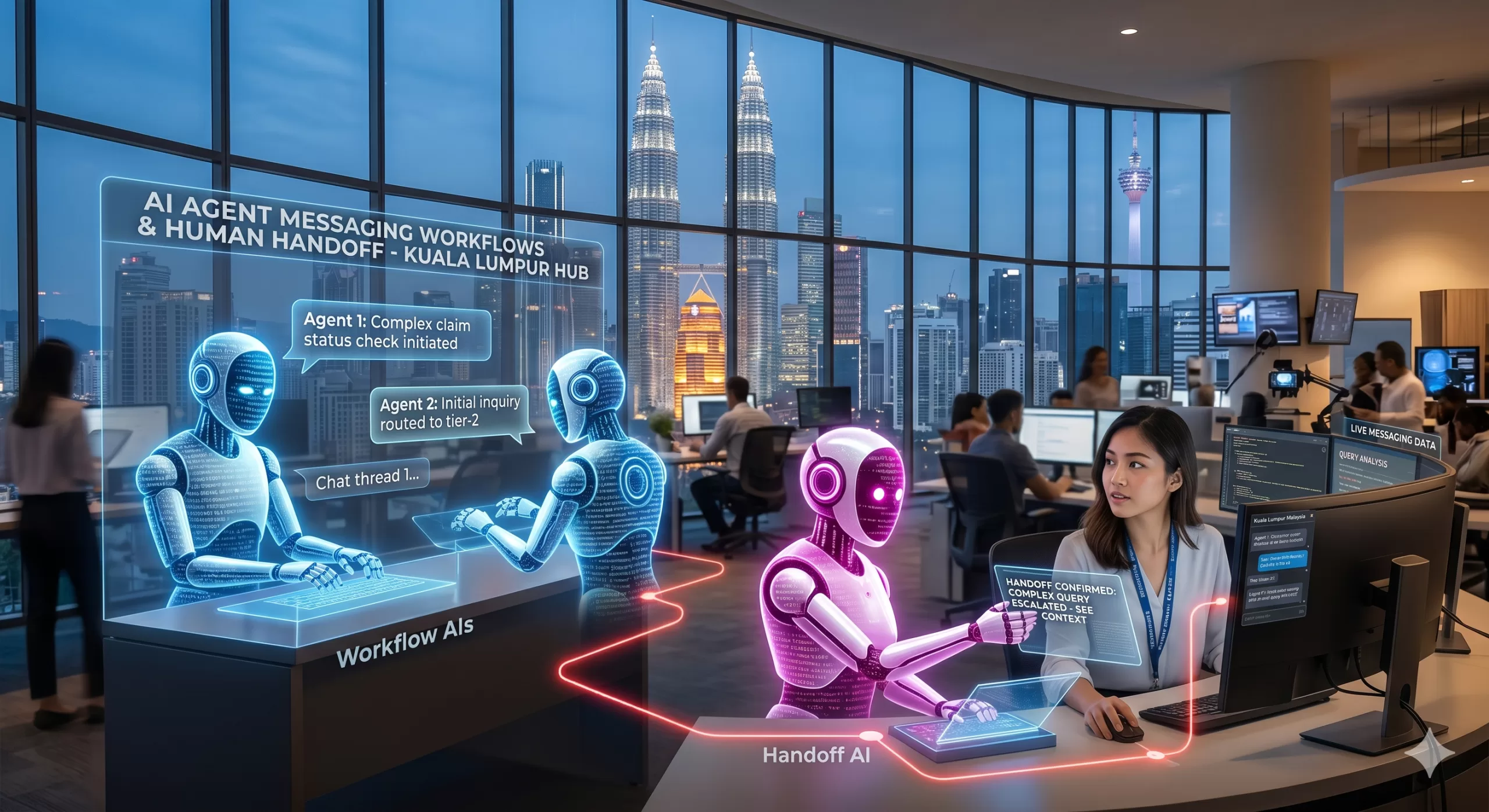
However, Asnawi points out a fundamental distinction that makes this wave different. Generative AI is passive; it waits for a prompt and generates content. Agentic AI is active; it understands an objective and executes workflows autonomously. It doesn’t just draft the reply about the battery stock; it checks the inventory database, confirms the price, sends a payment link, and updates the CRM, all within the WhatsApp chat.
“What we’re seeing now isn’t another hype cycle, it’s an evolution,” notes Jufrie. “Automation helped software follow rules. Generative AI helped machines create and assist with knowledge work. Now we’re entering the agentic era, where systems can take action and complete tasks autonomously.”
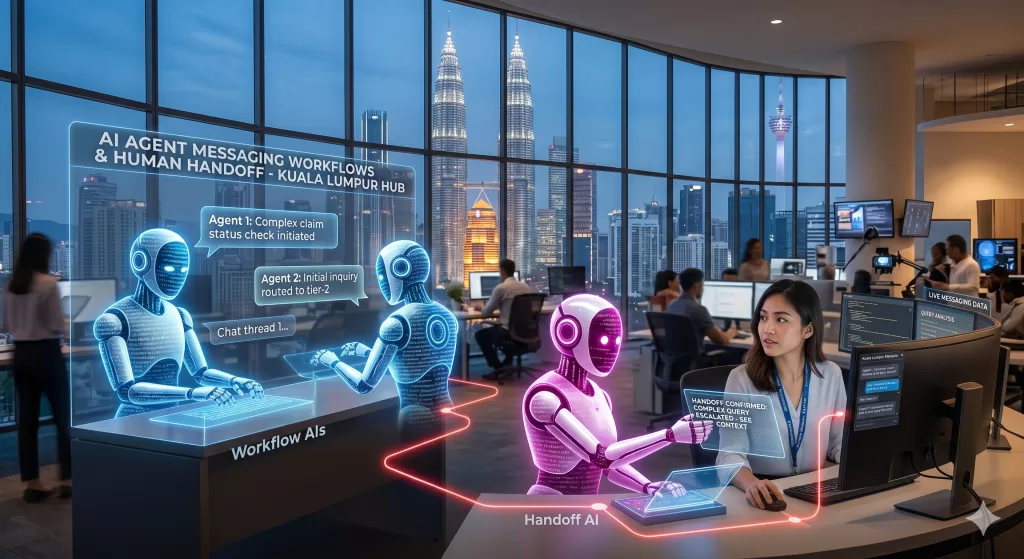
This represents a profound shift from capital expenditure on IT tools to what is effectively a “Virtual BPO” (Business Process Outsourcing) model. You aren’t buying a program; you are deploying an always-on, multilingual sales representative that thrives in the unstructured chaos of the WhatsApp Economy.
Promoting, Not Replacing, Your Human Staff
The immediate, reflexive fear surrounding autonomous AI is job displacement. If an algorithm is handling inventory queries and processing payments in chat, what happens to the customer service team?
The reality on the ground is far more nuanced. In high-growth, mobile-first economies, customer support and sales teams are currently drowning in repetitive, low-value interactions. They are acting as human routers, copying and pasting tracking numbers and business hours. Agentic AI acts as a pressure valve.
When a digital workforce handles the sheer scale of routine inquiries, the human workforce doesn’t disappear; it gets promoted.
“This isn’t about replacing people. It’s about expanding the workforce with digital workers that can operate alongside humans,” Jufrie explains. “In many ways, we’re moving from hype to utility, where AI evolves from a productivity tool into a true partner in getting work done.”
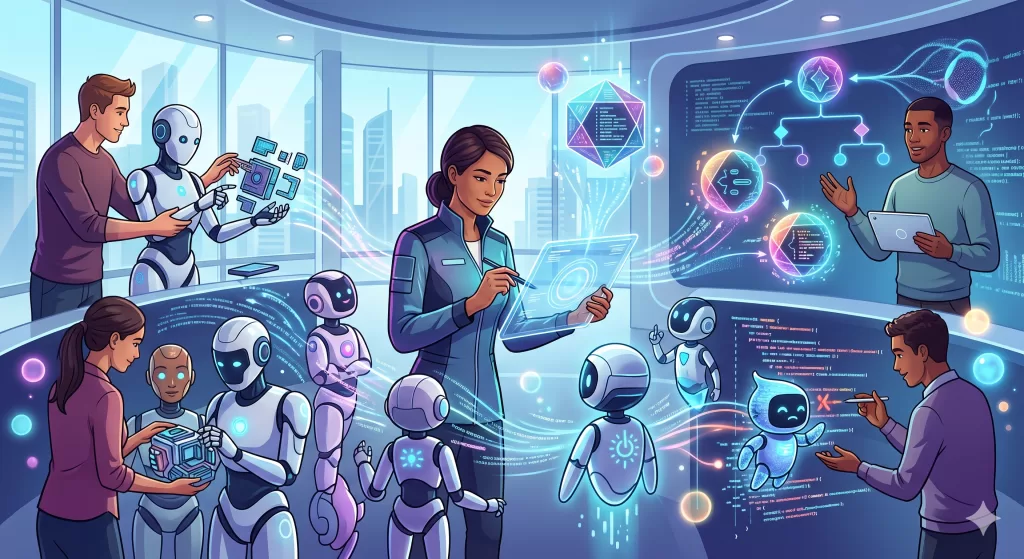
Humans transition from being the executors of repetitive tasks to the orchestrators of complex problem-solving. The digital agent handles the 300 daily inquiries about shipping times; the human sales executive steps in when a VIP client needs a bespoke enterprise contract negotiated. The ratio of work changes: algorithms handle the scale, while humans handle the substance, empathy, and strategy.
The “Switch-On” Fallacy and Real-World ROI
Perhaps the biggest hurdle for SMEs adopting this technology isn’t the cost, but the expectation. Business leaders are conditioned by two decades of SaaS to believe that software is a “plug-and-play” solution. You buy a license, turn it on, and it works.
Agentic AI requires a philosophical shift in implementation. You do not install a digital worker; you onboard them.
“There are many misconceptions around agentic AI, but the most damaging one is the belief that it’s something you simply adopt. In reality, it’s something you build toward,” warns Jufrie. “It doesn’t work like traditional software. It’s not something you switch on. It requires iteration, building, learning from real-world use, and continuously improving over time.”
The most successful companies start narrow. They don’t try to automate their entire business overnight. They target a specific, high-friction bottleneck—like after-hours lead qualification on Instagram—and deploy an agent specifically for that task.
When executed correctly, the return on investment moves beyond “time saved” into actual revenue generated. Take the local automotive service brand BateriHub as a prime example. By integrating automated, intelligent chat workflows, they didn’t just ease the burden on their staff; they saw a 22% increase in actual conversions while simultaneously dropping spam leads to under 1%. That is the definition of the new “Outcome Economy.” They didn’t pay for software engagement; they paid for closed deals.
The Most Capable Workforce Wins
The mandate for SMEs is clear. The volume of customer interactions will only increase, and the expectation for instant, personalised service across multiple messaging platforms is now the baseline, not a premium feature. Trying to meet this demand solely by hiring more human agents is a mathematically losing battle against rising operational costs.
The future of business technology isn’t about finding the coolest new app. It is about fundamentally rethinking what a workforce looks like.
“The future isn’t humans versus AI. It’s humans and AI working together, where technology amplifies what people can do rather than replacing what makes them irreplaceable,” Jufrie concludes. “The companies that win in the next decade won’t necessarily have the most employees, but they’ll have the most capable workforce, human and digital combined.”
For the modern SME, surviving the talent squeeze means accepting that your next Employee of the Month might just be an algorithm.
This article is written based on an interview with Asnawi Jufrie, Vice President & General Manager (SEA & US)

Asnawi Jufrie
Vice President & General Manager (SEA & US)
Asnawi Jufrie is the Vice President and General Manager for Southeast Asia at SleekFlow, a leading AI-native omnichannel platform that helps businesses drive conversions through conversations. Based in Singapore, he leads SleekFlow’s
regional growth, steering market strategy, operations, and stakeholder engagement across Southeast Asia.
At SleekFlow, Asnawi shapes the company’s vision of “AI that converts,” championing solutions that help businesses automate intelligently while preserving human connection at every touchpoint. His leadership has been pivotal in advancing SleekFlow’s AI capabilities, including the launch of AgentFlow, a sales-first AI agent built to close the gap between automation and conversions.
With deep expertise in CRM, customer experience, and AI, Asnawi drives SleekFlow’s regional strategy and partners with industry leaders and prominent brands to embrace
chat-first, AI-powered engagement. Recognised for his leadership in digital transformation, he brings practical insights and forward-thinking strategies that help
organisations scale through smart automation while keeping human connection at the core of a customer-first approach.
Asnawi is driven by a vision of smarter and more human engagement where AI empowers businesses to connect deeper, move faster, and grow stronger. He is committed to shaping the future of customer experience in Southeast Asia, one conversation at a time.