


The conversation around enterprise cybersecurity has fundamentally shifted over the past few years. We have moved far beyond the point of debating whether an organisation needs robust digital defence mechanisms. Today, for most businesses looking to establish a dedicated Security Operations Centre, or SOC, the pressing question is no longer about whether to invest, but rather what it will actually take to make that centre fully operational. While the intention to build an SOC to strengthen overall security posture is clear across the board, a recent comprehensive global study published by Kaspersky reveals that the real-world execution is fraught with wildly differing realities.

The Financial Disconnect in APAC
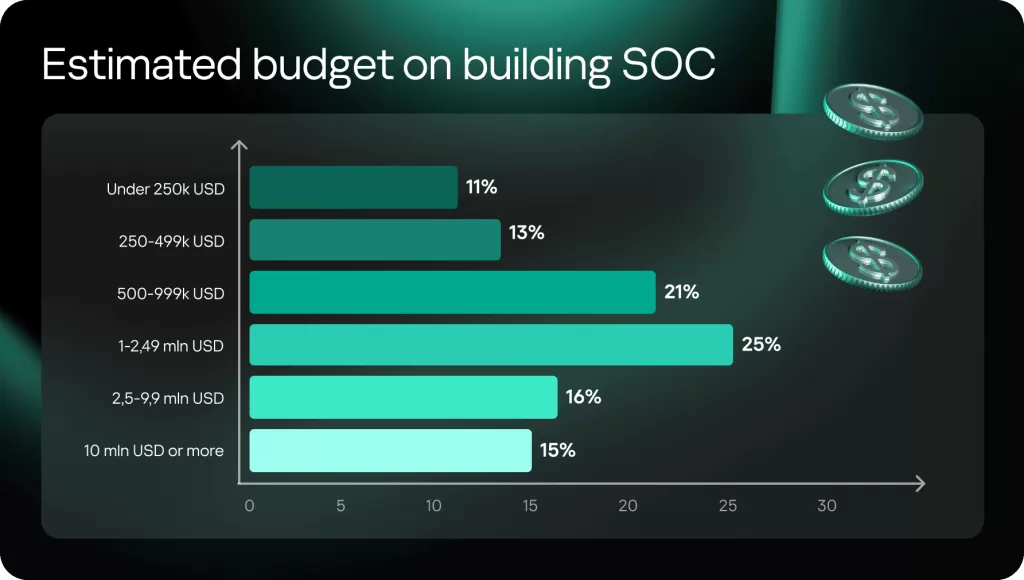
When we look at the financial commitment required to get an SOC off the ground, the numbers tell a fascinating story of expectation versus reality. According to the Kaspersky study, the average planned budget for establishing an SOC on a global scale hovers around USD$2 million. However, zooming in on the Asia Pacific region reveals a significant disconnect. A staggering 93% of organisations in APAC initially plan their SOC budgets to remain below the USD$1 million mark. Despite these highly modest initial expectations, the reality of implementation pushes the actual average allocation in the region to a hefty USD$3.5 million.
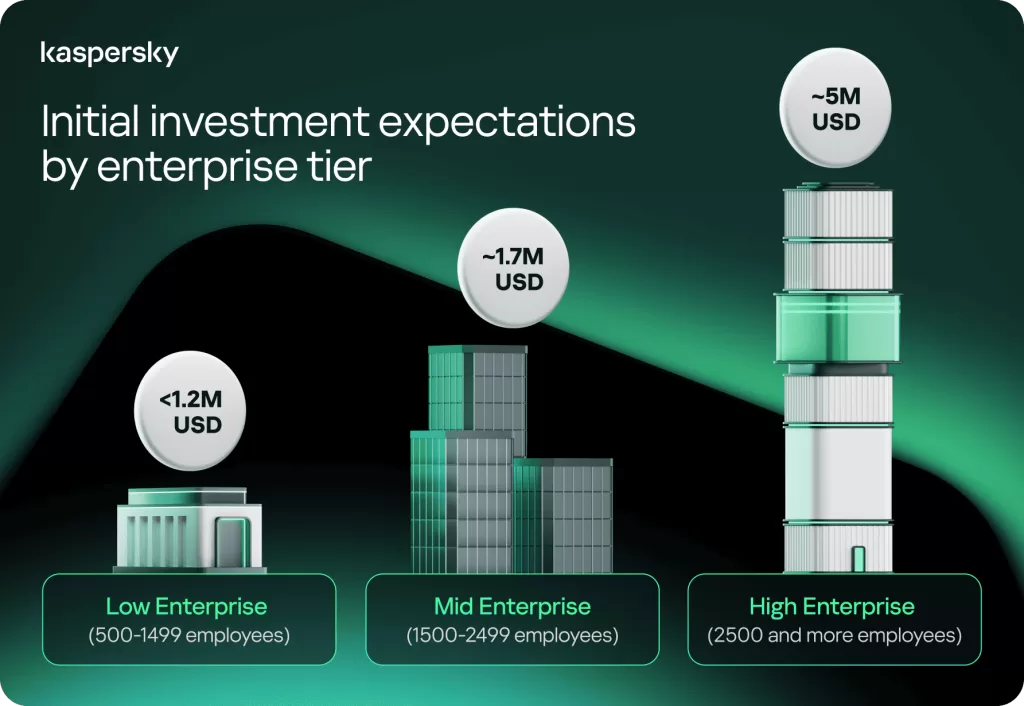
This massive leap in actual spending is heavily influenced by state-level differences and strategic national priorities. Organisations in countries like Vietnam and China are actively willing to invest significantly more than the global market average into their SOC development. This shift toward larger security budgets is largely driven by a growing national focus on digital sovereignty and the urgent need to develop in-house security solutions tailored for national infrastructure.
Understanding exactly where this money goes is crucial. Roman Nazarov, the Head of SOC Consulting at Kaspersky, accurately points out that the initial investment acts as a capital expenditure phase, primarily covering essential hardware and software licenses that are heavily influenced by the scale of the infrastructure. However, it is the subsequent operational costs, particularly the ongoing salaries for highly specialised personnel, that ultimately dictate the total cost of ownership.
Racing Against the Clock
Beyond the financial hurdles, companies are also wrestling with tight implementation timelines. In the APAC region, expectations are highly concentrated, with 69% of companies anticipating that they can build and launch their SOC within a tight six to twelve-month window. Meanwhile, a more cautious 25% of respondents expect these complex architectural projects to stretch up to two years.
Interestingly, the study found that on a global scale, larger companies with far more complex digital environments are actually more likely to prioritise faster SOC deployments compared to mid-sized organisations. In practical terms, these massive enterprises achieve this speed by adopting a staggered approach, choosing to launch an operational SOC exclusively for their most critical network segments first, before systematically expanding that coverage across the rest of their infrastructure in stages.
The True Stumbling Blocks: Proving Value and Finding Talent
While budgets and timelines are easily quantifiable, the day-to-day challenges of running an SOC are far more nuanced. Building a defence centre comes with a wide array of operational obstacles rather than one single dominant issue. In APAC, the most frequently cited challenge, highlighted by 34% of respondents, is the difficult task of evaluating the SOC’s actual effectiveness. Organisations are struggling to track a wide range of key performance indicators, balancing financial metrics like Return on Investment against operational benchmarks such as Mean Time to Detect and Mean Time to Response, all while ensuring stringent compliance with overarching industry standards.
Furthermore, the technological integration process is a massive headache for IT teams. Exactly 33% of companies grapple with high capital costs, while 30% find the intricate process of integrating multiple differing security solutions and systems to be highly difficult. Additionally, managing these complex security solutions and establishing clear internal processes continues to hinder progress.
Then comes the human element. More than a quarter of the surveyed companies emphasise that a lack of human resources remains a critical constraint that sits right alongside technological and budgetary limitations. Nearly one in three APAC organisations point directly to a distinct lack of expertise among their existing employee base, and 24% cite an ongoing struggle to find capable talent in the external labour market.
Adrian Hia, the Managing Director for Asia Pacific at Kaspersky, notes that the conversation has evolved from simply asking how to build an SOC to asking how to prove it truly delivers tangible value. He emphasises that for high-growth businesses in the region, the ultimate differentiator will be pure operational discipline. Success relies heavily on establishing clear metrics, building an integrated technological architecture, and securing the right mix of human expertise to transform security operations from a traditional cost centre into a genuine strategic advantage. For companies unable to immediately bridge this internal talent gap, leaning on external managed detection and response services for continuous threat identification, investigation, and remediation might be the most practical step forward to ensure comprehensive protection against evasive cyberattacks.