
Artificial intelligence is no longer just a corporate buzzword; it is a heavy, incredibly power-hungry reality. As businesses race to build larger and smarter AI models, the physical infrastructure required to run them is generating an unprecedented amount of heat. Traditional air conditioning in server rooms simply cannot keep up with the demands of modern processors. Addressing this massive bottleneck head-on, ASUS has unveiled a comprehensive, fully liquid-cooled AI infrastructure lineup at NVIDIA GTC 2026. Built heavily around the cutting-edge NVIDIA Vera Rubin platform, this new hardware aims to give enterprises the immense compute power they need without melting down their data centres or their operational budgets.
The Rack-Scale Powerhouse
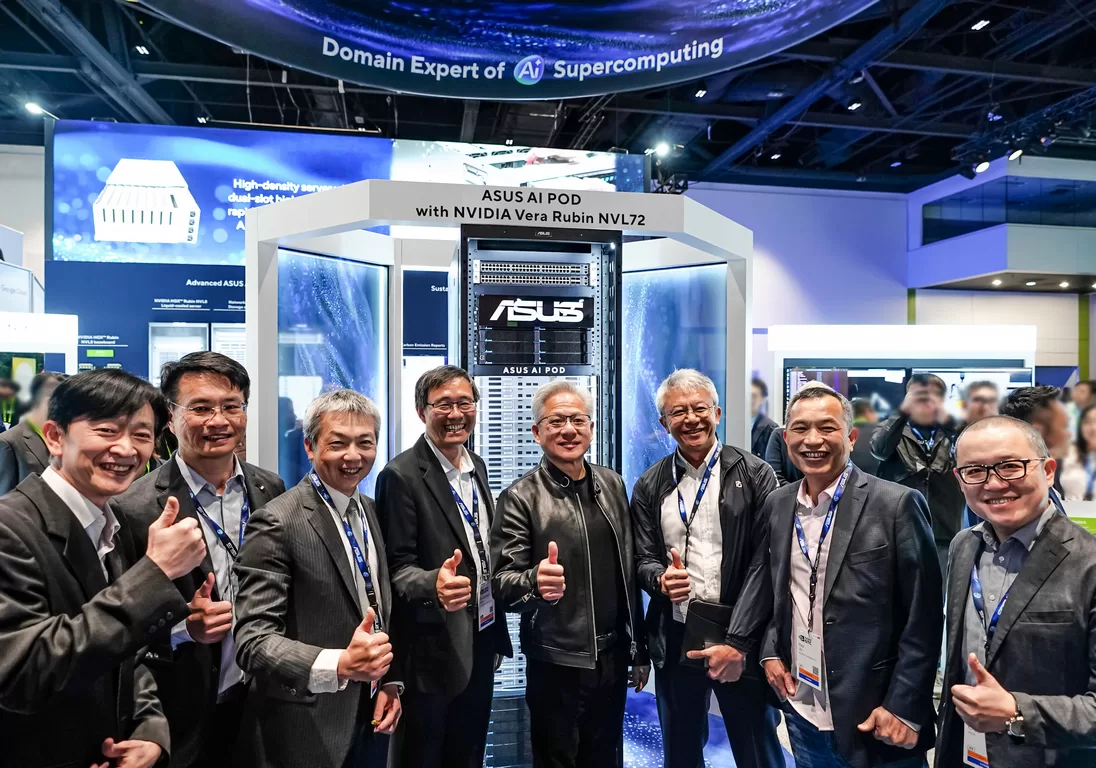
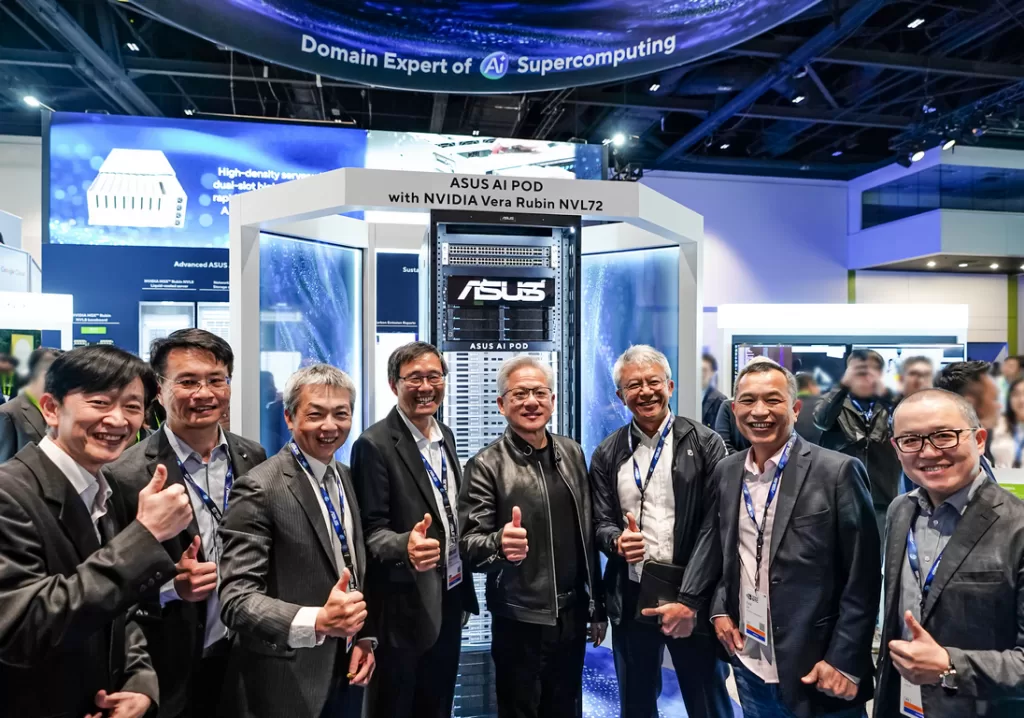
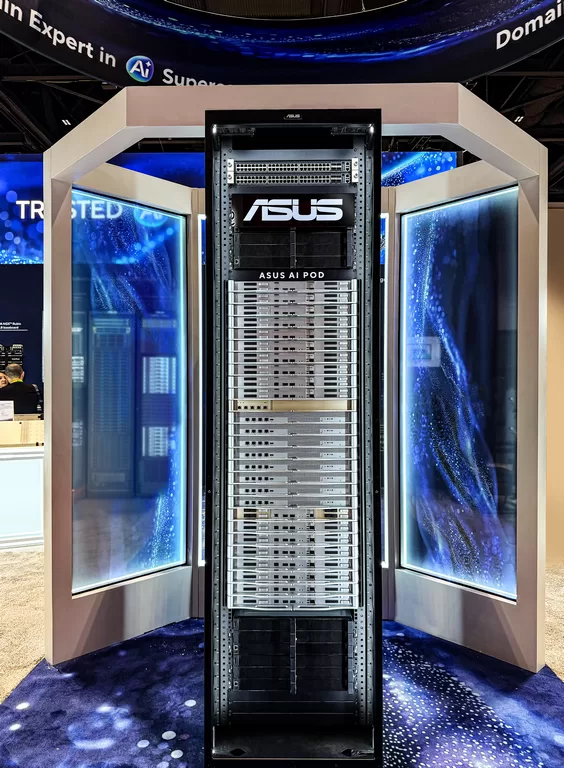
At the very top of this new enterprise food chain is the ASUS AI POD. This is far from your standard server rack. It is a flagship powerhouse built natively on the NVIDIA Vera Rubin NVL72 platform, designed specifically to handle massive, trillion-parameter AI workloads. To keep things running at peak efficiency, the system utilises a one hundred percent liquid-cooled architecture.
For facility managers and IT directors, this translates to drastically reduced Power Usage Effectiveness and a much lower Total Cost of Ownership. The system offers a staggering thermal design power of up to 227kW, yet it manages to deliver up to ten times higher performance per watt compared to older generations. Simply put, it ensures that maximum electricity goes into raw computing rather than just spinning massive cooling fans.
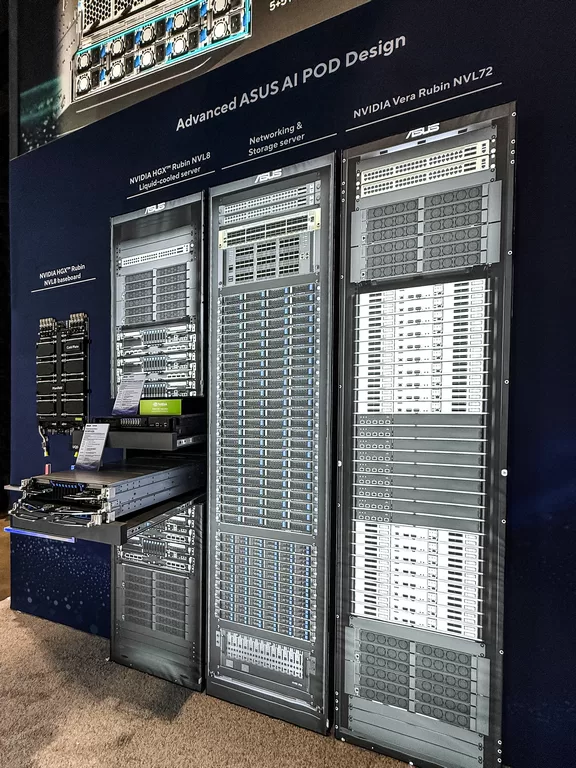
Recognising that not every enterprise is ready to completely overhaul its server rooms for full liquid cooling, ASUS is offering flexible stepping stones. The company introduced the XA NR1I-E12L, an innovative hybrid-cooled server. This system intelligently uses direct-to-chip liquid cooling for the heavy-lifting NVIDIA HGX Rubin NVL8 baseboard, while retaining traditional air cooling for the dual Intel Xeon processors. It is a highly practical compromise for businesses looking to upgrade their AI capabilities without tearing out their existing infrastructure overnight.
Bringing Supercomputing to the Desk
While massive server racks handle the heavy lifting in the cloud, ASUS is also bringing physical AI development directly into the office environment. The brand introduced the ExpertCenter Pro ET900N G3, a deskside supercomputer powered by the NVIDIA Grace Blackwell Ultra platform. Armed with 748GB of unified memory, developers can now train massive foundational models right next to their coffee mugs. For teams needing something even more compact, the ultrasmall Ascent GX10 offers petaflop-scale performance for rapid, scalable edge deployments.
This localised development hardware seamlessly links up with the new PE3000N, a ruggedised inference engine meant for the real world. Powered by NVIDIA Jetson Thor, this unit provides the real-time processing required for complex tasks like autonomous navigation and sensor fusion. It essentially acts as the brain for physical machines and robotics operating out in the field, far away from a climate-controlled server room.
Turning Compute into Business Intelligence
Hardware is naturally only half the battle. To make all this raw compute actually useful for daily business operations, ASUS rolled out the ASUS AI Hub. This is a turnkey, on-premises platform that allows companies to build their own custom AI assistants using open-source large language models like NVIDIA Nemotron and Gemma.
Because the system is hosted locally, businesses maintain complete data sovereignty, keeping their sensitive corporate information highly secure. In practical use, this means senior leaders can use natural language to instantly query an internal AI about factory operations, gross margins, or sales costs without waiting days for a data team to compile a complex spreadsheet. Furthermore, ASUS and NVIDIA have collaborated to integrate NemoClaw into these systems. This allows developers to build safe, long-running autonomous agents locally within isolated sandbox environments, ensuring that these automated workflows remain strictly governed and secure from outside interference.
Keeping Enterprise Computing Green
Pushing this much power requires a serious commitment to sustainability. ASUS has integrated its Thermal Radar 2.0 technology across these new servers. Using dozens of strategically placed sensors, the system intelligently optimises fan performance in real-time based on the exact thermal load. This smart management can cut power consumption by up to 36%, which translates to massive annual financial savings—estimated at around USD$29,000 for a standard 1,000-node cluster.
Coupled with the automated carbon emissions tracking built right into the ASUS Control Centre software, organisations are given the exact tools they need to meet their environmental goals while scaling their technological ambitions.
Availability
The new lineup of ASUS servers and AI infrastructure is available worldwide. However, as is standard with enterprise hardware, the availability of certain specific products and configurations is subject to local regulatory requirements. Interested enterprises and IT departments are encouraged to contact their local ASUS representatives for specific deployment timelines and tailored infrastructure consultations within their region.