

We are drowning in digital assistants. Between Siri, Google Assistant, Alexa, and the recent explosion of ChatGPT wrappers, asking a computer for help isn’t new. But at CES 2026, Lenovo pitched something different: an AI that doesn’t just answer questions but actively participates in your day across all your screens. They call it Qira—branded as Lenovo Qira on PCs and tablets, and Motorola Qira on smartphones—and it represents a significant shift from “app-based” assistance to “ambient” intelligence.
The core promise of Qira is continuity. Currently, your digital life is fragmented; your laptop doesn’t really know what you just did on your phone, and your tablet is often just a consumption screen. Qira is designed to bridge these gaps by existing as a unified system-level intelligence. It builds a “fused knowledge base” that travels with you. If you are researching a trip to Tokyo on your Motorola phone during your commute, Qira on your ThinkPad will know that context when you sit down to finalize the itinerary, without you needing to manually transfer links or notes.
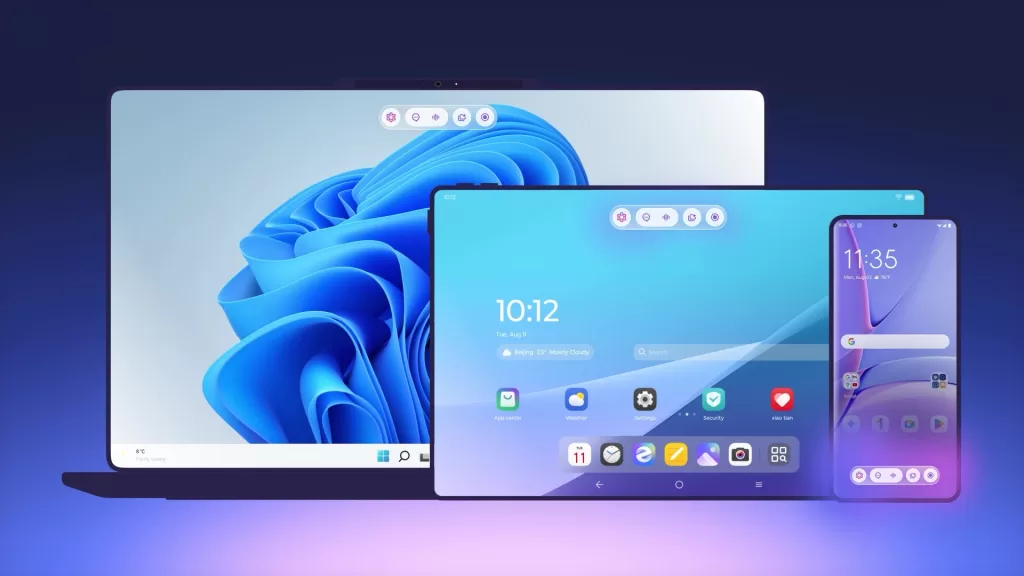
Functionally, Qira operates on three main principles: Presence, Actions, and Perception. “Presence” means it is baked into the OS, accessible via a dedicated key, a wake word (“Hey Qira”), or a simple tap, but smart enough to stay out of the way when not needed. “Perception” is where it gets interesting; by understanding your documents, messages, and on-screen activity (with your permission), it creates a living model of your workflow. It doesn’t just see a calendar invite; it sees the context of the project associated with it. Finally, “Actions” allows it to actually do things. It can orchestrate tasks across apps, effectively acting as a manager that coordinates different software agents to complete a job, rather than just telling you how to do it.
Lenovo has outlined several specific “experiences” that define how we will interact with Qira. “Next Move” offers proactive suggestions based on what you are currently doing. “Catch Me Up” is a lifesaver for the perpetually busy, summarizing what happened on your device while you were away—think of it as a “previously on” recap for your work day. For meetings, “Pay Attention” handles real-time transcription and translation, capturing key decisions so you can focus on the conversation. There is also “Live Interaction,” which allows you to converse with the AI multimodally while sharing your screen or camera, making it feel more like a co-pilot than a search engine.
Privacy, naturally, is the elephant in the room for any system that “perceives” your daily life. Lenovo is adopting a hybrid approach here. Qira prioritizes on-device processing to keep sensitive personal data local, only reaching out to the cloud when necessary and with strong safeguards. The ecosystem is also open, integrating with partners like Microsoft (via Azure and Windows Foundry), Stability AI for on-device image generation, and Perplexity for deep-dive research.
Lenovo and Motorola Qira will begin rolling out in Q1 2026 on select Lenovo devices. It will expand to supported Motorola smartphones shortly thereafter. For existing users of the “Lenovo AI Now” service, the transition to Qira will occur via a seamless over-the-air update.
While the service itself is a built-in feature of the hardware ecosystem and does not carry a standalone subscription price, it will be tied to the purchase of compatible AI-enabled Lenovo and Motorola devices. Specific device compatibility lists and local rollout schedules for Malaysia will be confirmed closer to the launch window.