

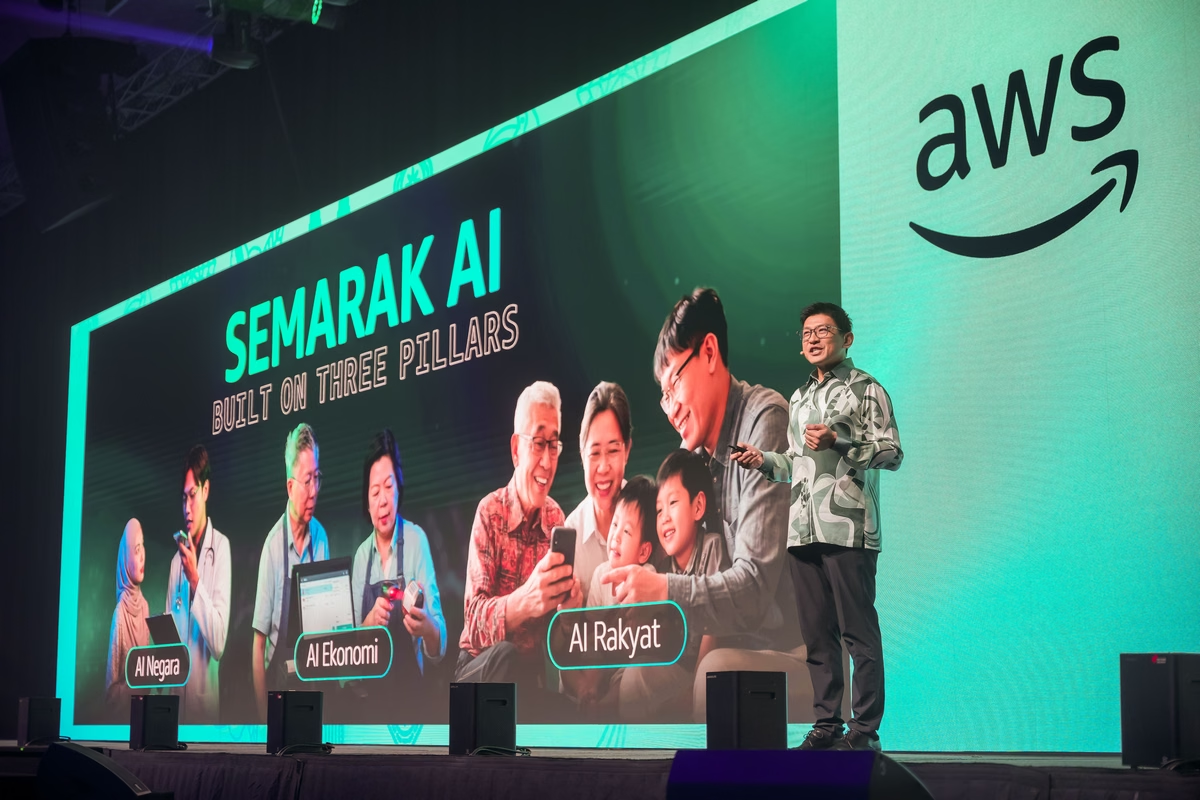
Malaysia is taking a massive leap forward in the digital economy. Amazon Web Services recently launched Semarak AI Malaysia at the company’s Cloud and AI Day event in Kuala Lumpur. Semarak AI is a comprehensive national program designed to equip government officers, local students, and software companies with the advanced artificial intelligence skills they need to build their own digital solutions.
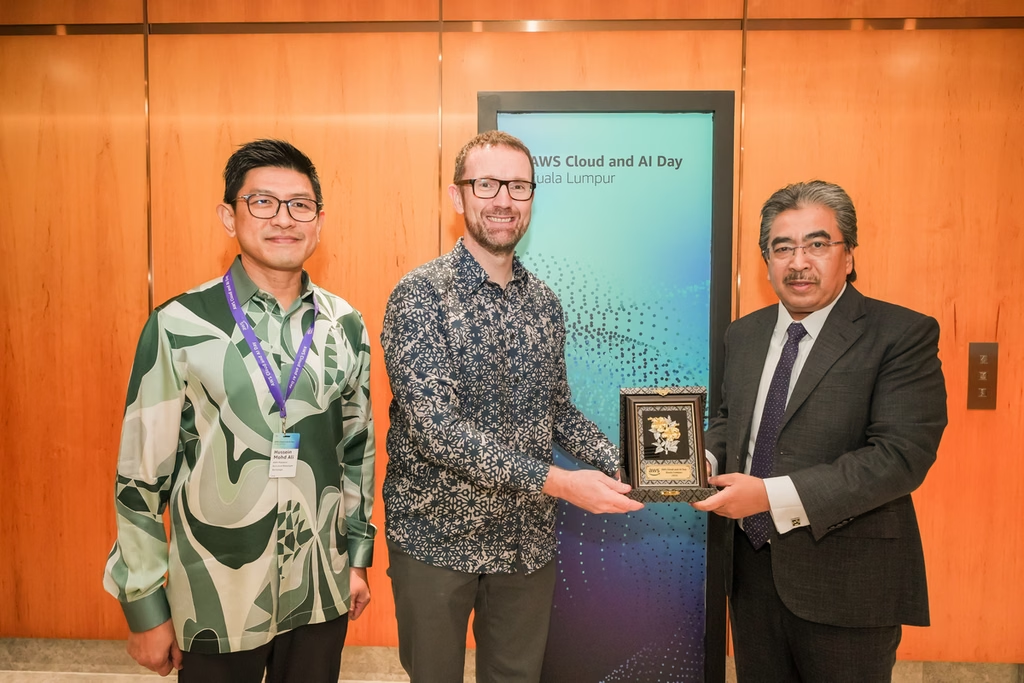
The program arrives at a crucial time as Malaysia rapidly positions itself as a regional technology hub. Speaking at the event, YB Datuk Seri Johari Abdul Ghani, Minister of Investment, Trade and Industry, emphasised the importance of value creation. He noted that Malaysia must look beyond merely hosting foreign infrastructure. In his keynote address, the Minister stated, “Malaysia must not be merely a host for digital infrastructure but a creator of digital value.” He further stressed the initiative’s core objective, adding, “For Malaysia to lead in the regional AI economy, we need a workforce and a software industry that can build, not just consume, AI technology.”
To achieve this bold vision, Semarak AI Malaysia is organised around three strategic pillars. These pillars target public services, local businesses, and community education. The first pillar, known as AI Negara, focuses on modernising the public sector. GovTech Malaysia is launching GovHub through the national AI-as-a-Service platform. This initiative brings a powerful AWS tool called Kiro to government developers. Kiro is an advanced engineering agent that uses spec-driven development. It turns text prompts into structured specifications for requirements, design, and implementation before writing a single line of code. This ensures developers build what they want with fewer errors and higher technical precision.

Alongside Kiro for developers, AWS is investing to put Amazon Quick into the hands of up to 445,000 civil servants. Amazon Quick is an intuitive artificial intelligence assistant built specifically for professional work environments. It helps knowledge workers tackle complex, higher-order tasks like analysing procurement data, synthesising policy research across multiple government agencies, and uncovering valuable patterns in massive datasets. This hands-on integration aims to eliminate repetitive administrative burdens and deliver faster, more responsive public services.
The second pillar, named AI Ekonomi, targets the growth of local businesses and small and medium enterprises. AWS is partnering with local solutions providers like GDXchange and VSTECS. Together, they plan to provide 10,000 eligible Malaysian SMEs with six months of complimentary access to Amazon Quick and Kiro. This program gives small business owners practical digital assistants to handle everyday operational challenges, such as competitor-price tracking and automated demand forecasting. Furthermore, regional accelerator programs like the Sarawak SaaS Accelerator are successfully graduating local software startups. These startups build specialised applications for agriculture, logistics, and retail, expanding Malaysia’s digital exports across the ASEAN region.
The third pillar, AI Rakyat, ensures that everyday citizens are not left behind in this technological shift. AWS is strengthening the national talent pipeline by collaborating closely with the Ministry of Higher Education. Recently, over 3,000 polytechnic and community college students set a new national record in the Malaysia Book of Records. They participated in a massive agentic AI competition using Kiro as their primary coding tool. This allowed students with no prior programming background to build real applications using natural language instructions. Additionally, AWS has adopted local schools under government digital uplift programs to train teachers and introduce students to drone technology and coding early on.
Semarak AI Malaysia proves that national digital transformation requires a collaborative ecosystem. By combining massive cloud investments with practical educational tools, Malaysia is building a sustainable future. Civil servants, local developers, and young students are all learning how to create technology solutions rather than just consume them. This initiative ensures that the nation remains at the absolute forefront of the regional artificial intelligence economy for decades to come.