
It was marketed as the ultimate solution to a geopolitical standoff. After years of will-they-won’t-they bans and executive orders, the US operations of TikTok were finally, formally emancipated from their Chinese parent company, ByteDance. On January 22, 2026, a new entity christened TikTok USDS Joint Venture LLC was born. It was supposed to be a triumph of American data security, backed by a consortium of domestic heavyweights including Oracle and the Dell Family Office. Instead, the transition has triggered what can only be described as a digital heart attack, leaving millions of creators staring at a broken platform.
A Technical Lobotomy & Algorithm Amnesia
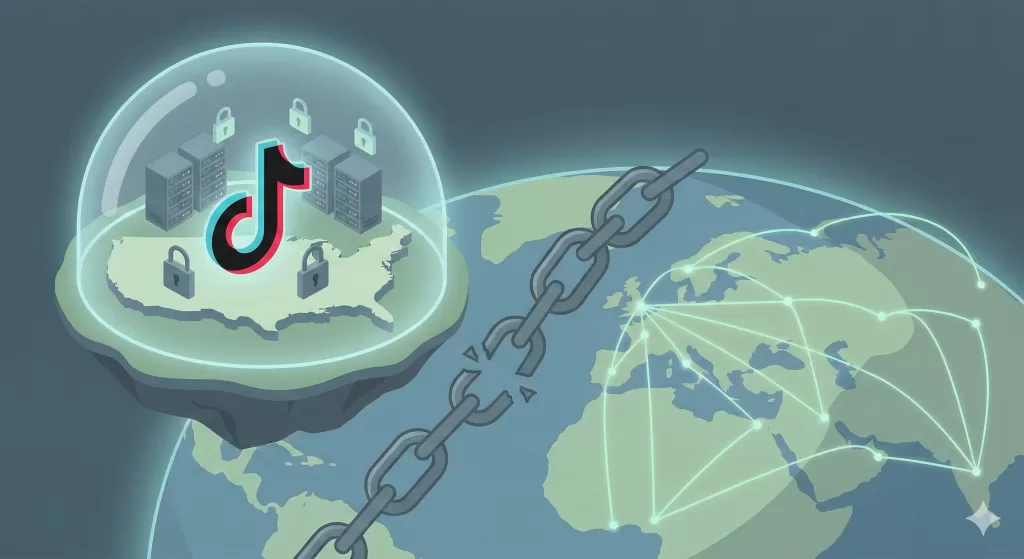
The core of the problem lies in the unprecedented technical surgery required to make this deal happen. This wasn’t a simple change of letterhead; it was a lobotomy. To satisfy US regulators, the new ownership had to sever the US version of the app from its global infrastructure. More critically, they were mandated to “retrain” the famous recommendation algorithm using exclusively US data. For a deep learning system that relies on billions of global signals to predict what you want to watch next, this isolation created a cold start problem. The algorithm essentially woke up with amnesia, losing the intuitive edge that made TikTok so addictive in the first place.
The immediate result was the catastrophic Zero View Bug that plagued the platform in late January. For days, creators who typically command millions of views found their new uploads stagnating at exactly zero. While the company blamed a conveniently timed power outage at an Oracle data centre for a cascading systems failure, the community suspected something far more systemic. The feed, once a hyper-personalised stream of niche interests, reverted to a repetitive loop of generic, hyper-viral content. It was as if the machine had forgotten who its users were, breaking the fundamental feedback loop that drives the creator economy.
The Crisis of Trust As Fears of Censorship Arise
This technical fragility was quickly compounded by a crisis of trust. The blackout coincided with the fatal shooting of US citizen Alex Pretti by ICE agents. As users attempted to share information and organize via the app, they were met with upload failures and suppressed views. While TikTok USDS attributed this to the broader infrastructure collapse, the optics were disastrous. Accusations of censorship flared, further fueled by bizarre reports—later confirmed by California Governor Gavin Newsom’s office—that private messages containing the word “Epstein” were being blocked by the platform’s new moderation filters. What was pitched as a move for “national security” began to look, to many users, like ideological capture by the new “patriotic” ownership group.
The Exodus to UpScrolled
The fallout has been swift and quantifiable. A digital exodus is underway, with the primary beneficiary being UpScrolled, an independent, Palestinian-founded app that positions itself as the ethical antithesis to the new TikTok. By promising transparency and a chronological feed free from algorithmic games, UpScrolled saw its downloads surge by over 2,000% in mere days. Meanwhile, established giants like YouTube Shorts and Instagram Reels have become safe harbours for creators desperate to protect their income streams from TikTok’s volatility.
Advertisers Are Hitting the Brakes
For advertisers, the situation has induced a state of “whiplash.” Major brands like Target and DoorDash had already begun pulling back spend in anticipation of the transition, but the chaotic reality of the takeover has accelerated the retreat. If the platform cannot reliably count views, it cannot reliably bill for impressions. The “Great Severance” has proven that you cannot simply surgically remove a social network from its global context without severe complications. The new owners have secured the asset, but they have yet to prove they can actually keep the lights on.