

If you watched the Paris 2024 Olympics, you might have noticed the replays looking a little more “Matrix” than usual. That wasn’t an accident. For the Olympic Winter Games Milano Cortina 2026, Alibaba Cloud is doubling down on that technology, promising to turn the viewing experience into something that feels less like a traditional broadcast and more like a sci-fi movie.
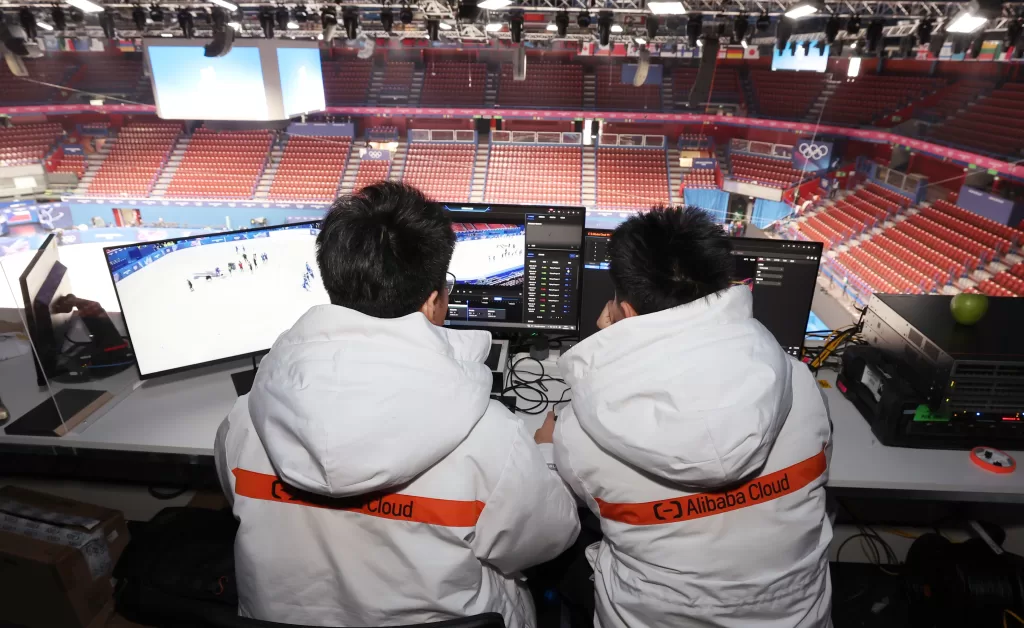
The company, which serves as the digital backbone for the Games, has announced a suite of AI and cloud innovations designed to change how we watch sports and how broadcasters produce them. This isn’t just about higher resolution; it is about using artificial intelligence to deconstruct and reconstruct the action in real-time.
The End of the “Bad Angle”
The headline feature here is the upgraded Real-Time 360º Replay system. In the past, getting a “bullet time” shot required a massive array of physical cameras and significant processing time. For Milano Cortina 2026, Alibaba Cloud is using AI algorithms to do the heavy lifting. The system can now separate athletes from complex, visually noisy backgrounds—like snow and ice—and generate a three-dimensional reconstruction of the moment in just 15 to 20 seconds.

This speed is critical because it means these clips can be used during a live broadcast, not just in a post-game analysis show. The technology also introduces “Spacetime Slices,” a feature that visualizes multiple phases of an athlete’s movement in a single composite image. Imagine seeing every frame of a figure skater’s triple axel or a snowboarder’s corkscrew overlaid at once, giving you a complete breakdown of their technique in one shot.
The “Chatty” Olympic Archive
For the first time in history, the International Olympic Committee (IOC) is deploying a Large Language Model (LLM) officially. Powered by Alibaba’s Qwen, this system is being used to make the massive Olympic archive actually searchable.
Previously, finding a specific clip—say, “find the figure skating gold medal performance”—might have involved manually scrubbing through hours of footage or relying on tagged metadata. Now, the Automatic Media Description (AMD) system uses AI to identify athletes, describe the action, and tag video assets instantly. Broadcasters can simply type a natural language query, and the system retrieves the exact moment. This isn’t just for internal use; an “Olympic AI Assistant” on the official website will allow fans to ask questions and get real-time information, effectively giving every viewer a personal commentator.
Cloud Broadcasting becomes the Standard
While AI gets the glory, the real workhorse is the OBS Live Cloud. We are officially moving away from the era of satellite trucks. For Milano Cortina 2026, cloud-based delivery will be the primary method for distribution, supporting 39 broadcasters with 428 live video feeds.
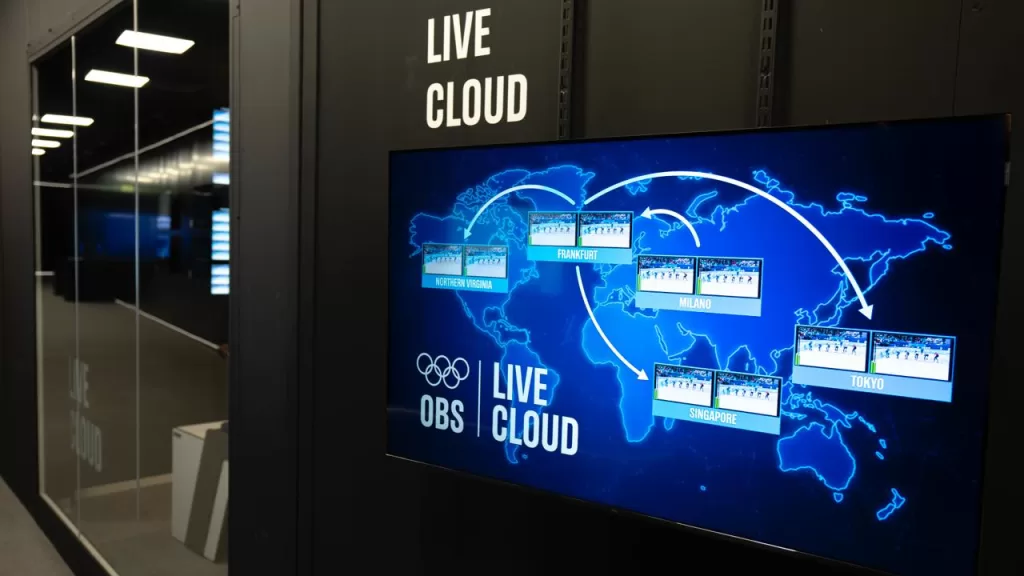
This shift matters because it democratizes coverage. By replacing expensive satellite links with cloud infrastructure, it lowers the barrier for smaller broadcasters to carry the Games. It also reduces the physical footprint of the event—fewer trucks, fewer cables, and less power consumption on-site.
A “Wonder on Ice” for Fans
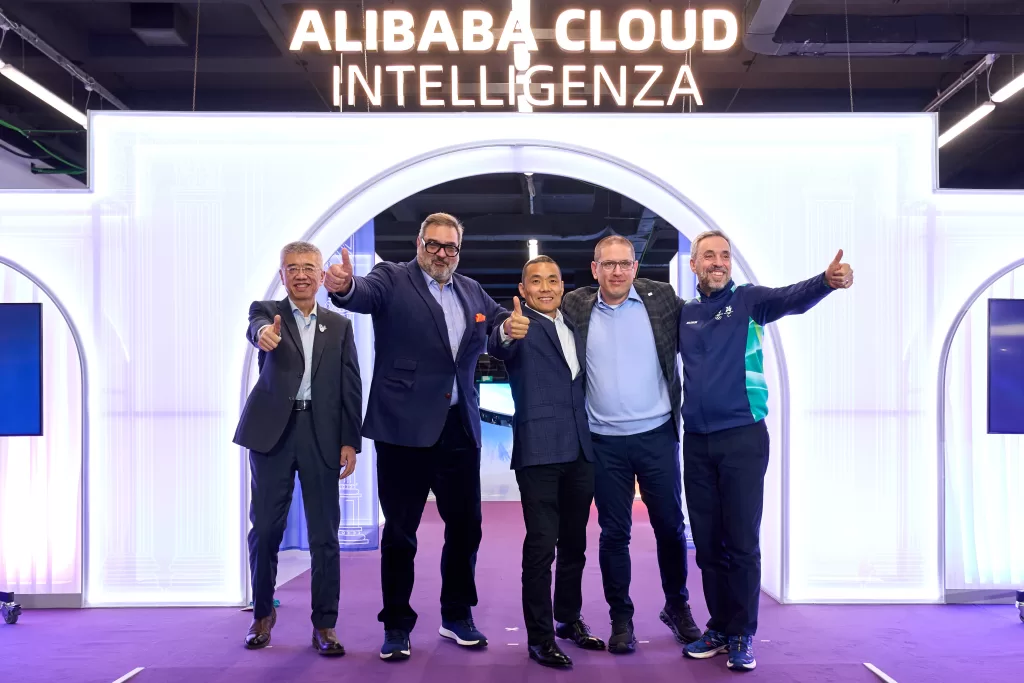
On the ground in Milan, Alibaba is also trying to make AI tangible for the public. They have launched “Wonder on Ice,” an interactive showcase in Milan’s Piazza del Castello. This installation uses AI to create personalized virtual retail experiences for visitors.
Perhaps more artistically, the company ran a campaign called “YOUR EPIC VIBE,” inviting fans globally to co-create digital art using Alibaba’s generative AI tools. These fan-created pieces aren’t just for social media; 100 of them have been selected to be projected onto the pavilion and will eventually be acquired by the Olympic Museum, marking the first time AI-generated fan art has entered the official Olympic legacy.
What This Means for You
Ultimately, Alibaba Cloud’s involvement suggests that the 2026 Winter Games will be the most “analyzed” Olympics yet. For the viewer at home, it means more immersive replays, faster access to highlights, and a broadcast that offers deeper technical insight into the sports. For the industry, it is further proof that the future of live events lives in the cloud, not in a satellite dish.